
Near Boulder City in Clark County, Nevada — The American Mountains (Southwest)
Robert L. Mendenhall Scenic Overlook Obelisk

Photographed by Tom Bosse, July 20, 2024
1. Robert L. Mendenhall Scenic Overlook Obelisk Marker
Origin of the Dam
In 1902 the Reclamation Act provided for the creation of what is now called the Bureau of Reclamation (BOR). Primarily engineers, they sought potential water development projects in western states with federal lands. The Colorado River was chosen because of the flooding it caused and the enormous amount of water it could provide to the surrounding states. The Boulder Canyon Project Act of 1928 authorized construction of the dam.
BOR’s engineers were among the most experienced dam builders in the world. The Colorado River required a huge dam, larger then anything they had designed before. Art Deco architectural elements were designed by architect Gordon B. Kaufmann including the intake towers, towers on top of the dam, Arizona power house exteriors, Nevada power house exteriors and an exhibit building.
Tunnel Construction
The Six Companies, Inc. crew blasted tunnels to divert water, faced carbon monoxide-chocked tunnels and worked with jackhammers from heights of 700 feet. Casualties resulted from falling equipment, rocks and workers. This view shows the interior of one of the tunnels through
this page online
Boulder City
Building the dam required thousands of hands. At least 21,000 workers were required during construction. Approximately six miles from the dam city, Boulder City was constructed to provide accommodations for the workers.
Dam Completion
The task of completing the dam was both immense and treacherous, but the project was completed in 1935, just over four years from the start. The dam was designated a National Historic Landmark in 1985. The National Park Service has been on site since the 1930’s as a partner with the Bureau of Reclamation. The aerial view shows the crest of the Hoover Dam and the highway leading across it taken on July 16, 1935. The highway provided an easy route between Las Vegas, NV and Kingman, AZ. The intake towers jut up on the other side of the dam.
Topics. This historical marker is listed in these topic lists: Bridges & Viaducts • Charity & Public Work • Waterways & Vessels. A significant historical date for this entry is April 18, 1932.
Location. 35° 59.661′ N, 114° 47.957′ W. Marker is near Boulder City, Nevada,

Photographed by Tom Bosse, July 20, 2024
2. Origin of the Dam

Regionally, this marker is in Nevada’s Colorado River Valley, in the Mojave Desert, and in Greater Las Vegas. It is also in the American Southwest and in the Mountain West. Globally, it is in North America, the Western Hemisphere, the Western World, and the Anglosphere. Historically, it finds itself in what was once New Spain and also Mexico’s Alta California.
Other nearby markers. At least 8 other markers are within walking distance of this marker: Interstate 11 Project Team (here, next to this marker); Lake Mead National Recreation Area (a few steps from this marker); The Colorado River (a few steps from this marker); Dam Completion (a few steps from this marker); Boulder City (a few steps from this marker); Origin of the Dam (a few steps from this marker); Tunnel Construction (a few steps from this marker); Boulder Dam! No! (a few
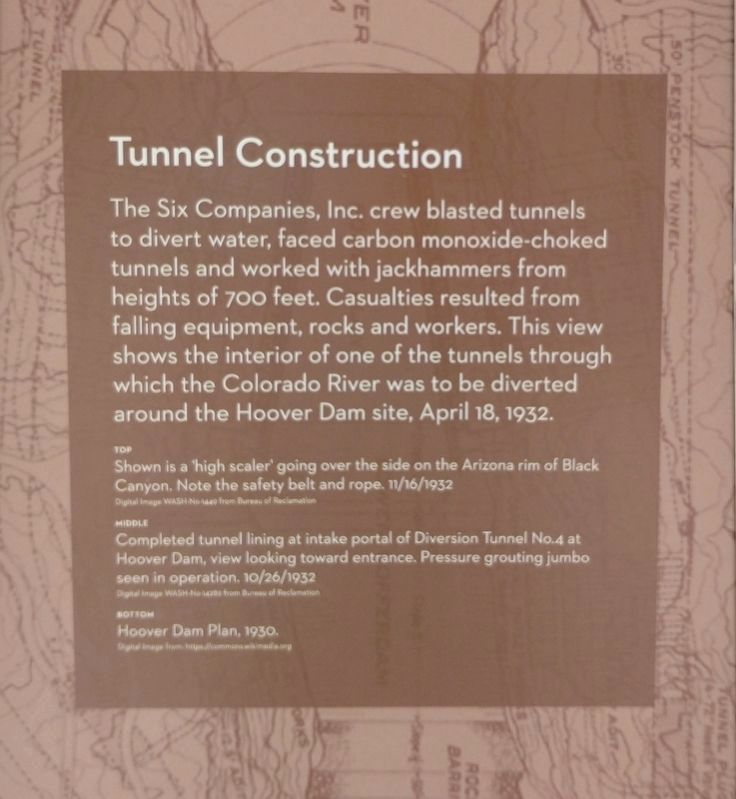
Photographed by Tom Bosse, July 20, 2024
3. Tunnel Construction

Photographed by Tom Bosse, July 20, 2024
4. Boulder City

Photographed by Tom Bosse, July 20, 2024
5. Dam Completion

Photographed by Tom Bosse, July 20, 2024
6. Robert L. Mendenhall Scenic Overlook Obelisk Marker
Credits. This page was last revised on July 13, 2025. It was originally submitted on September 29, 2024, by Tom Bosse of Jefferson City, Tennessee. This page has been viewed 299 times since then and 68 times this year. Photos: 1, 2, 3, 4, 5, 6. submitted on September 29, 2024, by Tom Bosse of Jefferson City, Tennessee. • Andrew Ruppenstein was the editor who published this page.
