Crisfield in Somerset County, Maryland — The American Northeast (Mid-Atlantic)
Crab Shedding Float
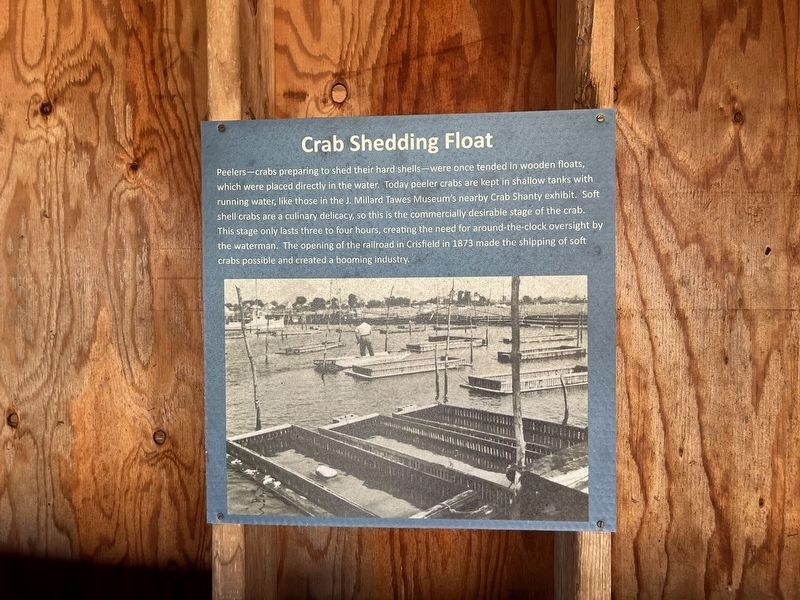
Erected by Crisfield Heritage Foundation.
Topics. This historical marker is listed in these topic lists: Animals • Industry & Commerce • Railroads & Streetcars • Waterways & Vessels. A significant historical year for this entry is 1873.
Location. 37° 58.683′ N, 75° 51.572′ W. Marker is in Crisfield, Maryland, in Somerset County. It is on Spruce Street. Touch for map. Marker is at or near this postal address: 927 Spruce St, Crisfield MD 21817, United States of America. Touch for directions.

Regionally, this marker is
this page online
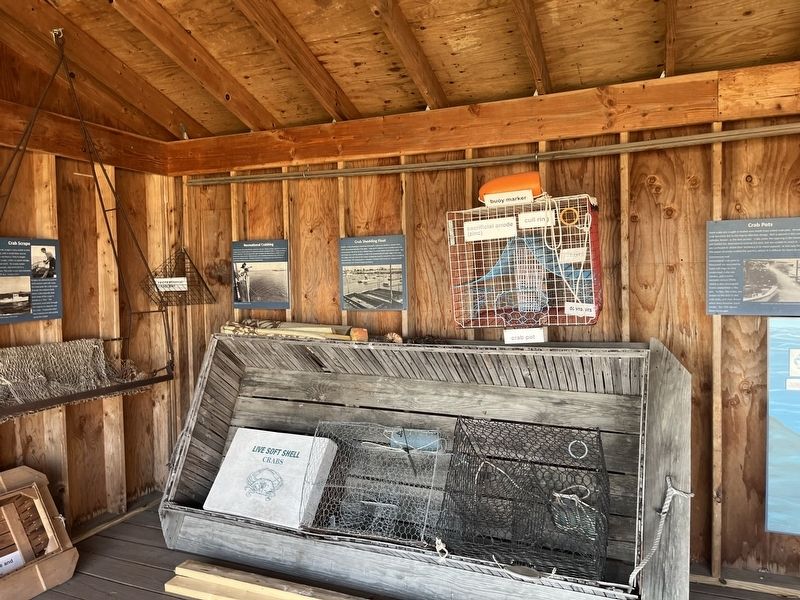
Other nearby markers. At least 8 other markers are within walking distance of this marker: Crab Scrape (here, next to this marker); Crab Pots (here, next to this marker); Oyster Dredges (here, next to this marker); Hand Tongs (here, next to this marker); Skipjacks and Bugeyes (here, next to this marker); Drop Tongs (here, next to this marker); African American Watermen of the Chesapeake (here, next to this marker); Watermen of the Tangier Sound (here, next to this marker). Touch for a list and map of all markers in Crisfield.
Photographed by Devry Becker Jones (CC0), October 12, 2024
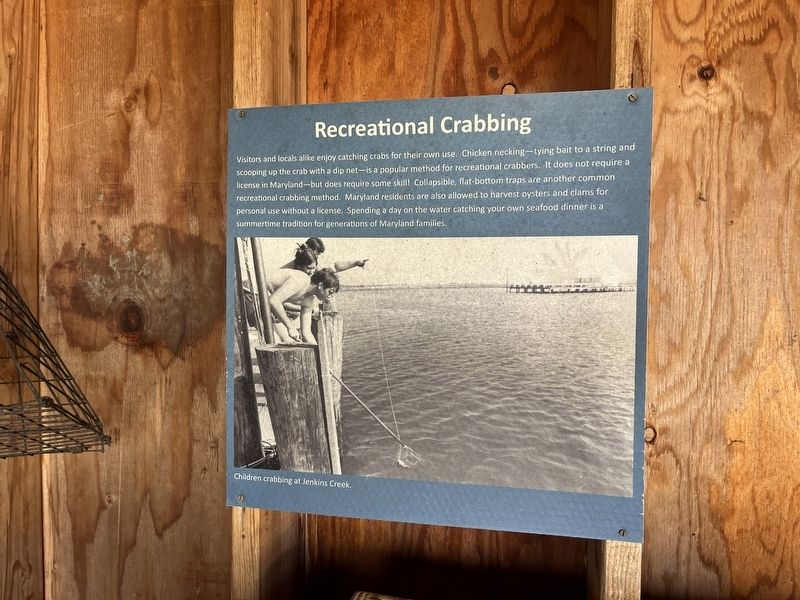
3. Recreational Crabbing (nearby sign that features no historical information)
Visitors and locals alike enjoy catching crabs for their own use. Chicken necking—tying bait to a string and scooping up the crab with a dip net—is a popular method for recreational crabbers. It does not require a license in Maryland—but does still require some skill. Collapsible, flat-bottom traps are another common recreational crabbing method. Maryland residents are also allowed to harvest oysters and clams for personal use without a license. Spending a day on the water catching your own seafood dinner is a summertime tradition for generations of Maryland families.
Credits. This page was last revised on October 13, 2024. It was originally submitted on October 13, 2024, by Devry Becker Jones of Washington, District of Columbia. This page has been viewed 312 times since then and 73 times this year. Photos: 1, 2, 3. submitted on October 13, 2024, by Devry Becker Jones of Washington, District of Columbia.
