Port Credit in Mississauga in Peel Region, Ontario — Central Canada (North America)
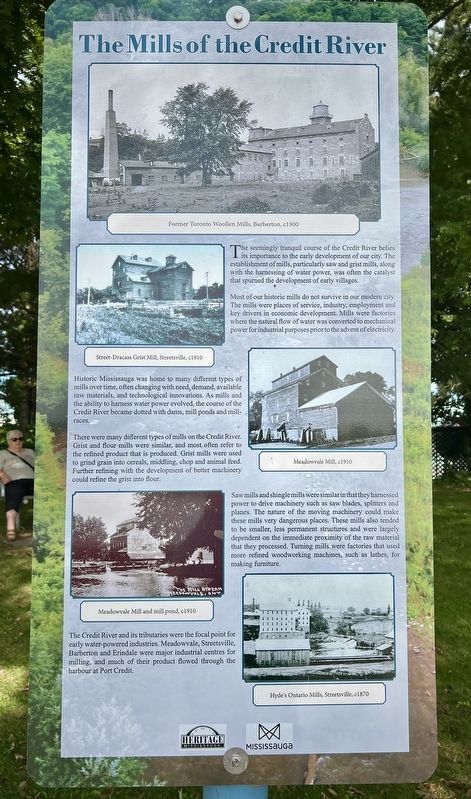
The Mills of the Credit River
Photographed by Tim Boyd, September 26, 2024
1. The Mills of the Credit River Marker
The seemingly tranquil course of the Credit River belies its importance to the early development of our city. The establishment of mills, particularly saw and grist mills, along with the harnessing of water power, was often the catalyst that spurned the development of early villages.
Most of our historic mills do not survive in our modern city. The mills were places of service, industry, employment and key drivers in economic development. Mills were factories where the natural flow of water was converted to mechanical power for industrial purposes prior to the advent of electricity.
Historic Mississauga was home to many different types of mills over time, often changing with need, demand, available raw materials, and technological innovations. As mills and the ability to harness water power evolved, the course of the Credit River became dotted with dams, mill ponds and millraces.
There were many different types of mills on the Credit River. Grist and flour mills were similar, and most often refer to the refined product that is produced. Grist mills were used to grind grain into cereals, middling, chop and animal feed. Further refining with the development of better machinery could refine the grist into flour.
Saw mills and shingle mills were similar in that they harnessed power to drive machinery such as saw blades, splitters and planes. The nature of the moving machinery could make these mills very dangerous places. These mills also tended to be smaller, less permanent structures and were largely dependent on the immediate proximity of the raw material that they processed. Turning mills were factories that used more refined woodworking machines, such as lathes, for making furniture.
The Credit River and its tributaries were the focal point for early water-powered industries. Meadowvale,
this page online
Topics. This historical marker is listed in these topic lists: Industry & Commerce • Waterways & Vessels.
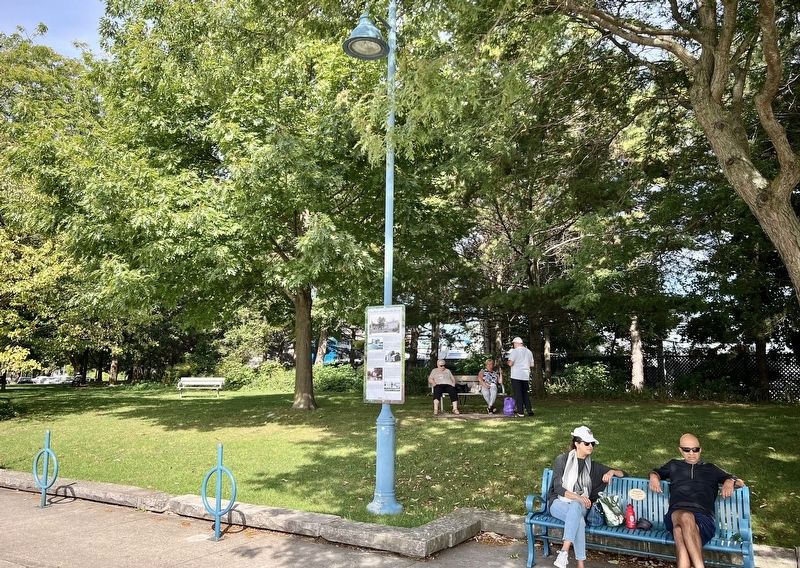
Location. 43° 32.982′ N, 79° 34.938′ W. Marker is in Mississauga, Ontario, in Peel Region. It is in Port Credit. It can be reached from Port Street East. The marker is by the water’s edge in J.J. Plaul Park, approx. 100 metres south of the parking lot at the end of Stavebank Road South. Touch for map. Marker is in this post office area: Mississauga ON L5G 4V5, Canada. Touch for directions.

Regionally, this marker is in Greater Toronto, specifically on the Golden Horseshoe, and in the Toronto Metropolitan Area. It is also in Central Canada. Globally, it is in North America, on the Great Lakes, in the Western Hemisphere, in the Western World, and in the Anglosphere. Historically, it finds itself in what was once a British colony, the Viceroyalty of New France, the Haudenosaunee (Iroquois) Confederacy, and Rupert’s
Photographed by Tim Boyd, September 26, 2024
2. The Mills of the Credit River Marker
Other nearby markers. At least 8 other markers are within walking distance of this marker: The Harbour (within shouting distance of this marker); The Harvest (within shouting distance of this marker); Crossing the River (about 90 meters away, measured in a direct line); Remembering the Stonehookers (about 90 meters away); A Sailor’s Memorial (about 120 meters away); The Changing Port (about 120 meters away); The Lighthouse (about 180 meters away); The Ridgetown (about 210 meters away). Touch for a list and map of all markers in Mississauga.
circa 1870s
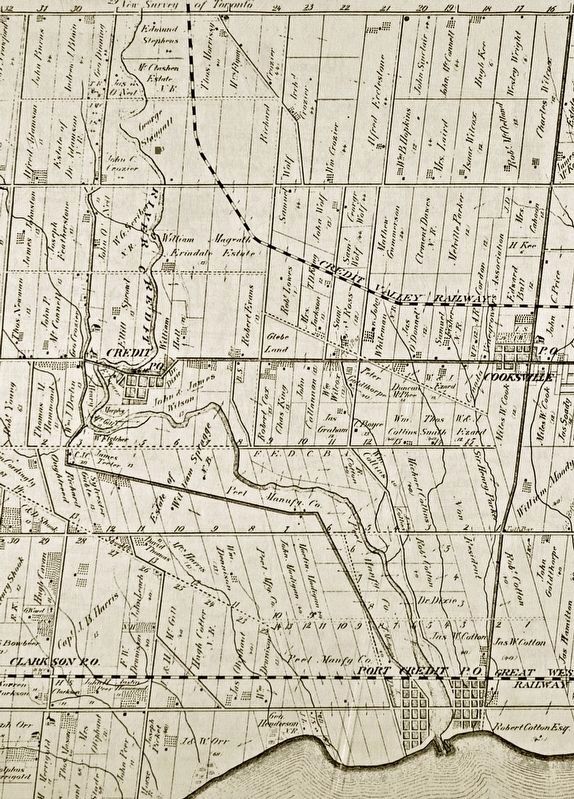
3. The Credit River in Toronto Township, 1870s.
Credits. This page was last revised on October 18, 2024. It was originally submitted on October 14, 2024, by Tim Boyd of Hamilton, Ontario. This page has been viewed 318 times since then and 64 times this year. Photos: 1, 2, 3. submitted on October 14, 2024, by Tim Boyd of Hamilton, Ontario. • Andrew Ruppenstein was the editor who published this page.
