Ossining in Westchester County, New York — The American Northeast (Mid-Atlantic)
Dr. Franz Boas (1858-1942)
The Father of American Anthropology
| — | Dale Cemetery Heritage Trail | — |
Photographed by Duane and Tracy Marsteller, September 29, 2024
1. Dr. Franz Boas (1858-1942) Marker
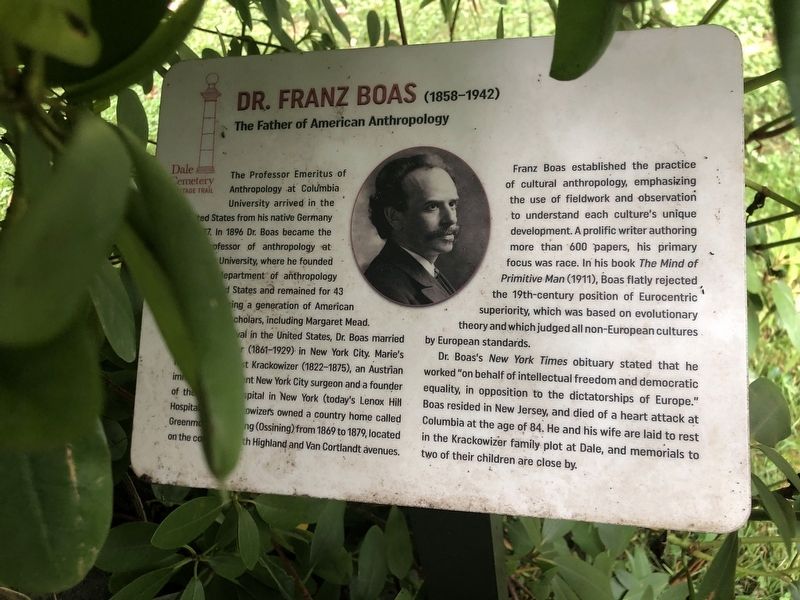
The Professor Emeritus of Anthropology at Columbia University arrived in the United States from his native Germany in 1887. In 1896 Dr. Boas became the first professor of anthropology at Columbia University, where he founded the first department of anthropology in the United States and remained for 43 years, mentoring a generation of American anthropology scholars, including Margaret Mead.
Upon his arrival in the United States, Dr. Boas married Marie Krackowizer (1861-1929) in New York City. Marie's father was Ernst Krackowizer (1822-1875), an Austrian immigrant, prominent New York City surgeon and a founder of the German hospital in New York (today's Lenox Hill Hospital). The Krackowizers owned a country home called Greenmont in Sing Sing (Ossining) from 1869 to 1879, located on the corner of North Highland and Van Cortlandt avenues.
Franz Boas established the practice of cultural anthropology, emphasizing the use of fieldwork and observation to understand each culture's unique development. A prolific writer authoring more than 600 papers, his primary focus was race. In his book The Mind of Primitive Man
this page online
Dr. Boas's New York Times obituary stated that he worked “on behalf of intellectual freedom and democratic equality, in opposition to the dictatorships of Europe.” Boas resided in New Jersey, and died of a heart attack at Columbia at the age of 84. He and his wife are laid to rest in the Krackowizer family plot at Dale, and memorials to two of their children are close by.
Erected by Dale Cemetery. (Marker Number 15.)
Topics. This historical marker is listed in these topic lists: Anthropology & Archaeology • Education. A significant historical year for this entry is 1887.
Location. 41° 10.359′ N, 73° 51.298′ W. Marker is in Ossining, New York, in Westchester County. It can be reached from the intersection of Havell Street and Jenkins Court. Marker is in Section G of Dale Cemetery. Touch for map. Marker is at or near this postal address: 104 Havell St, Ossining NY 10562, United States of America. Touch for directions.

Regionally,
Photographed by Duane and Tracy Marsteller, September 29, 2024
2. Dr. Franz Boas (1858-1942) Marker
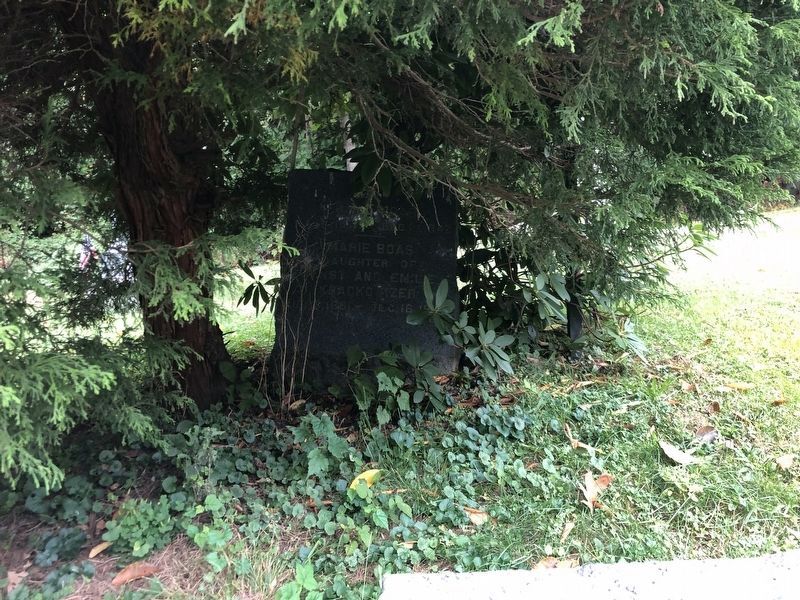
The marker and gravestone are hidden by an overgrown shrub.
Other nearby markers. At least 8 other markers are within walking distance of this marker: Dr. George Jackson Fisher (1825-1893) (a few steps from this marker); The Heuss Family (within shouting distance of this marker); Benjamin Brandreth (1809-1880) (within shouting distance of this marker); Gen. Edwin A. McAlpin (1848-1917) (within shouting distance of this marker); Eleanor B. Wunderlich (1925-2008) (within shouting distance of this marker); George Brandreth Borup (1885-1912) (within shouting distance of this marker); The Foshay Family (within shouting distance of this marker); The Holden Family (within shouting distance of this marker). Touch for a list and map of all markers in Ossining.
Also see . . . Franz Boas.
Photographed by Duane and Tracy Marsteller, September 29, 2024
3. Dr. Franz Boas (1858-1942) Marker
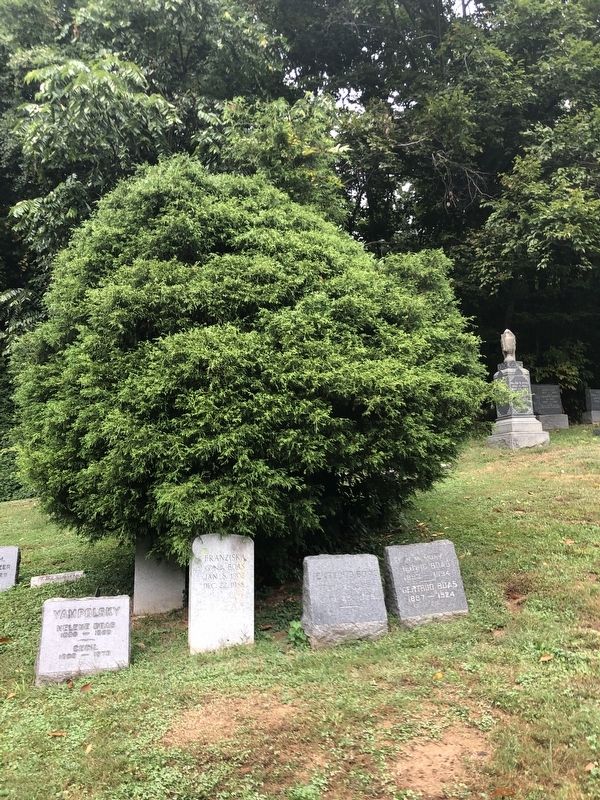
The Krackowizer family plot, where Dr. Boas and his wife are buried.
Unknown via Wikipedia (Public Domain), circa 1915
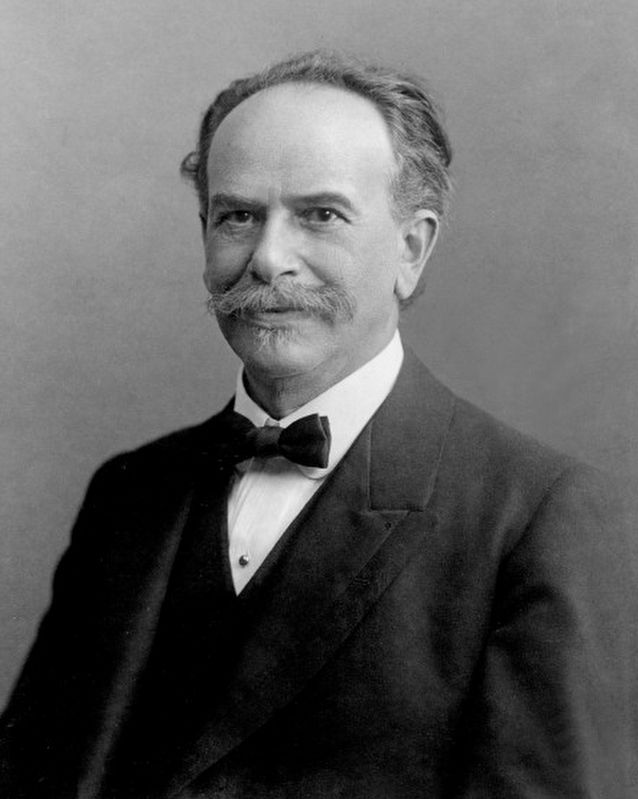
4. Dr. Franz Boas (1858-1942)
Among his many significant students were A. L. Kroeber, Alexander Goldenweiser, Ruth Benedict, Edward Sapir, Margaret Mead, Zora Neale Hurston, and Gilberto Freyre.
Credits. This page was last revised on April 1, 2026. It was originally submitted on October 20, 2024, by Duane and Tracy Marsteller of Murfreesboro, Tennessee. This page has been viewed 282 times since then and 70 times this year. Photos: 1, 2, 3, 4. submitted on October 20, 2024, by Duane and Tracy Marsteller of Murfreesboro, Tennessee.
