Near Norris in Anderson County, Tennessee — The American South (East South Central)
Caleb Crosby Trashing Barn
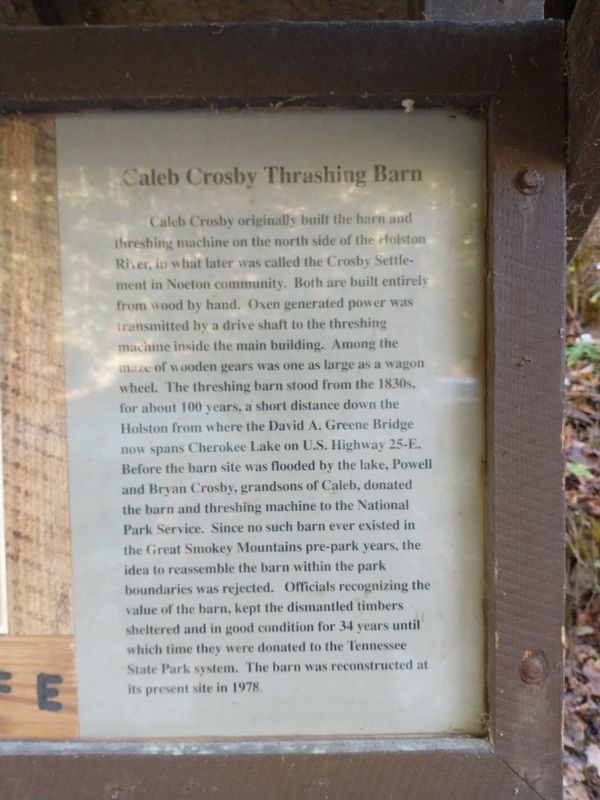
Photographed by Tom Bosse, October 19, 2024
1. Caleb Crosby Trashing Barn Marker
Topics. This
this page online
Location. 36° 12.787′ N, 84° 4.364′ W. Marker is near Norris, Tennessee, in Anderson County. It is on Lower Clear Creek Road east of U.S. 441, on the right when traveling east. Touch for map. Marker is at or near this postal address: 495 Lower Clear Creek Rd, Norris TN 37828, United States of America. Touch for directions.

Regionally, this marker is in East Tennessee and in Greater Knoxville. It is also in the American South, specifically in the Upper South, in Appalachia, and specifically in Southern Appalachia. Globally, it is in North America, the Western Hemisphere, the Western World, and the Anglosphere. Historically, it finds itself in what was once the original Cherokee Nation, the territory of the Mississippian Culture, one of the Confederate States of America, and the Antebellum South.
Other nearby markers. At least 8 other markers are within 5 miles of this marker, measured as the crow flies: Rice 18th Century Grist Mill (here, next to this marker); The Caleb Crosby Threshing Barn (here, next to this
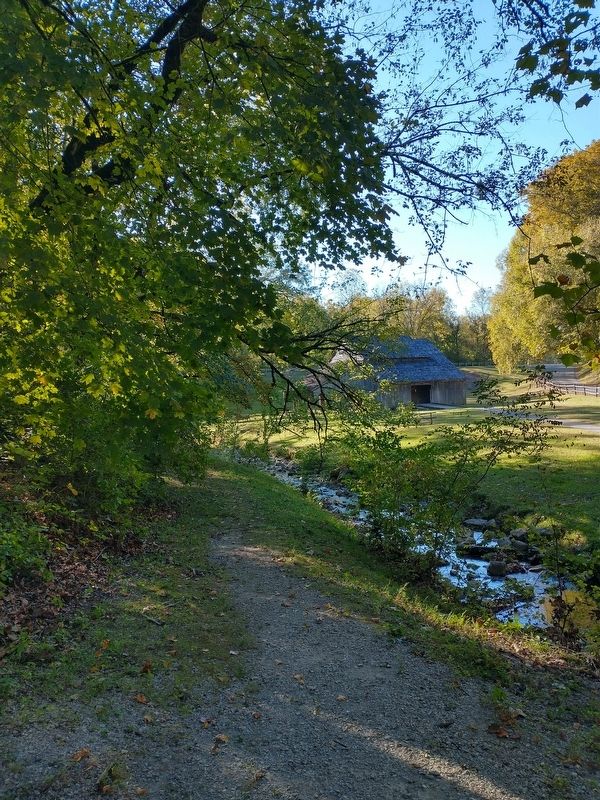
Photographed by Tom Bosse, October 18, 2024
2. Caleb Crosby Trashing Barn

Photographed by Tom Bosse, October 18, 2024
3. Caleb Crosby Trashing Barn
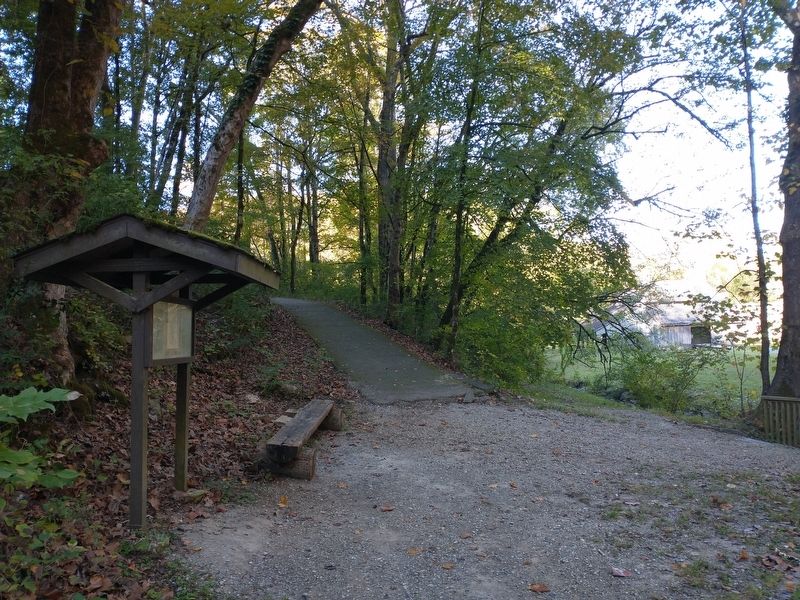
Photographed by Tom Bosse, October 19, 2024
4. Caleb Crosby Trashing Barn Marker
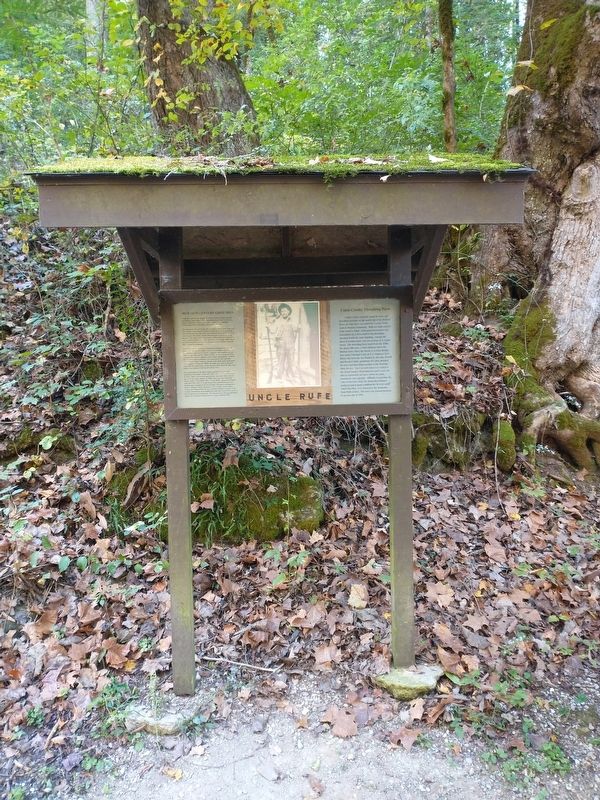
Photographed by Tom Bosse, October 19, 2024
5. Caleb Crosby Trashing Barn Marker
Credits. This page was last revised on October 23, 2024. It was originally submitted on October 21, 2024, by Tom Bosse of Jefferson City, Tennessee. This page has been viewed 154 times since then and 16 times this year. Photos: 1, 2, 3, 4, 5. submitted on October 21, 2024, by Tom Bosse of Jefferson City, Tennessee. • James Hulse was the editor who published this page.
