New Britain in Capitol Region, Connecticut — The American Northeast (New England)
Museum of American Art
Where Art Meets Life
⎯⎯⎯
The Painter and the Park Maker
| — | New Britain Historic Walking Trail | — |

Photographed by Duane and Tracy Marsteller, September 29, 2024
1. Museum of American Art side of marker
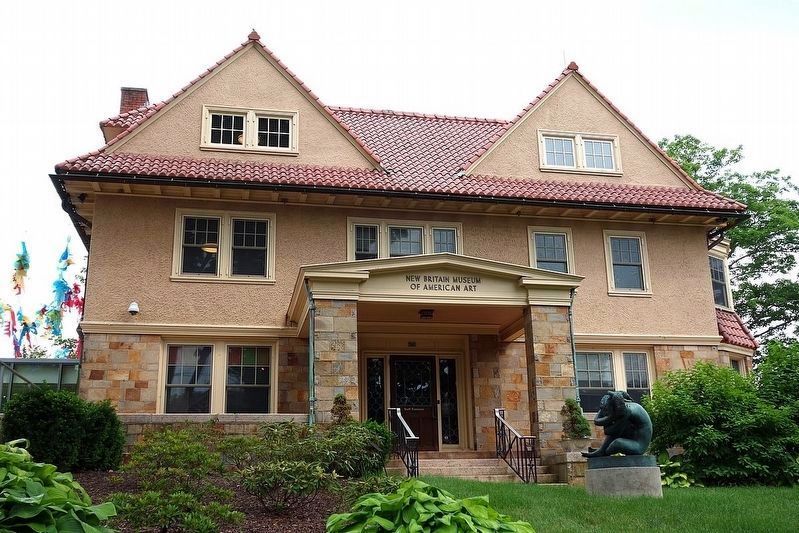
Acknowledged as the first museum in the U.S. to concentrate exclusively on American art, the New Britain Museum of American Art traces its beginnings to 1903, when Jon Butler Talcott established an endowment to buy an art collection for the enjoyment and education of the public. In 1935, Grace Judd Landers bequeathed her turn-of-the-century stone mansion located on the edge of the beautiful Frederick Law Olmsted-designed Walnut Hill Park, as a permanent home for the art collection, then only numbering 26 works. The Art Museum of the New Britain Institute (as it was then called), newly renovated, opened its doors to the public on July 1, 1937. Numerous wings were added over the years, but the Museum truly blossomed with the opening of the Chase Family Building in 2006 to critical and public acclaim.
The Museum is renowned for its preeminent collection that as of May 2014 numbered more than 11,500 works, with its masterpieces in demand worldwide and NBMAA-originating exhibitions traveling across the U.S. and abroad each year. Visitors can walk through the three-decade [sic] history of the nation's
this page online
Programming for all ages, interests and abilities include docent-led school and adult tours, teacher services, studio classes, gallery talks, lectures, symposia, concerts, and film.
The Museum's slogan, “Where Art Meets Life”, comes to life through creative community-building special events, held monthly, quarterly and annually. Toe-tapping jazz evenings, Museum After Dark parties, and a variety of community celebrations make the NBMAA a rich performance venue combining music, performance, and the visual arts.
[Captions (top to bottom)]
• A portion of Thomas Hart Benton's Arts of the City, 1932, tempera with oil glaze. (New Britain Museum of American Art)
• Albert Bierstadt, Seal Rock, 1872-87, oil on canvas, 50 x 44 1/4 in. (New Britain Museum of American Art)
• Norman Rockwell, Weighing In, 1958, oil on canvas. (New Britain Museum of American Art)
The Painter and the Park Maker
The

Photographed by Duane and Tracy Marsteller, September 29, 2024
2. The Painter and the Park Maker side of marker
The Hudson River School was a popular group of American landscape painter who worked from 1825 to about 1870. Their paintings first depicted the beauty and majesty of the landscapes of the Hudson River Valley and surrounding areas, but many carried the style into some of the most famous images of the American West. Rather than a harsh wilderness, most promoted a tranquil pastoral American landscape where people, nature, and animals coexisted peacefully.
Olmsted was inspired to create his landscapes in part by the work of Church and fellow Hudson River School painters, Thomas Cole, George Inness, Albert Bierstadt, and Asher B. Durand. As the painters created landscapes on paper, Olmsted created three-dimensional landscapes that echo the ordered natural aesthetic of the Hudson River Valley School of painters. He sought to create organized landscapes of idealized
Photographed by Duane and Tracy Marsteller, September 29, 2024
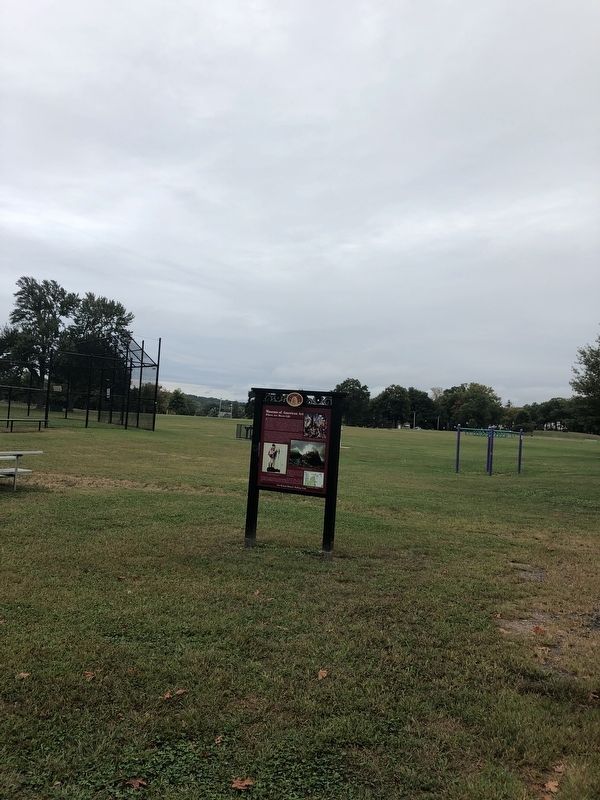
3. Museum of American Art / The Painter and the Park Maker Marker
Frederic Church and Frederick Law Olmsted undoubtedly knew each other, as they had many professional and personal connections. Both were born in Hartford and Church served as a Parks Commissioner in New York City during the contraction of Central Park, which Olmsted designed. The men also worked together to build support for the preservation of Niagara Falls. As Church had influenced Olmsted, Olmsted in turn influenced Church as designed and created the landscape of his estate, Olana, in the Hudson River Valley.
Significant examples of Church's work and that of other Hudson River School painters hang in the nearby galleries of the New Britain Museum of American Art. Olmsted's work is before you.
Today the work of Frederic Church and Frederick Law Olmsted coexist in harmony. The Chase Family Building addition to the New Britain Museum of American Art was designed intentionally by Ann Beha Architects in 2000 to make it appear an extension of the park, providing visitors with sweeping
Daderot via Wikimedia Commons (Public Domain), June 27, 2013
4. Grace Judd Landers Mansion
In 1935, Landers bequeathed the mansion to house the art collection. The fledgling art museum opened in its new home on July 1, 1937.
[Captions (top to bottom)]
• John Singer Sargent, Frederick Law Olmsted, 1895, oil on canvas, 91 1/8 x 60 3/4 in. (Biltmore Estate, Asheville, North Carolina)
• Frederic Edwin Church, West Rock, New Haven, 1849, oil on canvas, 27 1/8 x 40 1/8 in. (New Britain Museum of American Art)
• Asher Brown Durand, Sunday Morning, 1860, oil on canvas, 28 1/8 x 42 1/8 in. (New Britain Museum of American Art) (Marker Number GR4.)
Topics. This historical marker is listed in these topic lists: Architecture • Arts, Letters, Music • Education • Parks & Recreational Areas. A significant historical date for this entry is July 1, 1937.
Location. 41° 39.811′ N, 72° 47.521′ W. Marker is in New Britain in Capitol Region, Connecticut. It is at the intersection of Walnut Hill Park D Road and Lexington Street, on the left when traveling south on Walnut Hill Park D Road. Marker is in Walnut Hill Park. Touch for map. Marker is in this post office area: New Britain CT 06052, United States of America. Touch for directions.

Regionally, this marker is in the Connecticut River Valley, in Greater Hartford, and

T. Johnson engraving of J. Notman photograph; via Library of Congress Prints & Photographs Div. (Public Domain), 1893
5. Frederick Law Olmsted (1822-1903)
He is considered to be the father of landscape architecture in the United States.
Other nearby markers. At least 8 other markers are within walking distance of this marker: Hard Hittin' Heros (about 400 feet away, measured in a direct line); Hamilton's Flight / Urban Escapes (about 400 feet away); Charles K. Hamilton (about 400 feet away); Frederick "Doc" Mirliani (about 600 feet away); Ye Old State House Step (about 700 feet away); City of New Britain Sesquicentennial Anniversary (about 700 feet away); 100 Birthday of Freedom Tree (about 700 feet away); History of the Hospital / The Rose Garden (approx. 0.2 miles away). Touch for a list and map of all markers in New Britain.
Also see . . . New Britain Museum of American Art. The museum's homepage. (Submitted on November 2, 2024, by Duane and Tracy Marsteller of Murfreesboro, Tennessee.)
Napoleon Sarony; via National Portrait Gallery, Smithsonian Institution (Public Domain), circa 1868
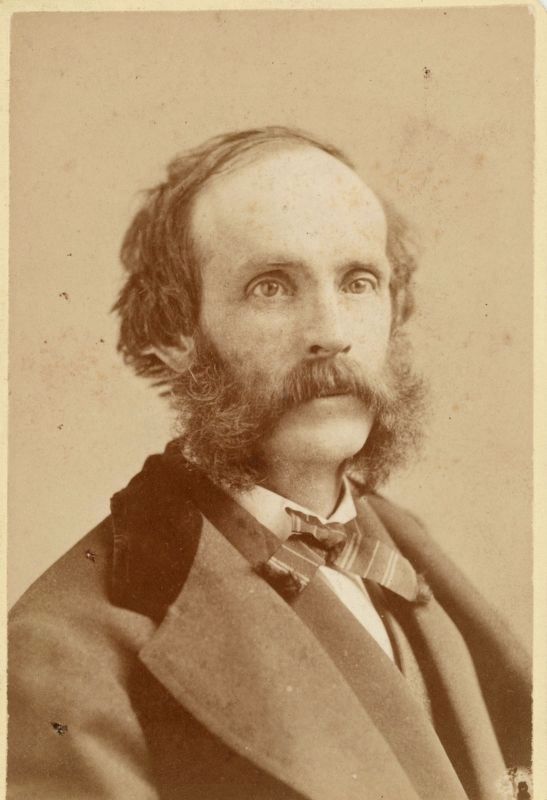
6. Frederic Edwin Church (1826-1900)
He is best known for painting large landscapes, often depicting mountains, waterfalls, and sunsets, that emphasized realistic detail, dramatic light, and panoramic views.
Credits. This page was last revised on May 19, 2026. It was originally submitted on October 30, 2024, by Duane and Tracy Marsteller of Murfreesboro, Tennessee. This page has been viewed 221 times since then and 40 times this year. Photos: 1, 2, 3. submitted on October 30, 2024, by Duane and Tracy Marsteller of Murfreesboro, Tennessee. 4, 5, 6. submitted on November 2, 2024, by Duane and Tracy Marsteller of Murfreesboro, Tennessee.
Editor’s want-list for this marker. Clearer closeup photographs of the marker. • Can you help?
