Shanty Bay in Simcoe County, Ontario — Central Canada (North America)
War of 1812 Veteran
⎯⎯⎯
Vétéran de la guerre de 1812
Photographed by Cosmos Mariner, June 6, 2024
1. War of 1812 Veteran Marker

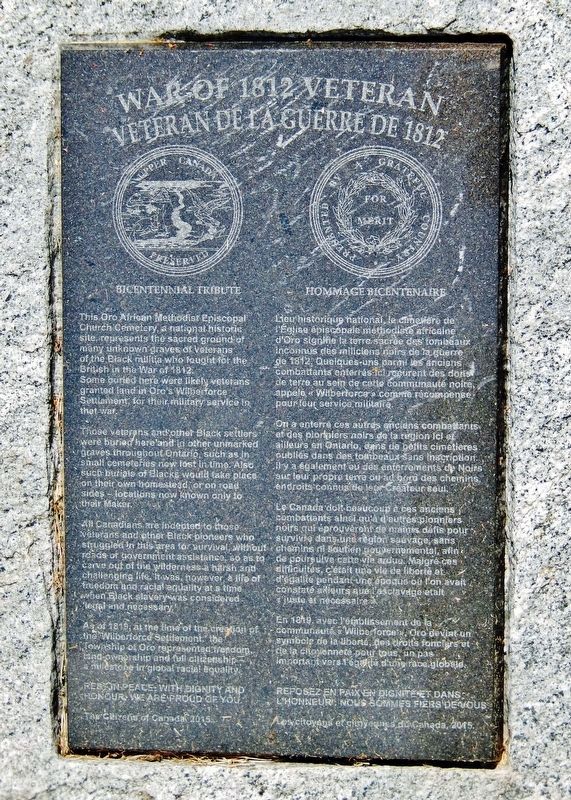
This Oro African Methodist Episcopal Church Cemetery, a national historic site, represents the sacred ground of many unknown graves of veterans of the Black militia who fought for the British in the War of 1812. Some buried here were likely veterans granted land in Oro’s Wilberforce Settlement for their military service in that war.
Those veterans and other Black settlers were buried here and in other unmarked graves throughout Ontario, such as in small cemeteries now lost in time. Also such burials of Blacks would take place on their own homestead, or on roadsides — locations now known only to their Maker.
All Canadians are indebted to those veterans and other Black pioneers who struggled in this area for survival without roads or government assistance, so as to carve out of the wilderness a harsh and challenging life. It was, however, a life of freedom and racial equality at a time when Black slavery was considered legal and necessary.
As of 1819, at the time of the creation of the Wilberforce Settlement, the Township of Oro represented freedom, land ownership and full citizenship
this page online
Rest in peace with dignity and honor. We are proud of you.
The Citizens of Canada 2015.
Lieu historique national, le cimetière de l’Église épiscopale méthodiste africaine d’Oro, signifie la terre sacré des tombeaux inconnus des miliciens noirs de la guerre de 1812. Quelques-uns parmi les anciens combattants enterrés ici reçurent des dons de terre au sein de cette communauté noire, appelé « Wilberforce » comme récompense pour leur service militaire.
On a enterré ces autres anciens combattants et des pionniers noirs de la région ici et ailleurs en Ontario, dans de petits cimetières oublies dans tombeaux sans inscription. Il y a également eu des enterrements de Noirs sur leur propre terre ou au bord des chemins endroits connus de leur Créateur seul.
Le Canada doit beaucoup á ces anciens combattants ainsi qu’á d’autres pionniers noirs qui éprouvèrent de malnos défis pour survivre dans une région sauvage, sans chemins ni soutien gouvernemental, afin de poursuive cette via ardue. Malgré ces difficultés, c’était une vie de liberté et d’égalité pendant une époque où l’on
Photographed by Cosmos Mariner, June 6, 2024
2. War of 1812 Veteran Marker
En 1819, avec l’établissement de la communauté appelé « Wilberforce », Oro devint un symbole de la liberté, des droits foncières et de la citoyenneté pour tous, un pas importante vers l'égalité a une race globale.
Repose en paix en dignité dans l’honneur. Nous sommes fiers devous.
Les citoyens et citoyennes du Canada 2015.
Topics. This historical marker is listed in these topic lists: African Americans • Cemeteries & Burial Sites • Settlements & Settlers • War of 1812. A significant historical year for this entry is 1819.
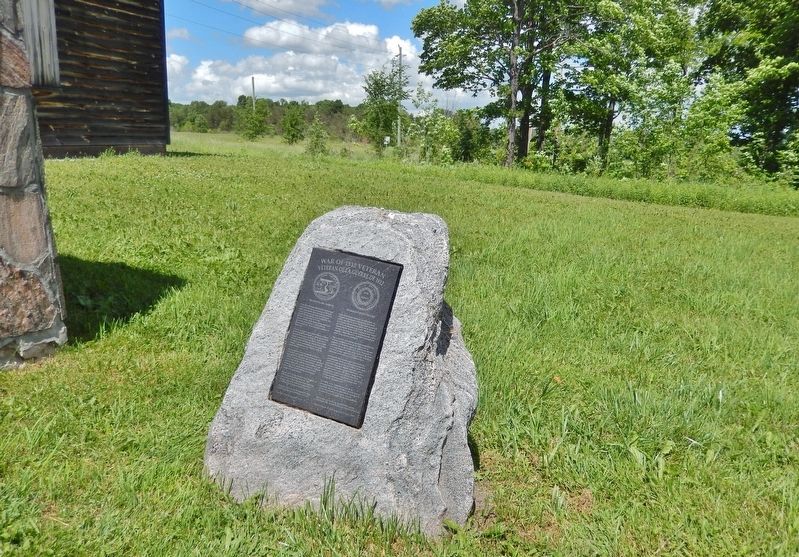
Location. 44° 30.157′ N, 79° 38.183′ W. Marker is in Shanty Bay, Ontario, in Simcoe County. It is at the intersection of Line 3 North and Old Barrie Road West (County Road 11), on the right when traveling north on Line 3 North. The marker is mounted on a waist-high boulder on the south side of African Methodist Episcopal Church. Touch for map. Marker is at or near this postal address: 1645 Line 3 North, Shanty Bay ON L0L 2L0, Canada. Touch for directions.

Regionally, this marker is in Central Ontario Cottage Country and specifically
Photographed by Cosmos Mariner, June 6, 2024
3. African Methodist Episcopal Church of Oro
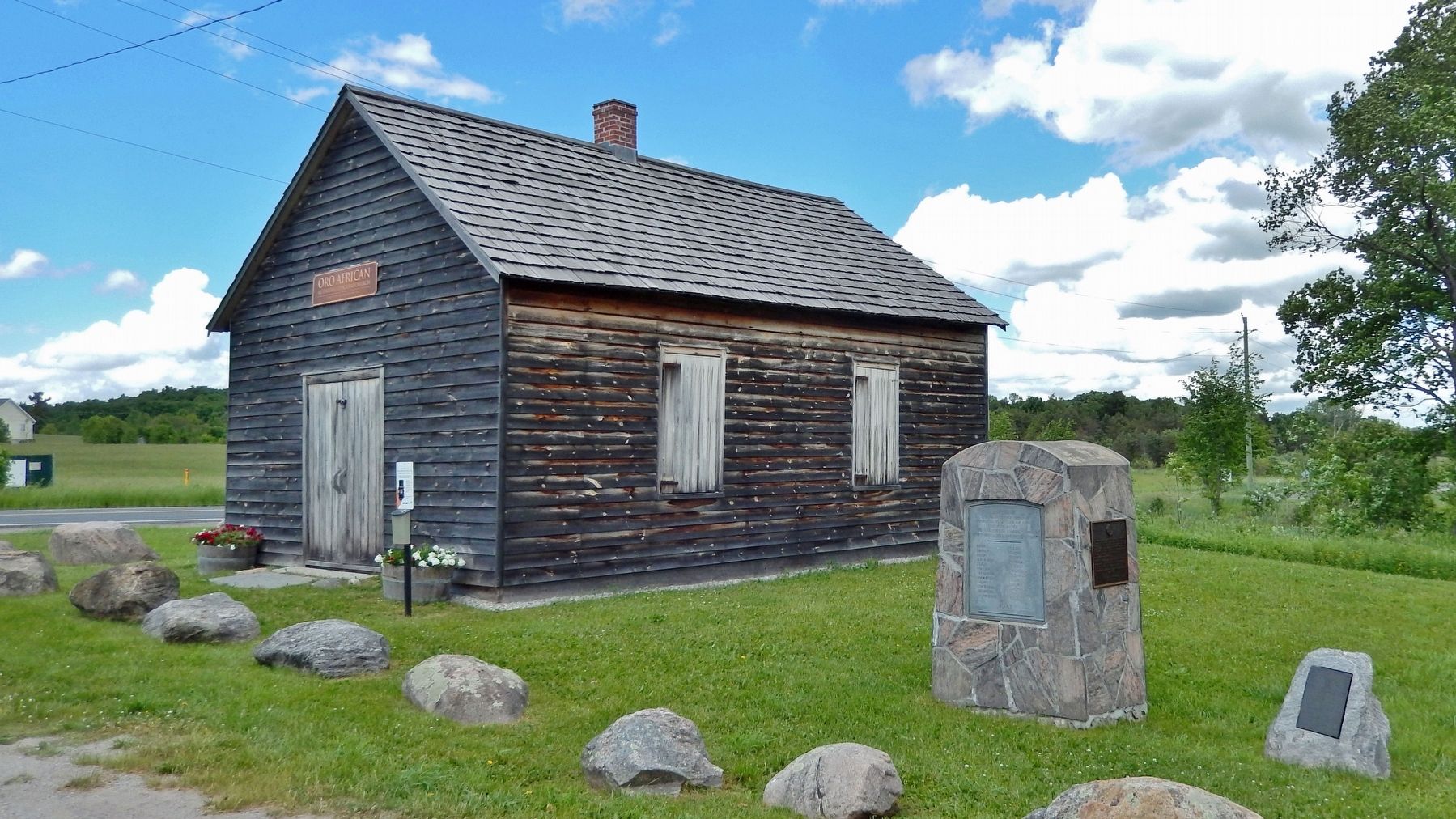
The marker is located on the south side of the church - in the far-right foreground of this photo.
Other nearby markers. At least 8 other markers are within 13 kilometers of this marker, measured as the crow flies: Black Pioneers Memorial (here, next to this marker); The African Methodist Episcopal Church of Oro / L'Église African Methodist Episcopal d'Oro (here, next to this marker); Between 1830 & 1850 some 24 Negro Families Settled in Oro (here, next to this marker); Hon. Ernest Charles Drury (approx. 7.1 kilometers away); St. Thomas' Church 1838 (approx. 11.1 kilometers away); Early Settlement (approx. 11.6 kilometers away); The Ice Industry (approx. 11.6 kilometers away); Black Settlement in Oro Township / La Colonie Noire du Canton d'Oro (approx. 11.6 kilometers away). Touch for a list and map of all markers in Shanty Bay.
Related markers. Click here for a list of markers that are related to this marker. The African Methodist Episcopal Church of Oro
Also see . . . The Black Settlement in Oro Township.
Excerpt: On April 26th, 1819, the Executive Council, two members of which had been slave-owners themselves, created a policy of settling Black Loyalist veterans and refugees on 100 acre lots in the second concession of Oro Township. On that date, four Orders in Council were passed granting land to Black settlers. Though it was not the largest Black settlement in Upper Canada, the Wilberforce Street settlement was the only one that resulted from government planning and encouragement. Between 1819 and 1826, about 23 Orders in Council were issued. The recipients of these grants were a disparate group, mostly labourers who had emigrated from the United States. Eleven of the men who settled along Wilberforce Street had served in the military during the War of 1812.(Submitted on November 3, 2024, by Cosmos Mariner of Cape Canaveral, Florida.)
Credits. This page was last revised on November 3, 2024. It was originally submitted on November 2, 2024, by Cosmos Mariner of Cape Canaveral, Florida. This page has been viewed 117 times since then and 11 times this year. Photos: 1, 2, 3. submitted on November 3, 2024, by Cosmos Mariner of Cape Canaveral, Florida.
