Wilmington in New Castle County, Delaware — The American Northeast (Mid-Atlantic)
R. Walker Barn
Photographed by Pete Skillman, November 5, 2024
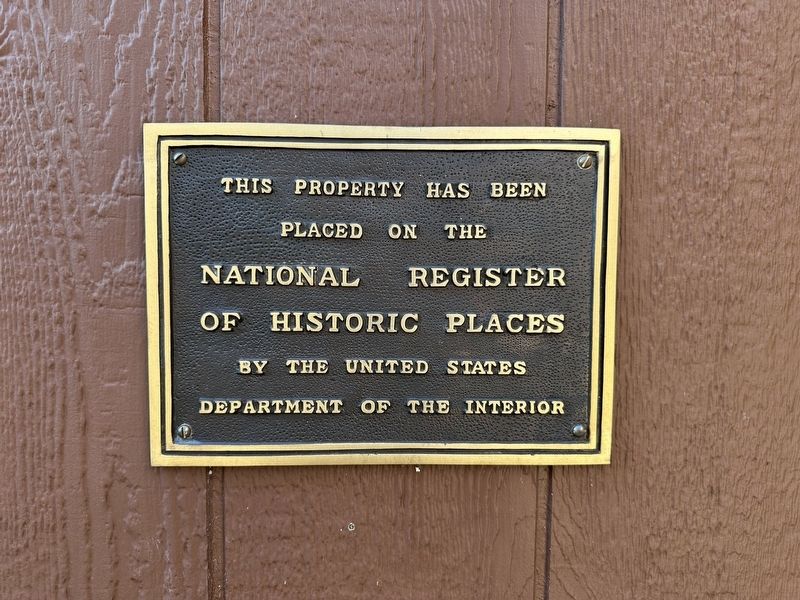
1. R. Walker Barn Marker
Placed on the
National Register
of Historic Places
by the United States
Department of the Interior
Topics and series. This historical marker is listed in these topic lists: Agriculture • Architecture. In addition, it is included in the National Register of Historic Places (NRHP) series list.
Location. 39° 44.256′ N, 75° 41.774′ W. Marker is in Wilmington, Delaware, in New Castle County. It can be reached from Hewn Lane. Touch for map. Marker is at or near this postal address: 3605 Hewn Ln, Wilmington DE 19808, United States of America. Touch for directions.

Regionally, this marker is in Greater Philadelphia. It is also in the American Mid-Atlantic, on the Delmarva Peninsula, and on the Eastern Seaboard. Globally, it is in the North Atlantic Region, North America, the Western Hemisphere, the Western World, and the Anglosphere. Historically, it finds itself in what was once New Netherland and also one of the original Thirteen Colonies.
Other nearby markers. At least 8 other markers are within 2 miles of this marker, measured
this page online
Also see . . . R. Walker Barn - National Register of Historic Places Nomination Form.
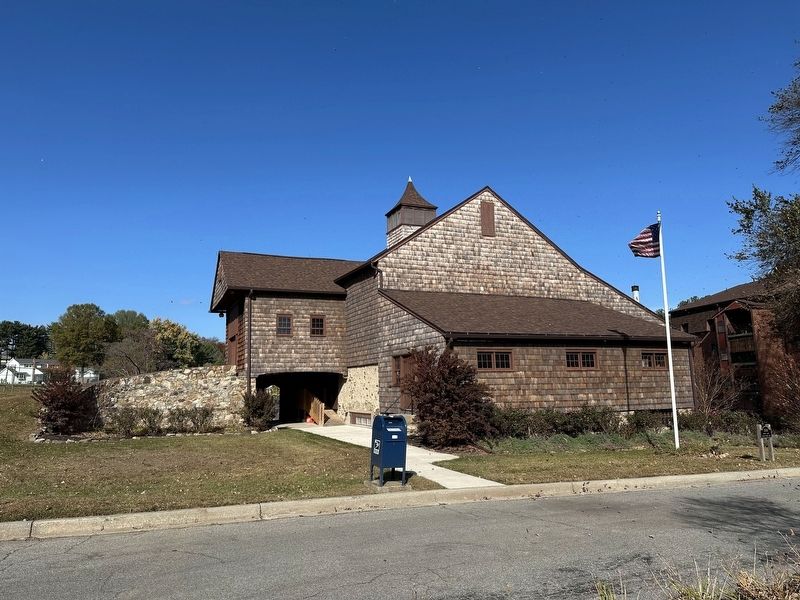
The significance of the R. Walker Barn is as an example of a transitional barn between the earlier varied barns and the regularized late barns. Transitional elements can be seen in the absence of the notched strut and in the changed use of the flared and notched post. With the placement of the plate over the girt it was possible for the bent to be raised as a unit; whereas the earlier barns were probably raised piece by piece.(Submitted on November 5, 2024, by Pete Skillman of Wilmington, Delaware.)
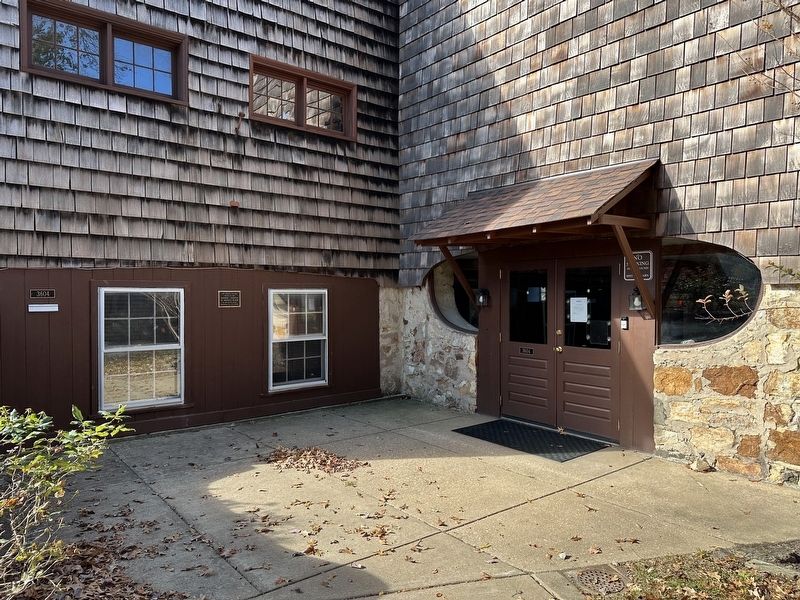
Also Important is the incorporation of the hay shed in the original structure as indicatedby the lack of evidence for exterior siding and the similar framing techniques in the hay shed, in particular, the use of the flared post. The double decker form and the additions stress the primary Importance of the barn as a multiple purpose building and focal point of the farm.Photographed by Pete Skillman, November 5, 20242. R. Walker Barn Marker - wide view
Photographed by Pete Skillman, November 5, 2024
3. R. Walker Barn
Credits. This page was last revised on June 29, 2025. It was originally submitted on November 5, 2024, by Pete Skillman of Wilmington, Delaware. This page has been viewed 210 times since then and 27 times this year. Photos: 1, 2, 3. submitted on November 5, 2024, by Pete Skillman of Wilmington, Delaware.
