Gunnison in Sanpete County, Utah — The American Mountains (Southwest)
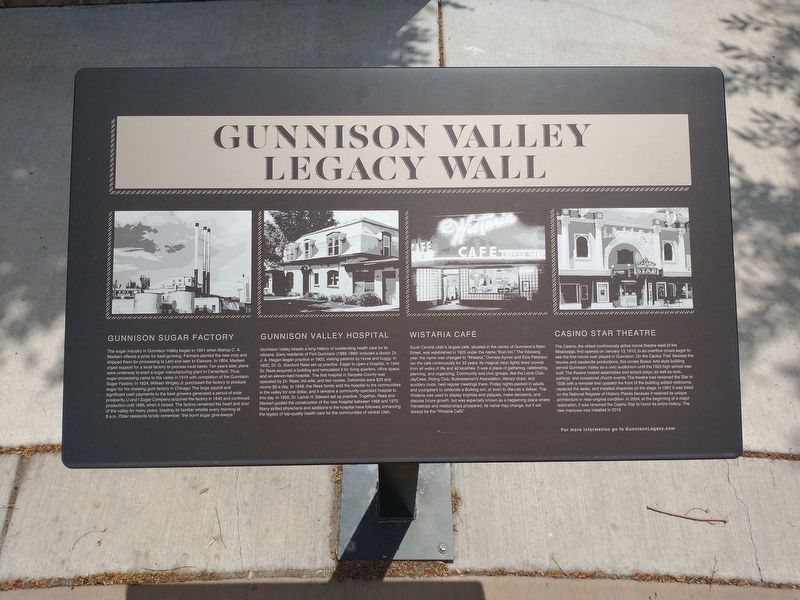
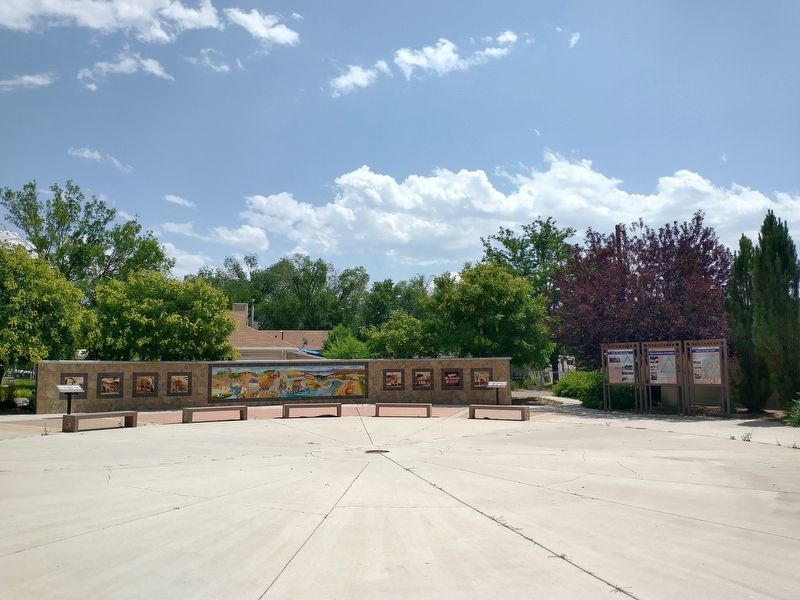
Gunnison Valley Legacy Wall
Photographed by Tom Bosse, July 27, 2024
1. Gunnison Valley Legacy Wall Marker
Gunnison Sugar Factory
The sugar industry in Gunnison Valley began in 1901 when Bishop C.A. Madsen offered a prize for beet-growing. Farmers planted the new crop and shipped them for processing to Lehi and later to Elsinore. In 1904, Madsen urged support for a local factory to process local beets. Ten years later, plans were underway to erect a sugar manufacturing plant in Centerfield. Thus, sugar-processing came to the valley in 1919 with completion of the Gunnison Sugar Factory. In 1924, William Wrigley Jr. purchased the factory to produce sugar for his chewing gum factory in Chicago. The large payroll and significant cash payments to the beet growers generated a period of wide prosperity. U and I Sugar Company acquired the factory in 1940 and continued production until 1966, when it closed. The factory remained the heart and soul of the valley for many years, blasting its familiar whistle every morning at 8 a.m. Older residents fondly remember “the burnt sugar give-aways”.
Gunnison Valley Hospital
Gunnison Valley boasts a long history of outstanding health care for its citizens. Early residents of Fort Gunnison
this page online
Wistaria Café
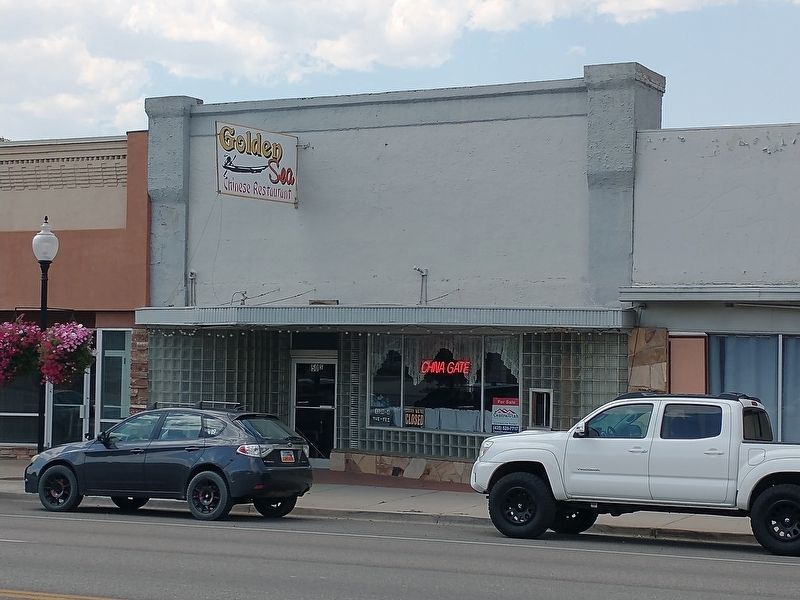
South Central Utah’s largest café, situated in the center of Gunnison’s Main Street, was established in 1925 under the name, “Kozi Inn”. The following year, the name was changed to “Wistaria”. Owners Aymer and Elva Peterson ran the café continuously for 33 years.
Photographed by Tom Bosse, July 27, 2024
2. Gunnison Valley Legacy Wall Marker
Casino Star Theatre
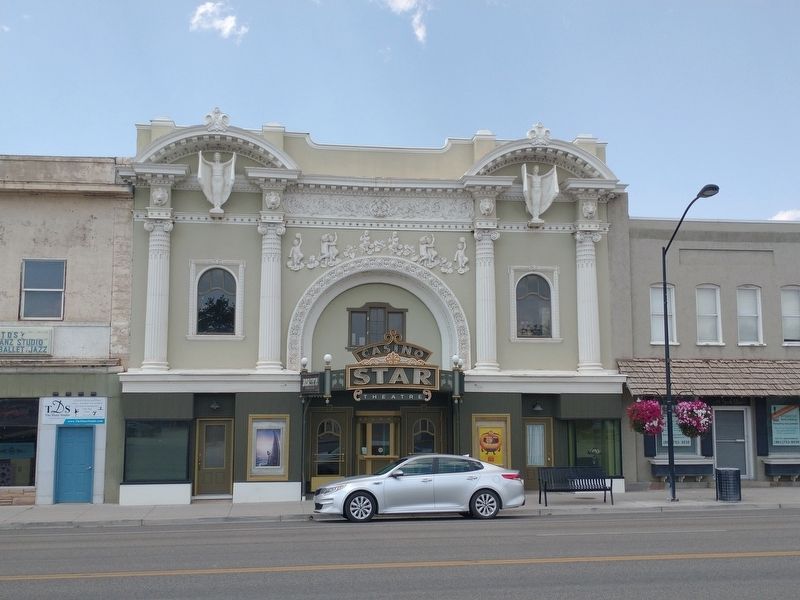
The Casino, the oldest continuously active movie theatre west of the Mississippi, first opened on January 13, 1913, to an overflow crowd eager to see the first movie ever played in Gunnison: On the Cactus Trail. Besides the movies and vaudeville productions, this ornate Beaux Arts-style building served Gunnison Valley as a civic auditorium until the 1925 high school was built. The theatre hosted assemblies and school plays, as well as civic, political,
Photographed by Tom Bosse, July 27, 2024
3. Casino Star Theatre
For more information go to GunnisonLegacy.com
Topics. This historical marker is listed in these topic lists: Arts, Letters, Music • Industry & Commerce • Science & Medicine. A significant historical date for this entry is January 13, 1913.
Location. 39° 9.288′ N, 111° 49.076′ W. Marker is in Gunnison, Utah, in Sanpete County. It is at the intersection of South Main Street and East Center Street, on the right when traveling north on South Main Street. Touch for map. Marker is in this post office area: Gunnison UT 84634, United States of America. Touch for directions.

Regionally, this marker is in the Central Utah Valleys. It is also in the American Mountain
Photographed by Tom Bosse, July 27, 2024
4. Wistaria Cafe
Other nearby markers. At least 8 other markers are within 3 miles of this marker, measured as the crow flies: The Colonists of Clarion (here, next to this marker); “Back to the Soil” (here, next to this marker); Life on the Land (here, next to this marker); a different marker also named Gunnison Valley Legacy Wall (a few steps from this marker); Casino / Star Theatre (about 300 feet away, measured in a direct line); Gunnison (approx. 0.3 miles away); First Public Buildings (approx. 2.3 miles away); Centerfield (approx. 2.3 miles away). Touch for a list and map of all markers in Gunnison.
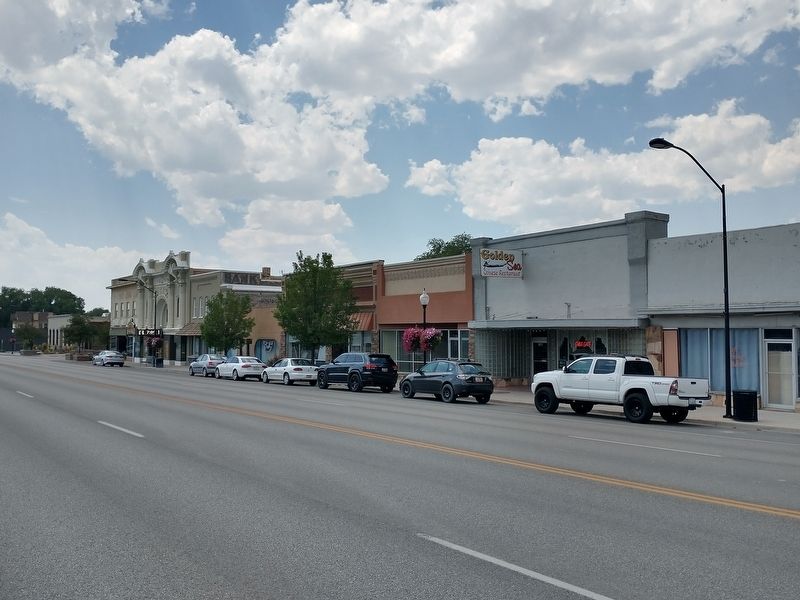
Photographed by Tom Bosse, July 27, 2024
5. Downtown Gunnison - Casino Star Theatre & Wistaria Cafe
Credits. This page was last revised on November 19, 2024. It was originally submitted on November 12, 2024, by Tom Bosse of Jefferson City, Tennessee. This page has been viewed 382 times since then and 68 times this year. Photos: 1, 2, 3, 4, 5. submitted on November 12, 2024, by Tom Bosse of Jefferson City, Tennessee. • Andrew Ruppenstein was the editor who published this page.
