Peterborough in Peterborough County, Ontario — Central Canada (North America)
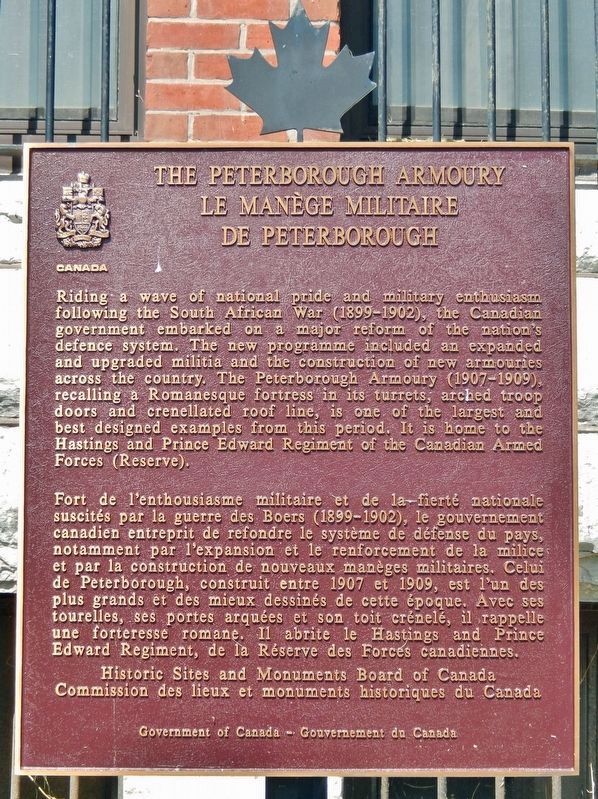
The Peterborough Armoury
⎯⎯⎯
Le manège militaire de Peterborough
Photographed by Cosmos Mariner, June 1, 2024
1. The Peterborough Armoury / Le manège militaire de Peterborough Marker

this page online
Erected by Historic Sites and Monuments Board of Canada/Commission des lieux et monuments historiques du Canada.
Topics and series. This historical marker is listed in these topic lists: Architecture • Patriots & Patriotism • Wars, Non-US. In addition, it is included in the Canada, Historic Sites and Monuments Board series list. A significant historical year for this entry is 1909.
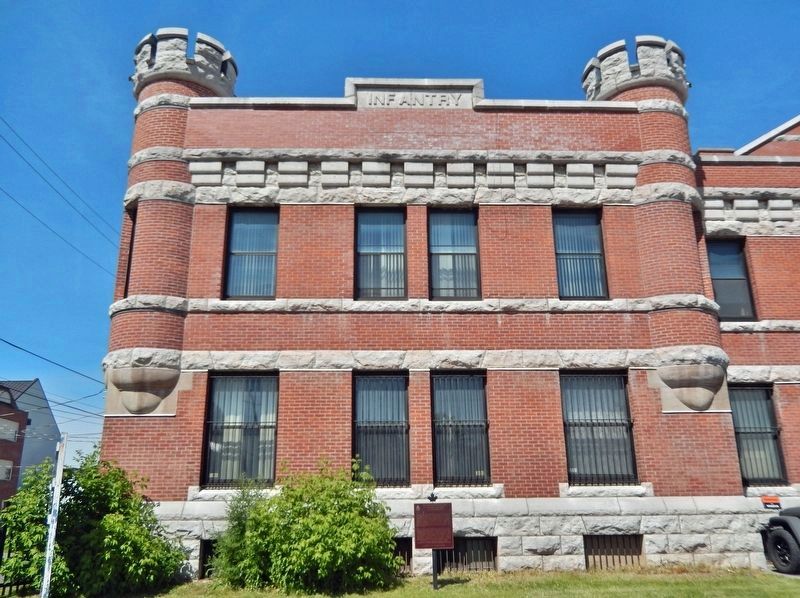
Location. 44° 18.509′ N, 78° 19.318′ W. Marker is in Peterborough, Ontario, in Peterborough County. It is on Murray Street just east of George Street North, on the right when traveling east. The marker is located directly in front of the Peterborough Armoury National Historic Site, near the southeast corner of the armoury, (the infantry wing), facing east. Touch for map. Marker is at or near this postal address: 220 Murray Street, Peterborough ON K9H 2S8, Canada. Touch for directions.

Regionally, this marker is in the Kawarthas Northumberland Area and in Eastern Ontario. It is also in Central Canada. Globally, it is in North America, the Western Hemisphere, the Western
Photographed by Cosmos Mariner, June 1, 2024
2. The Peterborough Armoury / Le manège militaire de Peterborough Marker
The marker is located near the southeast corner of the building, below the first-story windows, in front of the original infantry wing.
Other nearby markers. At least 8 other markers are within walking distance of this marker: Military (within shouting distance of this marker); Agricultural Fair (about 120 meters away, measured in a direct line); Civic Park (about 120 meters away); The Citizens' War Memorial (about 120 meters away); Capt. Edward T. Brown (about 120 meters away); The Brock Street Burial (about 150 meters away); Pioneer Burial Ground (about 150 meters away); The Robinson Settlement (approx. 0.2 kilometers away). Touch for a list and map of all markers in Peterborough.
Regarding The Peterborough Armoury / Le manège militaire de Peterborough. Canadian Register of Historic Places; formally recognized: 1989/06/22.
Related markers. Click here for a list of markers that are related to this marker.
Also see . . .
1. Peterborough Drill Hall / Armoury National Historic Site of Canada.
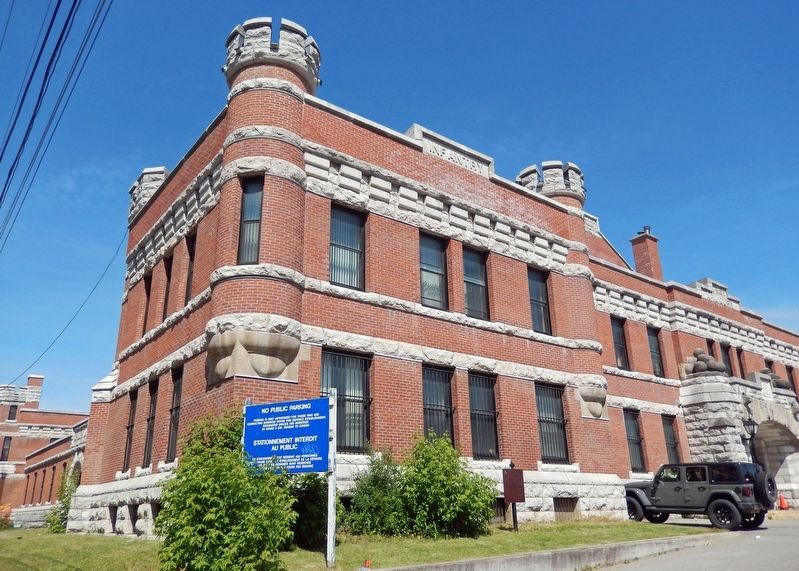
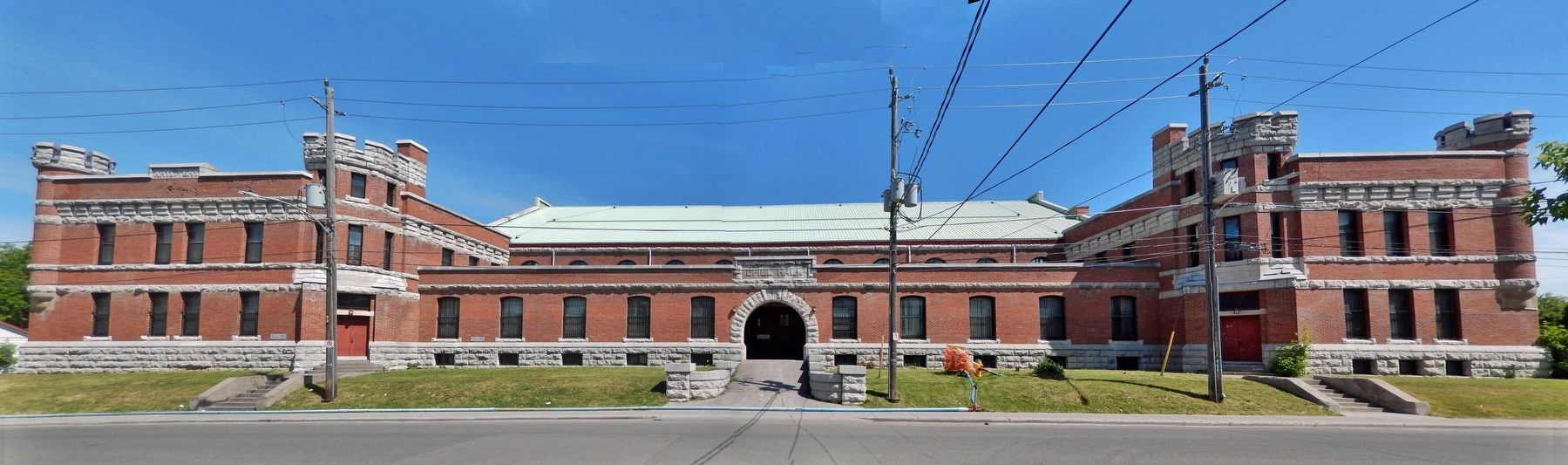
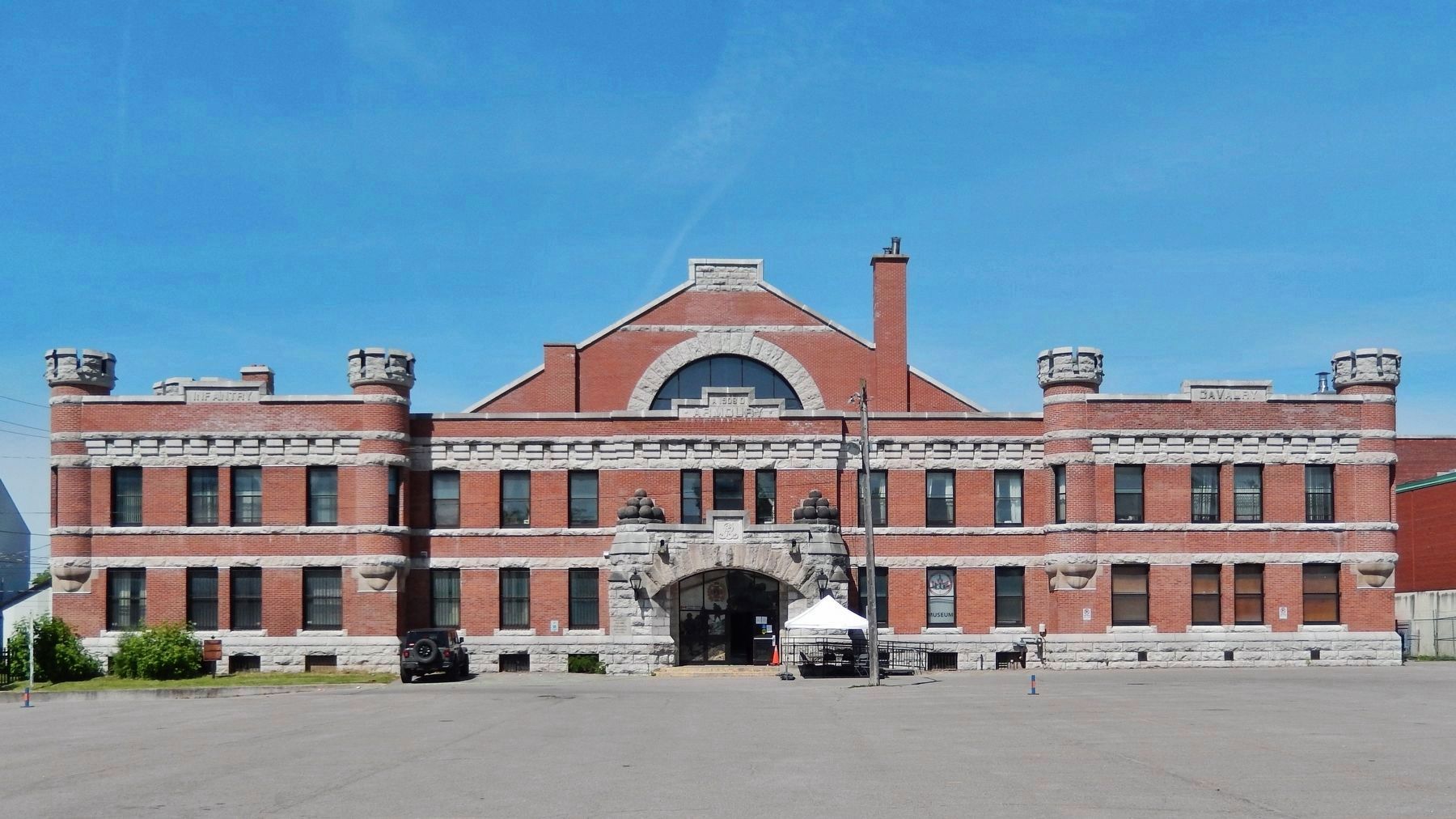
Excerpt: Prominently located in downtown Peterborough across(Submitted on November 12, 2024, by Cosmos Mariner of Cape Canaveral, Florida.)from Confederation Park, the Peterborough Drill Hall/Armoury is constructed in a robust Romanesque Revival style. The exterior’s red brick contrasts with the rough-faced stone foundation and stone accents. Its handsome proportions, detailing and military motifs are evocative a medieval fortress. The large, gable-roofed drill hall featuring a high, arched window, balances the horizontal emphasis of the principal façade. The main entrance has a monumental quality, its troop door being under a heavy arch set with cannonball trophies. Official recognition refers to the building on its legal lot.Photographed by Cosmos Mariner, June 1, 20243. The Peterborough Armoury (southeast elevation)Thomas Fuller, Chief Architect of the Federal Department of Public Works, designed Peterborough Drill Hall/Armoury as one of the large, Class B drill halls. It constitutes one of the largest and best-designed examples from this period, measuring 24 metres by 51 metres and includes spaces standard to drill halls by 1909, including armouries, stores, administrative offices, and sanitary services.
2. Peterborough Drill Hall / Armoury National Historic Site of Canada.
Photographed by Cosmos Mariner, June 1, 2024
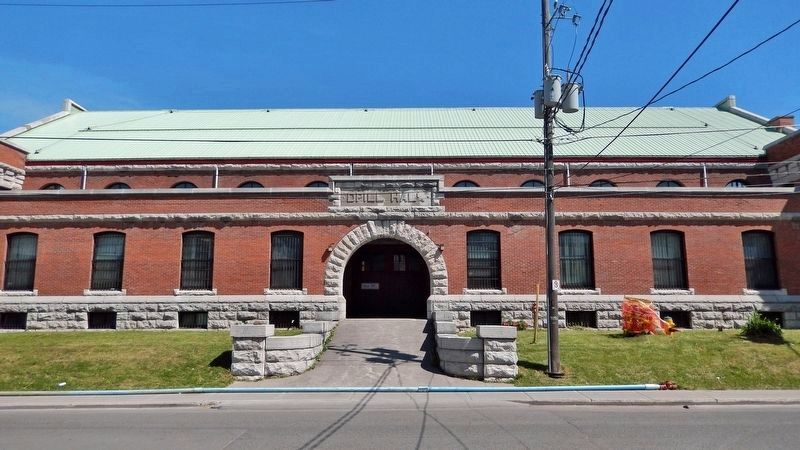
4. The Peterborough Armoury Drill Hall (south elevation)
Excerpt: The key elements that contribute to the heritage character of this site include:(Submitted on November 12, 2024, by Cosmos Mariner of Cape Canaveral, Florida.)- the prominent location in downtown Peterborough;
- the large scale, massing and distinctive profile, including the front and rear double-storied façades flanked by crenellated corner towers;
- the structure’s large-roofed drill hall with its large, arched window;
- the principal façade that incorporates an arched troop door in rough-faced stone with cannonball ornamentation;
- the distinctive masonry pattern, including rough-faced stone foundation and red brick walls with decorative stone detailing, including coping, crenellation and stringcourses;
- the large, unobstructed volume of the drill hall interior spanned by the exposed metal Fink trusses that support a gable roof on wooden purlins, which are in turn, strengthened by herringbone struts;
- decorative interior such as stairways with handsome newel posts and balustrades, and paneled doors.
Photographed by Cosmos Mariner, June 1, 2024
5. The Peterborough Armoury (south elevation)
Photographed by Cosmos Mariner, June 1, 2024
6. The Peterborough Armoury (east/front elevation)
The marker is visible near the left/south corner, below the first-story windows.
Credits. This page was last revised on March 27, 2025. It was originally submitted on November 12, 2024, by Cosmos Mariner of Cape Canaveral, Florida. This page has been viewed 265 times since then and 24 times this year. Photos: 1, 2, 3, 4, 5, 6. submitted on November 12, 2024, by Cosmos Mariner of Cape Canaveral, Florida.
