Plantage in Amsterdam, North Holland, Netherlands — Northwestern Europe
Toegangspoort
⎯⎯⎯
Entrance Gate
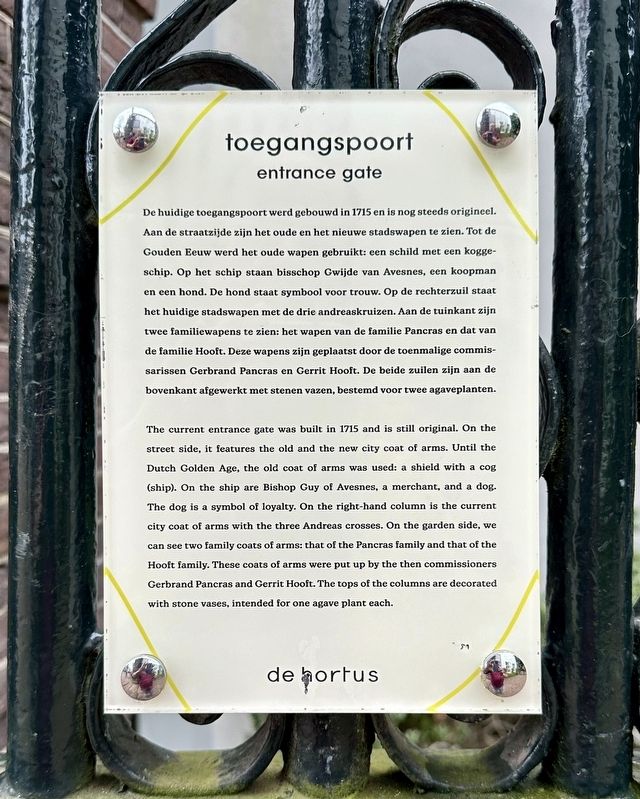
Photographed by Andrew Ruppenstein, October 29, 2024
1. Toegangspoort / Entrance Gate Marker

this page online
Erected by de hortus.
Topics. This historical marker is listed in this topic list: Man-Made Features. A significant historical year for this entry is 1715.
Location. 52° 22.018′ N, 4° 54.455′ E. Marker is in Amsterdam, Noord-Holland (North Holland). It is in Plantage. It is on Plantage Middenlaan, on the left when traveling west. Touch for map. Marker is at or near this postal address: Plantage Middenlaan 2a, Amsterdam, Noord-Holland 1018 TZ, Netherlands. Touch for directions.

Regionally, it is in Europe, the European Union, Atlantic Europe, the Benelux Low Countries, the Schengen Area, Western Europe, and the Western World. Historically, it finds itself in what was once the Holy Roman Empire.
Other nearby markers. At least 8 other markers are within walking distance of this marker: De Hortus (within shouting distance
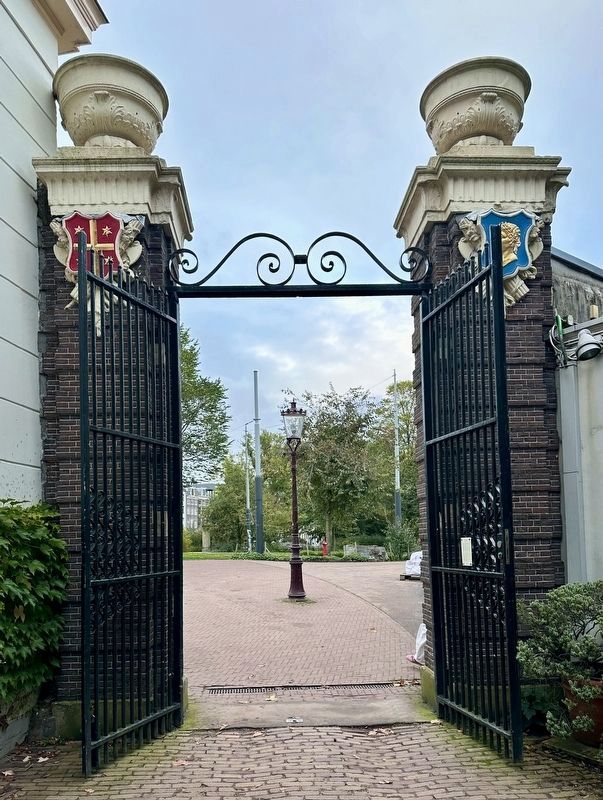
Photographed by Andrew Ruppenstein, October 29, 2024
2. Toegangspoort / Entrance Gate - interior side of gate
The marker is visible here attached to the gate.
Also see . . . Hortus Botanicus (Amsterdam) (Wikipedia). Overview:
Hortus Botanicus is a botanical garden in the Plantage district of Amsterdam, the Netherlands. It is one of the world's oldest botanical gardens.(Submitted on November 21, 2024.)
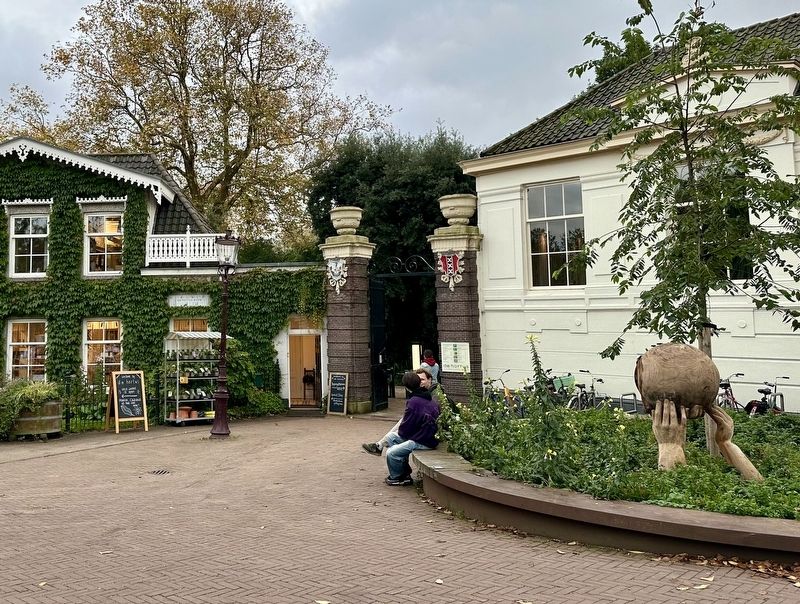
Photographed by Andrew Ruppenstein, October 29, 2024
3. Toegangspoort / Entrance Gate - exterior side, looking in to De Hortus (the botanical garden)
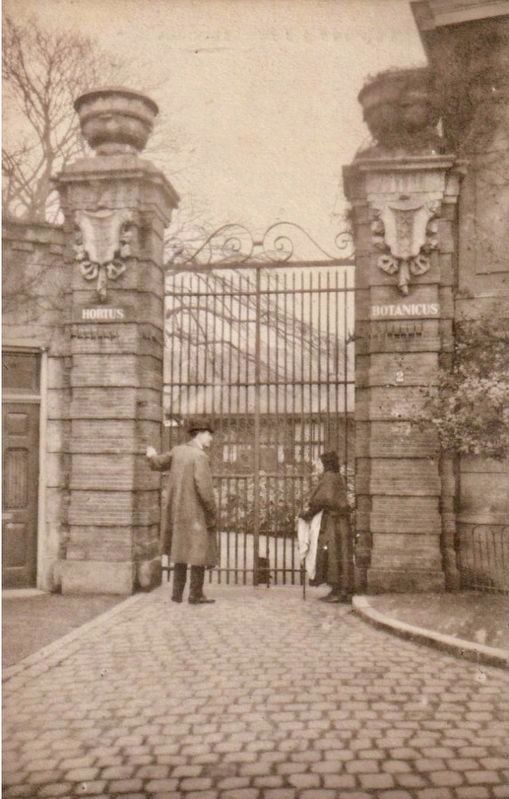
Photographed by N.V. A.J. Nuss, Amsterdam, circa 1900
4. Entrance Gate - exterior side
Credits. This page was last revised on November 21, 2024. It was originally submitted on November 21, 2024, by Andrew Ruppenstein of Lamorinda, California. This page has been viewed 118 times since then and 16 times this year. Photos: 1, 2, 3, 4. submitted on November 21, 2024, by Andrew Ruppenstein of Lamorinda, California.
