Farragut in Knox County, Tennessee — The American South (East South Central)
David Glasgow Farragut
1801-1870
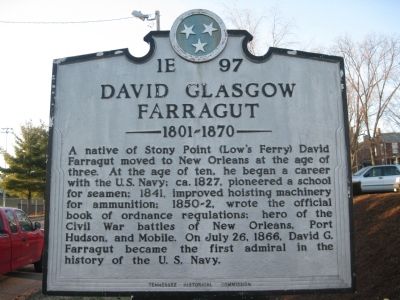
Photographed by Tom Bosse, March 6, 2010
1. David Glasgow Farragut Marker
Erected by Tennessee Historical Commission. (Marker Number 1E 97.)
Topics and series. This historical marker is listed in these topic lists: Heroes • Military • War, US Civil. In addition, it is included in the Tennessee Historical Commission series list. A significant historical date for this entry is July 26, 1866.
Location. 35° 53.013′ N, 84° 9.357′ W. Marker is in Farragut, Tennessee, in Knox County. It is at the intersection of Kingston Pike (U.S. 11) and Lendon Welch Way, on the right when traveling west on Kingston Pike. Touch for map. Marker is in this post office area: Farragut TN 37934, United States of America. Touch for directions.

Regionally, this
this page online
Other nearby markers. At least 8 other markers are within walking distance of this marker: Battle of Campbell's Station (a few steps from this marker); Loveville (a few steps from this marker); Archibald Roane (approx. 0.2 miles away); After the Civil War (approx. 0.3 miles away); During the Civil War (approx. 0.3 miles away); David Campbell builds a station (approx. 0.3 miles away); Settlement of the Frontier (approx. 0.3 miles away); USS Independence Gun (approx. 0.4 miles away). Touch for a list and map of all markers in Farragut.
Another marker is no longer nearby. Campbell Station (was approx. 0.4 miles away but has been confirmed missing).
Related markers.
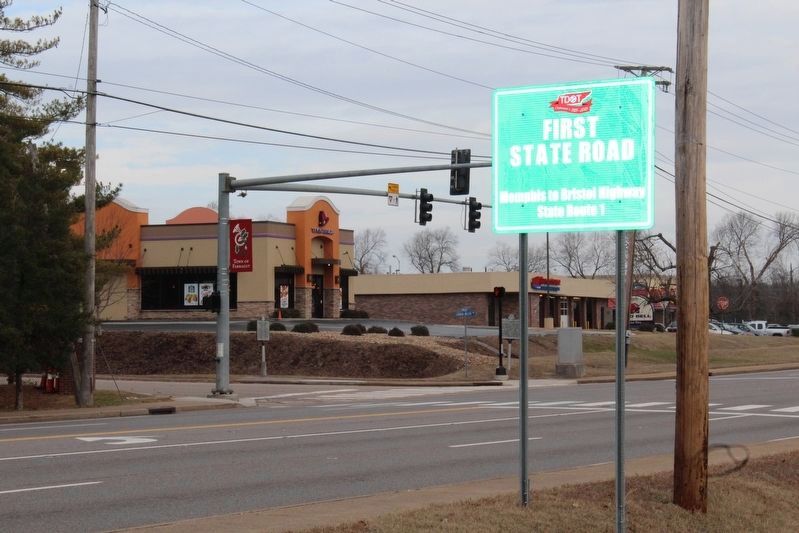
Photographed by Tom Bosse, December 26, 2016
2. David Glasgow Farragut Marker
Marker is on the left.
Additional commentary.
1. Exact location of Farragut's birthplace
Stoney Point is located on Northshore Drive about 7 miles from the Farragut historic marker. (Historic Lowe's Ferry is at Longitude 35.8517473 Latitude -84.0824110 on USGS Geographic Names Information System). Because of recent rezoning, a 110-year-old monument that was put on the birth site has recently been made public. This monument was dedicated by the Daughters of the American Revolution and Admiral George Dewey in 1900. The birth site has been placed on Knox County's Fragile 15 list of endangered historic sites (See link above) as well as on the Tennessee Preservation Trust’s 2010 “Ten in Tennessee” endangered list. Note To Editor only visible by Contributor and editor
— Submitted June 22, 2010, by Margot Kline of Knoxville, Tennessee.
November 29, 2015
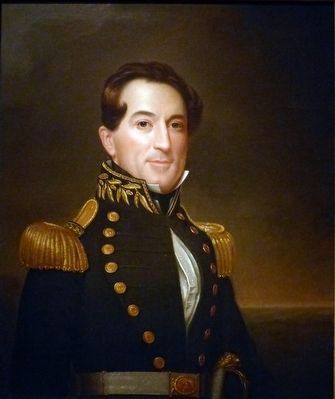
3. David Glasgow Farragut
This 1838 portrait of David Glasgow Farragut hangs in the National Portrait Gallery in Washington, DC.
“President Abraham Lincoln considered the appointment of David Glasgow Farragut as commander of the West Gulf Blockading Squadron the best one he made during the Civil War. Sailing in the flagship USS Hartford on April 24, 1862, Farragut led his fleet of seventeen vessels in a successful run by the Confederate defenses, engaged and defeated the enemy flotilla, and captured New Orleans. Rear Admiral Farragut spent the next two years blockading the Gulf Coast and maintaining Union control over the lower Mississippi before preparing for the capture of the Mobile Bay defenses in August 1864. By month's end, Farragut's fleet had forced the Confederate surrender. This, the major victory of Farragut's naval career, earned him the rank of vice admiral. Two years later, in declining health, he was commissioned admiral.
This portrait was painted early in Farragut's naval career, when he was a lieutenant. ” — National Portrait Gallery
“President Abraham Lincoln considered the appointment of David Glasgow Farragut as commander of the West Gulf Blockading Squadron the best one he made during the Civil War. Sailing in the flagship USS Hartford on April 24, 1862, Farragut led his fleet of seventeen vessels in a successful run by the Confederate defenses, engaged and defeated the enemy flotilla, and captured New Orleans. Rear Admiral Farragut spent the next two years blockading the Gulf Coast and maintaining Union control over the lower Mississippi before preparing for the capture of the Mobile Bay defenses in August 1864. By month's end, Farragut's fleet had forced the Confederate surrender. This, the major victory of Farragut's naval career, earned him the rank of vice admiral. Two years later, in declining health, he was commissioned admiral.
This portrait was painted early in Farragut's naval career, when he was a lieutenant. ” — National Portrait Gallery
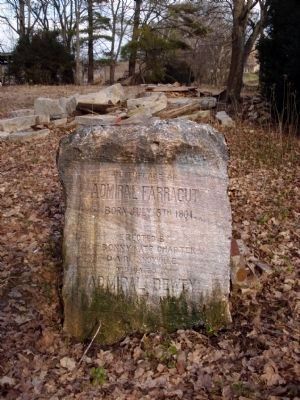
Photographed by Margot Kline, February 3, 2010
4. David Glasgow Farragut Birth Marker
Admiral Farragut
Born July 5th 1801
Erected by
Bonny Kate Chapter
D. A. R. Knoxville
Dedicated by
Admiral Dewey
May 15th 1900
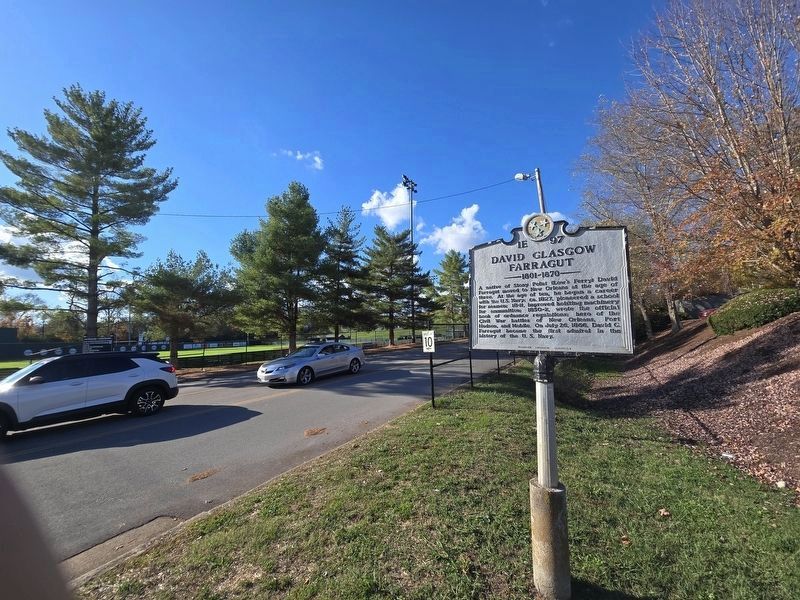
Photographed by Mark Parker, November 11, 2024
5. David Glasgow Farragut Marker across from Farragut High athletic fields
Credits. This page was last revised on November 27, 2024. It was originally submitted on March 11, 2010, by Tom Bosse of Jefferson City, Tennessee. This page has been viewed 2,250 times since then and 46 times this year. Last updated on November 22, 2024, by Mark Parker of Hickory, North Carolina. Photos: 1. submitted on March 11, 2010, by Tom Bosse of Jefferson City, Tennessee. 2. submitted on March 5, 2017, by Tom Bosse of Jefferson City, Tennessee. 3. submitted on December 1, 2015, by Allen C. Browne of Silver Spring, Maryland. 4. submitted on June 22, 2010, by Margot Kline of Knoxville, Tennessee. 5. submitted on November 22, 2024, by Mark Parker of Hickory, North Carolina. • Bernard Fisher was the editor who published this page.
