Oakville in Halton Region, Ontario — Central Canada (North America)
Oakville’s First Peoples
(9000 BC to AD 1847)
Photographed by Tim Boyd
1. Oakville’s First Peoples Marker
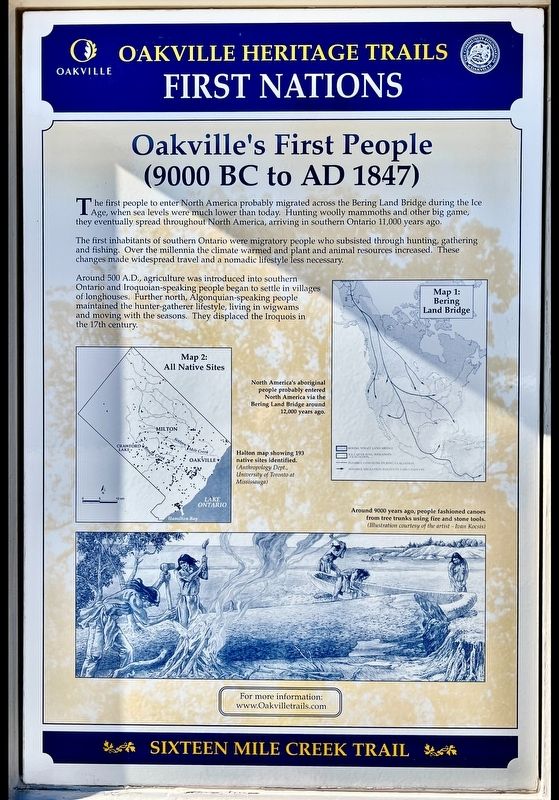
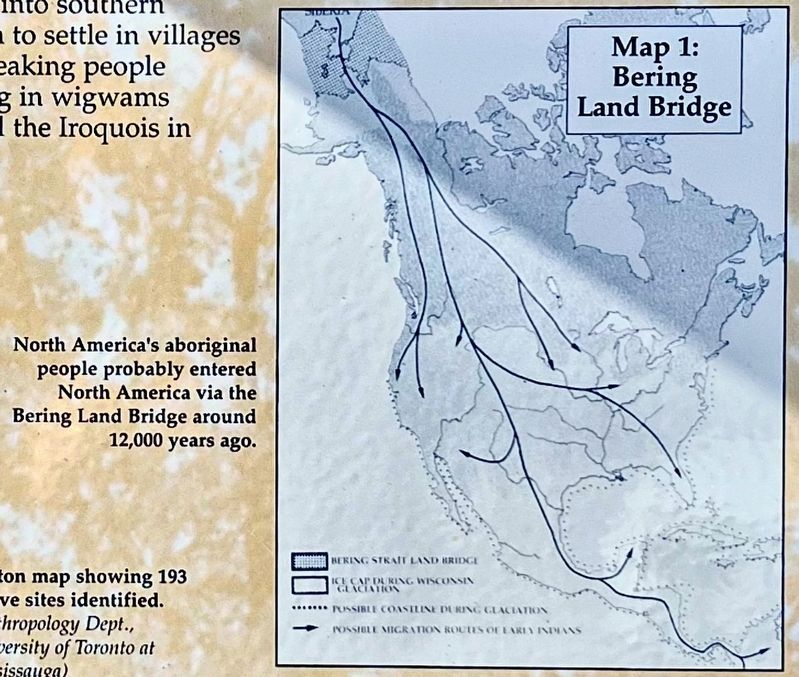
The first people to enter North America probably migrated across the Bering Land Bridge during the Ice Age, when sea levels were much lower than today. Hunting woolly mammoths and other big game, they eventually spread throughout North America, arriving in southern Ontario 11,000 years ago.
The first inhabitants of southern Ontario were migratory people who subsisted through hunting, gathering and fishing. Over the millennia the climate warmed and plant and animal resources increased. These changes made widespread travel and a nomadic lifestyle less necessary.
Around 500 A.D., agriculture was introduced into southern Ontario and Iroquoian-speaking people began to settle in villages of longhouses. Further north, Algonquian-speaking people maintained the hunter-gatherer lifestyle, living in wigwams and moving with the seasons. They displaced the Iroquois in the 17th century.
Erected by Town of Oakville.
Topics. This historical marker is listed in this topic list: Indigenous Peoples and Communities.
Location. 43° 26.762′ N, 79° 40.244′ W. Marker is in Oakville,
this page online

Regionally, this marker is in Greater Toronto, specifically on the Golden Horseshoe, in the Hamilton-Halton-Brant Area, and specifically in the Toronto Metropolitan Area. It is also in Central Canada. Globally, it is in North America, on the Great Lakes, in the Western Hemisphere, in the Western World, and in the Anglosphere. Historically, it finds itself in what was once a British colony, the Viceroyalty of New France, the Haudenosaunee (Iroquois) Confederacy, and Rupert’s Land.
Other nearby markers. At least 8 other markers are within walking distance of this marker: The First Horticultural People (AD 500 to 1610) (here, next to this marker); Hunter-Gatherer and Fisher People (9,000 BC to AD 500) (here, next to this marker); The Treaty Period (1801-1847) (here, next to this marker); The Mississauga People (here, next to this marker); Early Contact Period (1610-1700) (a
Photographed by Tim Boyd, February 20, 2024
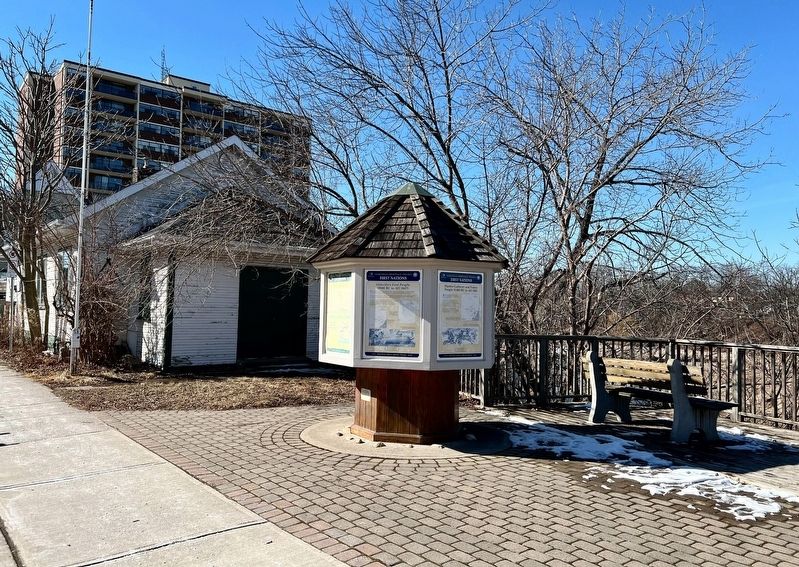
2. Oakville’s First Peoples Marker
3. Oakville’s First Peoples marker detail
The Bering Land Bridge
4. Oakville’s First Peoples marker detail
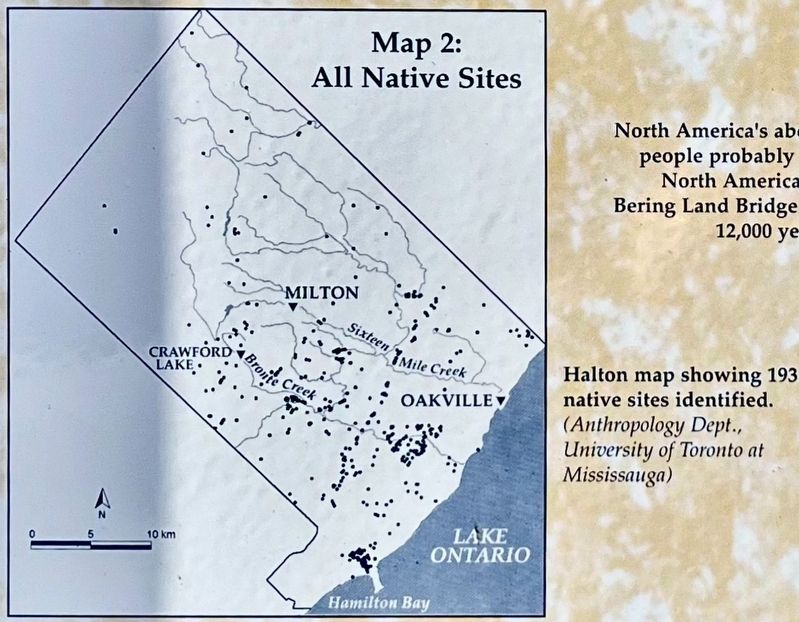
Currently known Indigenous sites in Halton Region
5. Oakville’s First Peoples marker detail
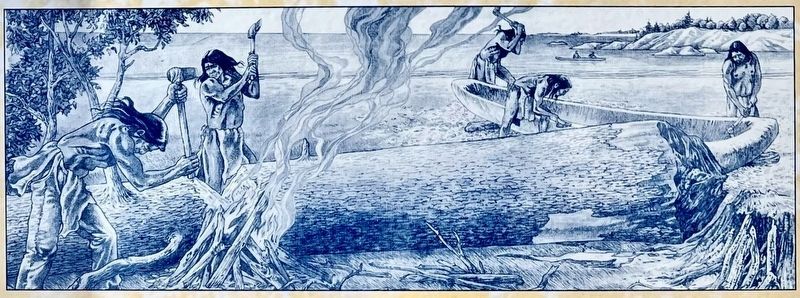
Canoe making by Indigenous peoples in Ontario
Credits. This page was last revised on December 10, 2024. It was originally submitted on December 10, 2024, by Tim Boyd of Hamilton, Ontario. This page has been viewed 112 times since then and 18 times this year. Photos: 1, 2, 3, 4, 5. submitted on December 10, 2024, by Tim Boyd of Hamilton, Ontario. • Andrew Ruppenstein was the editor who published this page.
