Weston in Lewis County, West Virginia — The American South (Appalachia)
Weston In The Civil War
Target of Raids
| — | Jones-Imboden Raid | — |
Photographed by Cosmos Mariner, September 5, 2014
1. Weston in the Civil War Marker
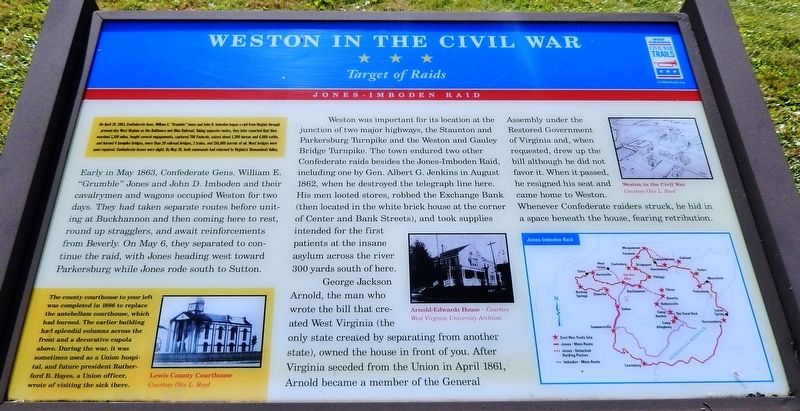
Early in May 1863, Confederate Gens. William E. "Grumble" Jones and John D. Imboden and their cavalrymen and wagons occupied Weston for two days. They had taken separate routes before uniting at Buckhannon and then coming here to rest, round up stragglers, and await reinforcements from Beverly. On May 6, they separated to continue the raid, with Jones heading west toward Parkersburg while Imboden rode south to Sutton.
Weston was important for its location at the junction of two major highways, the Staunton and Parkersburg Turnpike
this page online
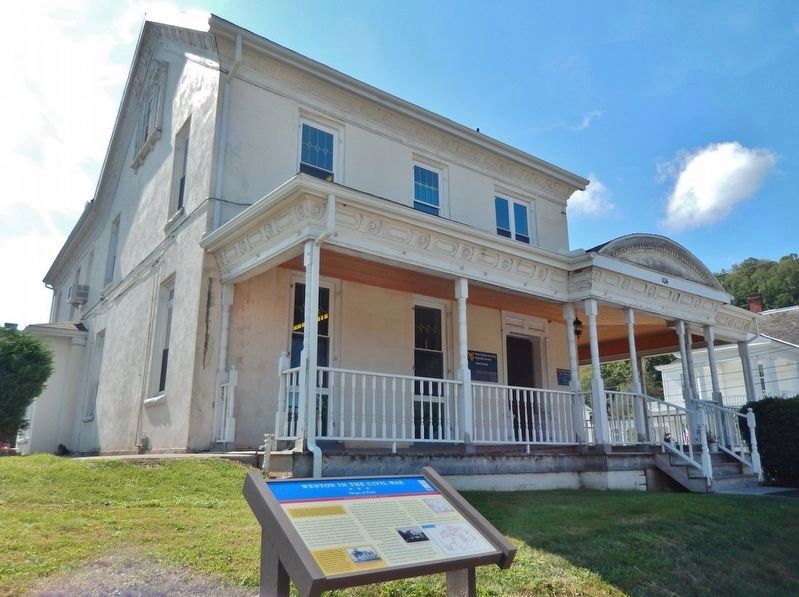
George Jackson Arnold, the man who wrote the bill that created West Virginia (the only state created by separating from another state), owned the house in front of you. After Virginia seceded from the Union in April 1861, Arnold became a member of the General Assembly under the Restored Government of Virginia and, when requested, drew up the bill although he did not favor it. When it passed, he resigned his seat and came home to Weston. Whenever Confederate raiders struck, he hid in a space beneath the house, fearing retribution.
(sidebar)
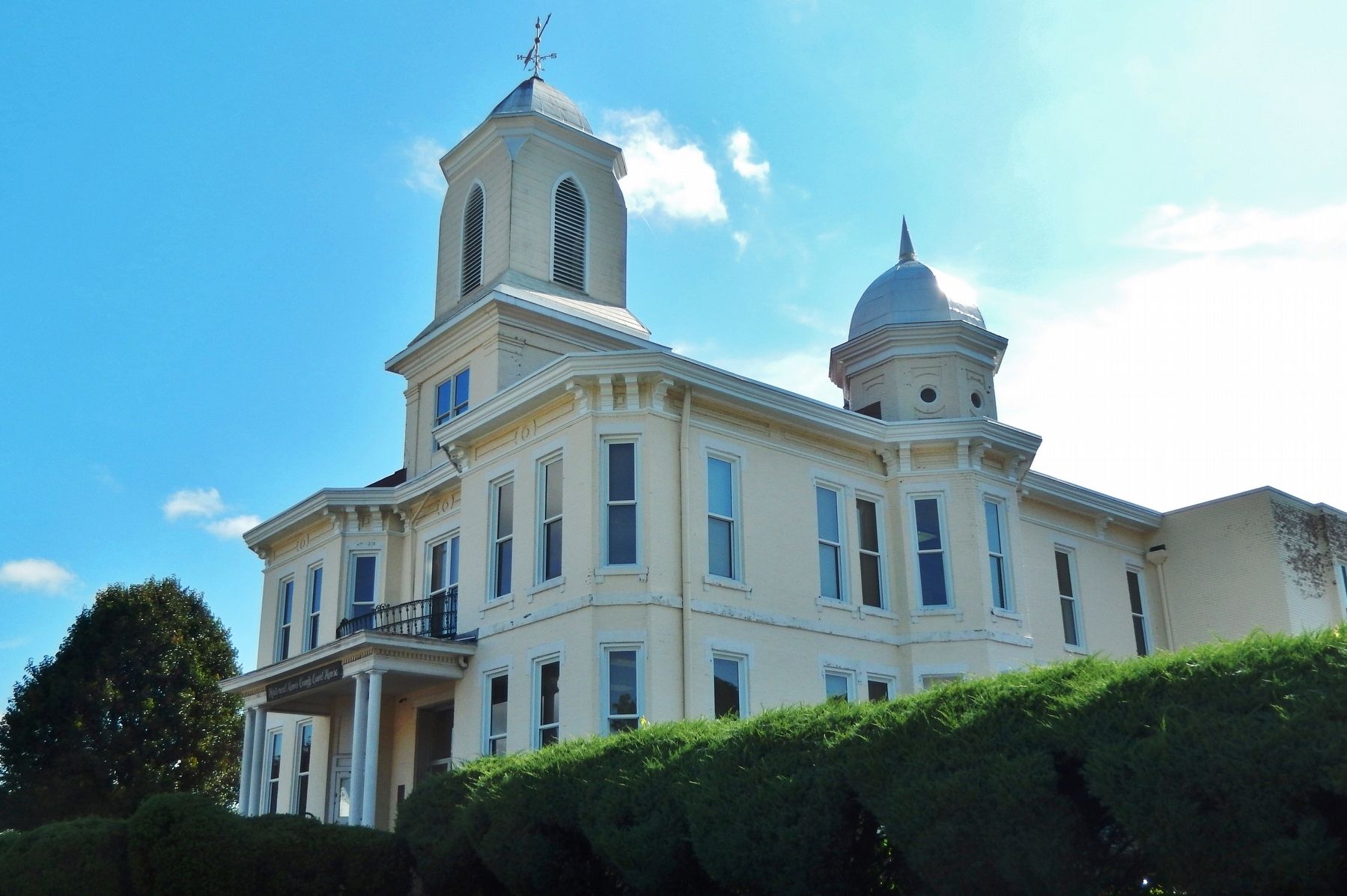
The county courthouse to your left was completed in 1886 to replace the antebellum courthouse, which had burned. The earlier building had
Photographed by Cosmos Mariner, September 5, 2014
2. Weston in the Civil War Marker
(captions)
Lewis County Courthouse Courtesy Otis L. Reed
Arnold-Edwards House - Courtesy West Virginia University Archives
Weston in the Civil War Courtesy Otis L. Reed
Erected by West Virginia Civil War Trails.
Topics and series. This historical marker is listed in these topic lists: Railroads & Streetcars • War, US Civil. In addition, it is included in the West Virginia Civil War Trails series list. A significant historical date for this entry is May 6, 1863.
Location. This marker has been replaced by another marker nearby. It was located near 39° 2.18′ N, 80° 28.04′ W. Marker was in Weston, West Virginia, in Lewis County. It was at the intersection of Center Avenue (U.S. 19) and 1st Street, on the right when traveling north on Center Avenue. Touch for map. Marker was at or near this postal address: 104 Center Avenue, Weston WV 26452, United States of America. Touch for directions.

Regionally, this marker was
Photographed by Cosmos Mariner, September 5, 2014
3. 1886 Lewis County Courthouse (view from marker)
Other nearby markers. At least 8 other markers are within walking distance of this location: A different marker also named Weston In The Civil War (here, next to this marker); Brannon-Whelan House (within shouting distance of this marker); Lewis County War Memorial (within shouting distance of this marker); Henry Flesher (within shouting distance of this marker); Weston (within shouting distance of this marker); The Exchange Bank of Virginia and the Lewis Maxwell House (within shouting distance of this marker); Weston's First Bank/Bennett House (about 300 feet away, measured in a direct line); Shirtman (about 500 feet away). Touch for a list and map of all markers in Weston.
Related marker. Click here for another marker that is related to this marker. New Replacement CWT Marker At This Location also titled "Weston In The Civil War".
Also see . . . Jones–Imboden Raid (Wikipedia). The raid was aimed at disrupting traffic on the vital Baltimore and Ohio Railroad and reasserting Confederate authority western Virginia in an effort to derail the growing statehood movement in the region. Raiders claimed success from a military vantage, and also captured valuable supplies and gained recruits. From a political standpoint, however, the raid failed, for it had little effect on pro-statehood sentiment, and West Virginia was admitted as the 35th state of the Union in June. (Submitted on September 2, 2020, by Cosmos Mariner of Cape Canaveral, Florida.)
Credits. This page was last revised on December 11, 2024. It was originally submitted on August 31, 2020, by Cosmos Mariner of Cape Canaveral, Florida. This page has been viewed 996 times since then and 72 times this year. Last updated on December 11, 2024, by Mark Parker of Hickory, North Carolina. Photos: 1. submitted on September 1, 2020, by Cosmos Mariner of Cape Canaveral, Florida. 2, 3. submitted on September 2, 2020, by Cosmos Mariner of Cape Canaveral, Florida. • Devry Becker Jones was the editor who published this page.
