Washington in Washington County, Pennsylvania — The American Northeast (Mid-Atlantic)
Whiskey Rebellion Mural
Photographed by Mark Parker, December 10, 2024
1. Whiskey Rebellion Mural panel one
(Panel one)
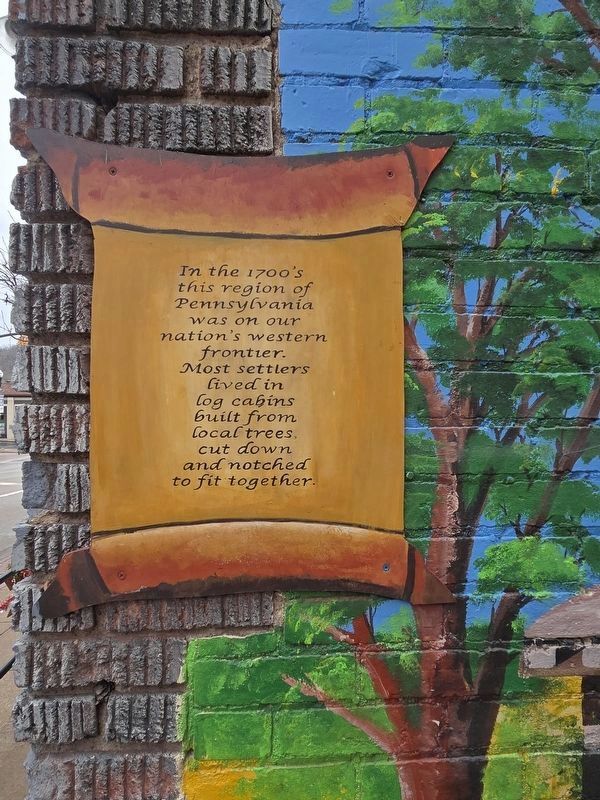
In the 1700's this region of Pennsylvania was on our nation's western frontier. Most settlers lived in log cabins built from local trees cut down and notched to fit together.
(Panel two)
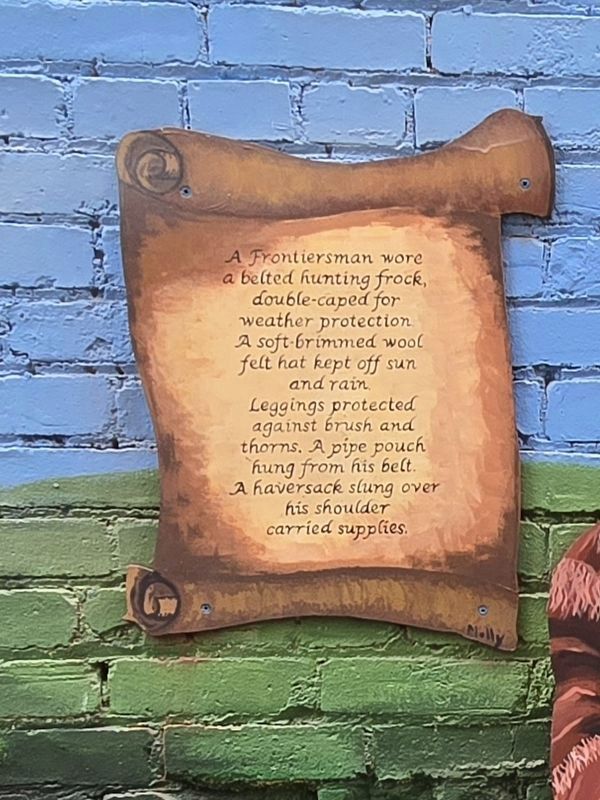
A Frontiersman wore a belted hunting frock, double-caped for weather protection a soft-brimmed wool felt that kept off sun and rain. Leggings protected against brush and thorns. A pipe pouch hung from his belt. A haversack slung over his shoulder carried supplies.
(Panel three)
Grain
this page online

Photographed by Mark Parker, December 10, 2024
2. Whiskey Rebellion Mural (full first panel)
(Panel four)
Farmers on the western frontier had a number of grievances with the federal government, but the enactment of the Whiskey Excise Tax of 1791 on their main trade commodity was deemed so unfair that the farmers rebelled, refusing to pay the tax and attacking the tax collectors. Liberty poles were defiantly raised, with flags and banners proclaiming the rebellion's goal. Attorney David Bradford became the firebrand leader of the insurrection.
(Panel five)
The
Photographed by Mark Parker, December 10, 2024
3. Whiskey Rebellion Mural panel two

Photographed by Mark Parker, December 10, 2024
4. Whiskey Rebellion Mural (full 2nd panel)
(Sixth panel)
On November 13, 1794 "The Dreadful Night", federal militia dragged 150 frontiersmen from their beds, arresting them for various crimes relating to the collapsed rebellion. Judges who had accompanied the Two Armyarmy tried or released those accused Of minor crimes Twenty were taken to Philadelphia, where they languished ín jail until their

Photographed by Mark Parker, December 10, 2024
5. Whiskey Rebellion Mural panel three
Topics. This historical marker is listed in this topic list: Notable Events. A significant historical year for this entry is 1794.
Location. 40° 10.087′ N, 80° 14.692′ W. Marker is in Washington, Pennsylvania, in Washington County. It can be reached from South Main Street north of West Maiden Street, on the right

Photographed by Mark Parker, December 10, 2024
6. Whiskey Rebellion Mural (full 3rd panel)

Regionally, this marker is in Greater Pittsburgh. It is also in the American Northeast, in the Mid-Atlantic, in Appalachia, and specifically in Northern Appalachia. Globally, it is in North America, the Western Hemisphere, the Western World, and the Anglosphere.

Photographed by Mark Parker, December 10, 2024
7. Whiskey Rebellion Mural panel four
Other nearby markers. At least 8 other markers are within walking distance of this marker: Bradford House (within shouting distance of this marker); Globe Inn (within shouting distance of this marker); Edward Acheson (within shouting distance of this marker); The Whiskey Rebellion (within shouting distance of this marker); "Declaration & Address" (about 300 feet

Photographed by Mark Parker, December 10, 2024
8. Whiskey Rebellion Mural (full 4th panel)

Photographed by Mark Parker, December 10, 2024
9. Whiskey Rebellion Mural panel Five

Photographed by Mark Parker, December 10, 2024
10. Whiskey Rebellion Mural (full 5th panel)

Photographed by Mark Parker, December 10, 2024
11. Whiskey Rebellion Mural panel aix

Photographed by Mark Parker, December 10, 2024
12. Whiskey Rebellion Mural (full panel six)

Photographed by Mark Parker, December 10, 2024
13. Full Whiskey Rebellion Mural

Photographed by Mark Parker, December 10, 2024
14. Rear view of William Bradford House across from Whiskey Rebellion Mural
Credits. This page was last revised on December 14, 2024. It was originally submitted on December 11, 2024, by Mark Parker of Hickory, North Carolina. This page has been viewed 322 times since then and 36 times this year. Photos: 1. submitted on December 11, 2024, by Mark Parker of Hickory, North Carolina. 2. submitted on December 13, 2024, by Mark Parker of Hickory, North Carolina. 3. submitted on December 12, 2024, by Mark Parker of Hickory, North Carolina. 4. submitted on December 13, 2024, by Mark Parker of Hickory, North Carolina. 5. submitted on December 12, 2024, by Mark Parker of Hickory, North Carolina. 6. submitted on December 13, 2024, by Mark Parker of Hickory, North Carolina. 7. submitted on December 12, 2024, by Mark Parker of Hickory, North Carolina. 8. submitted on December 13, 2024, by Mark Parker of Hickory, North Carolina. 9. submitted on December 12, 2024, by Mark Parker of Hickory, North Carolina. 10. submitted on December 13, 2024, by Mark Parker of Hickory, North Carolina. 11. submitted on December 12, 2024, by Mark Parker of Hickory, North Carolina. 12. submitted on December 13, 2024, by Mark Parker of Hickory, North Carolina. 13, 14. submitted on December 14, 2024, by Mark Parker of Hickory, North Carolina. • J. J. Prats was the editor who published this page.
