Saint-Denis in Seine-Saint-Denis, Île-de-France, France — Western Europe
Porte de Paris
Photographed by Andrew Ruppenstein, April 18, 2024
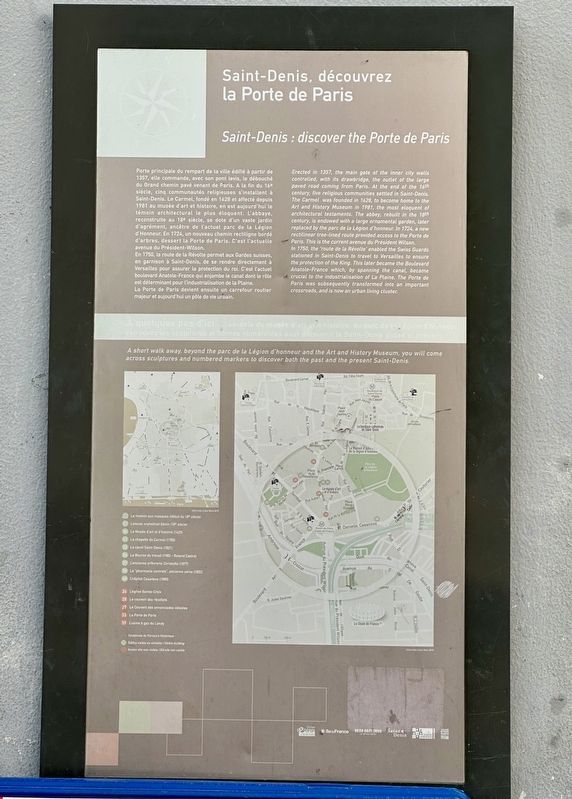
1. Porte de Paris Marker

Porte principale du rempart de la ville édifié à partir de 1357, elle commande, avec son pont levis, le débouché du Grand chemin pavé venant de Paris. A la fin du 16e siècle, cinq communautés religieuses s'installent à Saint-Denis. Le Carmel, fondé en 1628 et affecté depuis 1981 au musée d'art et histoire, en est aujourd'hui le témoin architectural le plus éloquent. L'abbaye, reconstruite au 18e siècle, se dote d'un vaste jardin d'agrément, ancêtre de l'actuel parc de la Légion d'Honneur. En 1724, un nouveau chemin rectiligne bordé d'arbres, dessert la Porte de Paris. C'est l'actuelle avenue du Président-Wilson. En 1750, la route de la Révolte permet aux Gardes suisses, en garnison à Saint-Denis, de se rendre directement à Versailles pour assurer la protection du roi. C'est l'actuel boulevard Anatole-France qui enjambe le canal dont le rôle est déterminant pour l'industrialisation de la Plaine. La Porte de Paris devient ensuite un carrefour routier majeur et aujourd'hui un pôle de vie urbain.
Erected in 1357,
this page online
Topics. This historical marker is listed in these topic lists: Forts and Castles • Religion & Religious Structures • Roads & Vehicles. A significant historical year for this entry is 1357.
Location. 48° 55.826′ N,
Photographed by Andrew Ruppenstein, April 18, 2024
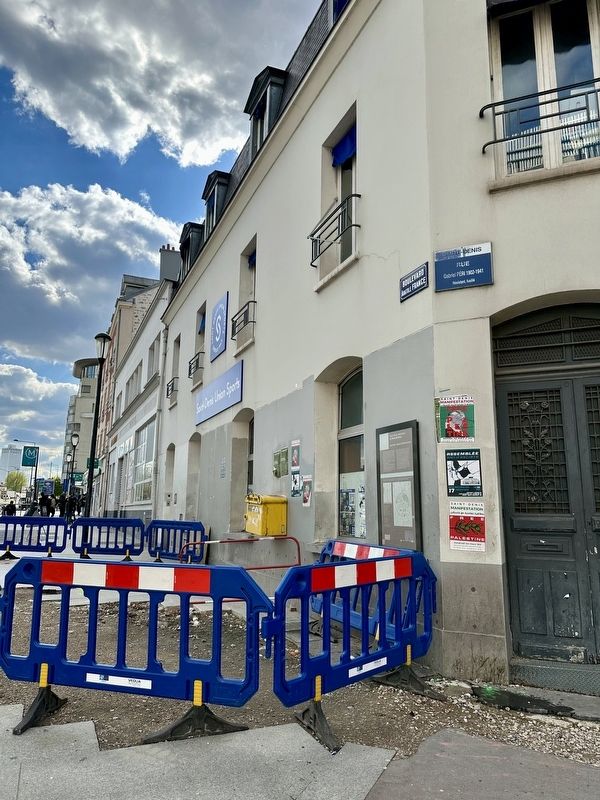
2. Porte de Paris Marker - wide view

Regionally, it is in the North Atlantic Region, Europe, the European Union, Atlantic Europe, the Schengen Area, Western Europe, a coastal Mediterranean country, and the Western World. Historically, it finds itself in what was once a French colony and also the Roman Empire.
Other nearby markers. At least 8 other markers are within walking distance of this marker: Draps et Teintures / Cloths and Dyes (about 120 meters away, measured in a direct line); L’orphenilat Génin / The Génin Orphanage (approx. 0.3 kilometers away); L’église Sainte-Croix (approx. 0.3 kilometers away); La Maison Aux Masques (approx. 0.4 kilometers away); École elementaire Jean Vilar Deported Jewish Students Memorial (approx. 0.4 kilometers away); La Mairie / City Hall (approx.
Photographed by Andrew Ruppenstein, April 18, 2024
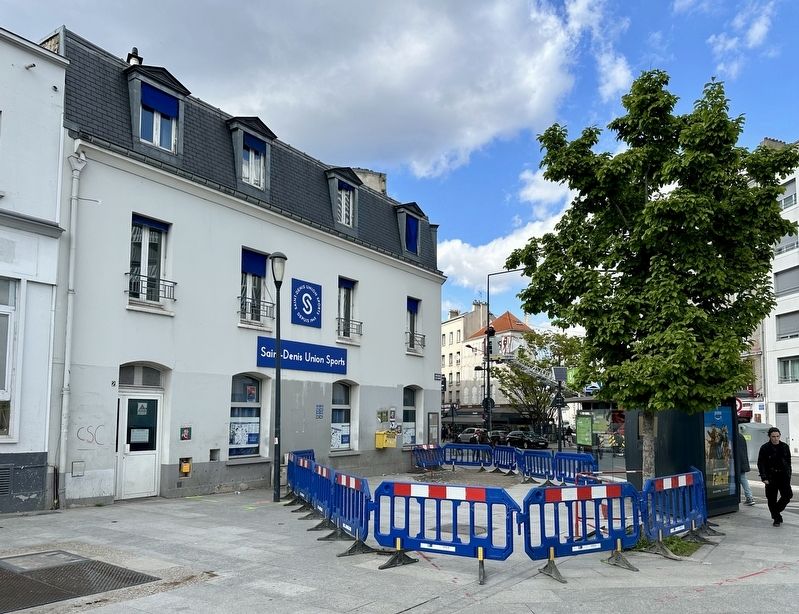
3. Porte de Paris Marker - wider view
Credits. This page was last revised on January 28, 2025. It was originally submitted on January 28, 2025, by Andrew Ruppenstein of Lamorinda, California. This page has been viewed 127 times since then and 11 times this year. Photos: 1, 2, 3. submitted on January 28, 2025, by Andrew Ruppenstein of Lamorinda, California.
