
Nolita in Manhattan in New York County, New York — The American Northeast (Mid-Atlantic)
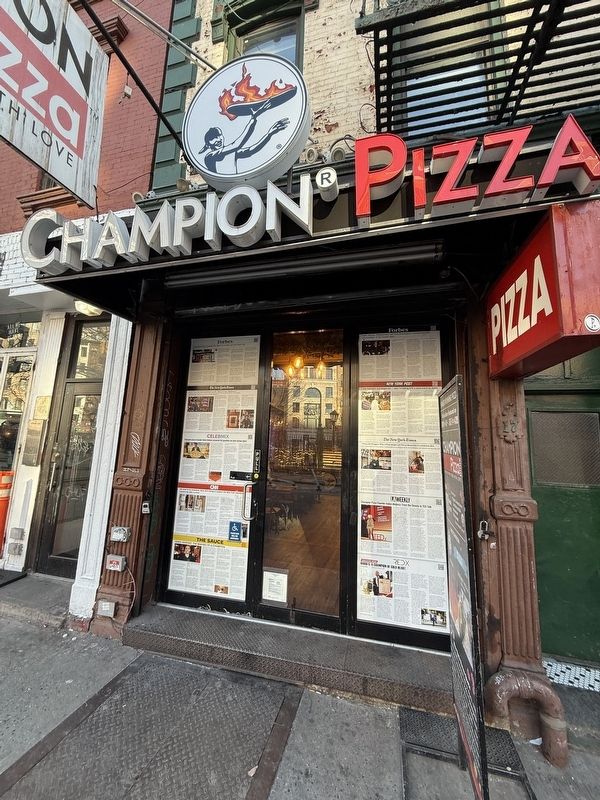
Champion Pizza
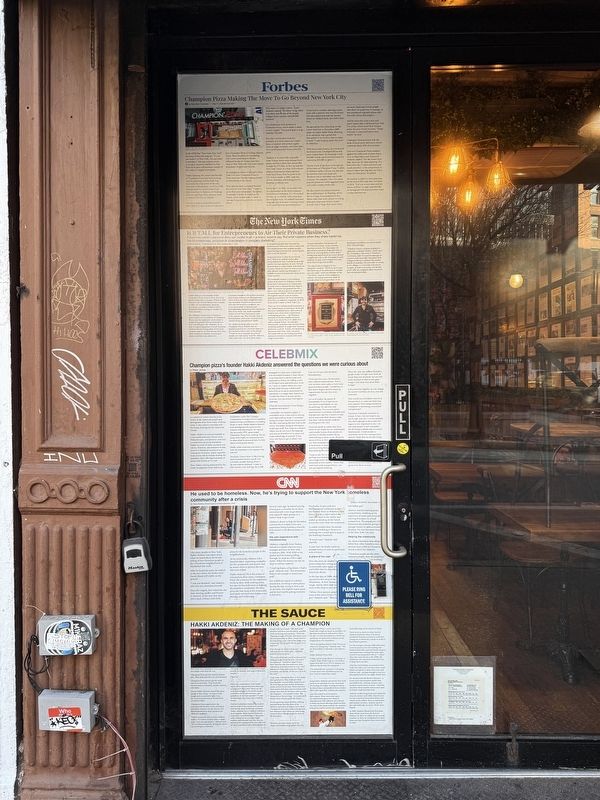
Champion Pizza Making The Move To Go Beyond New York City
By Gary Stern Contributor
May 17, 2023, 06:51am EDT
In the 1976 film "New York, New York," the lyrics of the title song say, "If you can make it in New York, you can make it anywhere." But now a pizza owner is trying to discover whether his New York-style pizza will resonate outside of the country's largest metropolis.
Hakki Akdentz, the owner and founder of Champion Pizza, has been thriving with his pizzerias in New York City. Currently, he owns seven in the city with four in Manhattan—in SoHo, Fifth Avenue, and two on the Lower East Side, and three in Queens, in Flushing, Astoria, and Rego Park, and one more in Nassau Country in Elmont.
Now he's ready to expand beyond his New York City roots as he has opened a new Champion Pizza in College Station, Texas. Then his plans are expanding with a new pizza shop in Miami, followed by one in Tampa, and then back to New York with two more venues in Jackson Heights and Astoria.
An immigrant owner is taking his New York City-style Champion Pizza to Texas and then Florida, hoping it leads to franchising in the future.
Why does he want to expand his roots in New York City? "I want to grow the name nationwide," he replies. Eventually he'd like to franchise the brand, which would make it easier to manage his growing portfolio of pizza shops.
Why start in College Station, Texas? Akdeniz replied, "It's where Texas A&M is located, and it's one of the largest colleges in the country with 80,000 students."
He collaborates with partners at Champion Pizza, which made it easier to raise capital. "Our grand goal is to go national," he said.
But other investments from his partners, he's never taken out a bank loan, or worked with private equity firms or angel investors, rare these days for a small restaurant chain primed to grow.
Akdeniz is 43-years-old, originally from Turkey, never went beyond third grade, and has a story that sounds like a made-for-TV film. In fact he told the New York Times in a May 2023 column about entrepreneurs bouncing back from hard times, how he came to the U.S. from Canada in 2001, and was, at first, homeless and making due by sleeping in subway cars.
But at age 21 in 2001, he secured a job as a dishwasher at the Mediterranean Grill Pizza in Hoboken, N.J. He worked his way up to what he calls pizza man, learning the trade. He worked hard and long and was dedicated to saving money so he could become an entrepreneur.
He started to consider opening a pizza store with a partner who was his friend, who absconded and stole the money, which set Akdeniz back, but didn't deter him.
He opened his first pizza shop on the Lower East Side in December 2009, under the name Hakki Pizza. Running it, he admitted, was a grind that demanded 12-to 14-hour days to make it work. "I was sleeping under the oven," he admitted.
With his second pizzeria, he introduced the brand name, Champion Pizza and never looked back. He financed it with $40,000 that he saved and borrowed the remaining $45,000 to open it.
Variety is one of the keys to the success of the menu at Champion Pizza. It offers 35 different styles of pizza, way beyond the number that most shops sell. Akedeniz like to introduce new kinds of pizzas. For example, two of his most popular pizzas are truffle eggplant pizza and truffle creamy mushroom.
He also customizes pizza based on the neighborhood. In Flushing, where there's a large Asian population, his shops make four sweet pizzas including pineapple pizza and chicken honey teriyaki, but in Rego Park where there are more observant Jewish people, who don't eat pepperoni or sausage, he has introduced vegetable pizzas with broccoli, onions and peppers.
Champion Pizza partners with the array of third party deliverers, which constitute about 30% of its revenue.
How can Champion Pizza compete against the behemoth of pizza chains such as Papa John's and Domino's? Akdeniz replied, "On the Lower East Side, there are 29 other pizzerias. I've been there for 13 years and don't pay much attention to the competition. It doesn't matter how big they are if you make the best pizza," he added.
He expects to add two more pizzerias by the end of 2023 and then five more in 2024. "Call me in two years and see where we'll be," he said, sounded like an immigrant who had overcome many hurdles and thrived.
Is It T.M.I. for Entrepreneurs to Air Their Private Business?
A business owner's personal story can bolster trust in a brand, experts say. But what happens when they share hardships like homelessness, addiction or incarceration in company marketing?
By Nina Roberts
Published April 20, 2023 Updated May 7, 2023
Hakki Akdeniz, the founder of the Champion Pizza chain in New York City, speaks freely about his past. When he first moved to the United States from Canada in 2001, he was homeless, sleeping in subway cars and at Grand Central Terminal before staying at a shelter for three months.
Mr. Akdeniz's experience is featured prominently on the website of Champion Pizza, and the company's dedication to supporting people who are homeless is key to its mission. Mr. Akdeniz, 43 is part of a growing group of small business owners incorporating some of the most intimate aspects of their private lives into their company's brands, according to experts and business observers.
Company founders telling their personal back stories is not a new phenomenon. These stories are often straightforward, rosy accounts of a determined person who sets out to solve a problem, but a new generation of founders are distinguishing themselves with narratives that aren't clean cut, easily digestible stories of how their businesses came to be, experts say. They include tales of homelessness, addiction, incarceration, mental illness and physical health.
Mr. Akdeniz's biography is on the Champion Pizza website, but he emphasized that the intention wasn't to put himself at the center of the brand. "I want to be an example for a lot of people, but not cocky," said Mr. Akdeniz, who is Kurdish. He often gives slices to homeless people who frequent his pizzerias and volunteers once a week with two organizations that support people experiencing homelessness, donating pies that he serves himself.
Originally from Turkey, he arrived in New York as an asylum seekers after being deported from Canada because his tourist visa had expired, he said. He had learned how to make Italian-style pizza in Canada, where he lived for several years, after already mastering lahmajoun, a Middle Eastern flatbread with meat, in his home country.
He eventually secured a job washing dishes at an eatery in Hoboken, before he started making pizza in restaurants himself, and he opened his first shop in 2009. He said he was granted the EB-1 green card, which is given to people "of extraordinary ability, after he received the highest overall score at a pizza-making competition by Pizza Marketing Quarterly, an industry magazine in 2010 at the Javits Center in New York City.
There are 33.2 million small businesses in the United States, according to the Small Business Administration, and scores of owners have most likely experienced challenging periods—the National Institute of Mental Health estimates "more than one in five U.S. adults live with a mental illness," for example. Historically, most have not revealed these hardships publicly through their business platforms, said Dr. Erdem, the marketing professor from New York University. But some who do are finding that their personal narratives resonate with their target consumers.
George Haymaker, the founder of ReThink Ice Cream, is one of these business owners. Mr. Haymaker, 62, described a period of drug addiction in his life as "circling down a toilet drain." Eating large amounts of ice cream played a significant role in Mr. Haymaker's early sobriety, he said, and it helped him stay away from drugs and alcohol.
This experience is integral to his company's identity: "ReThink Ice Cream was born out of my addiction to alcohol and pain pills," reads the first line of the "The Story" section of the company's website. He had gained more than 30 pounds when he first got sober, so he developed a healthier ice cream recipe with reduced sugar.
"Whether there's a stigma attached to addiction or mental health, I don't care," Mr. Haymaker, who lives in Northern California, said. He said his message of recovery had especially resonated with colleges looking to address the mental health of students. He now sells ice cream at 30 colleges in California and one in Oregon, as well as in stores, and he has given talks on campuses about recovery and entrepreneurship.
Champion pizza's founder Haki Akdeniz answered the questions we were curious about
by Peter Jones
is a powerful notion that lies at the hearts of the American people and immigrants alike. Even today, millions come to this country everyday with the hopes of living out the American Dream.
Hakki Akdeniz is a proud example of a successful American Dream story. Philanthropist, entrepreneur, and even a world pizza spinning champion, Hakki is a man of many successes and talents. However, one endeavor he has proven to find great success in is in helping the homeless. Hakki regularly hosts events which include feeding the homeless, often offering thousands of pizzas and clothes on his part.
Now, Hakki is being nominated by the Great Immigrants Great Americans foundation under the Carnegie Corporation in respect of his countless humanitarian contributions to helping those in need. Hakki Akdeniz himself is an immigrant who came to this country with big dreams. He started the successful NYC pizza brand Champion Pizza from nothing. We sat down with Hakki to understand why he does what he does and how he feels about winning this award.
Hakki, what motivates you most to help the homeless in the manner that you do?
Honestly, I know what it’s like having been homeless before myself. It is a terrible, terrible feeling which I do not wish on anybody. I came to this country with nothing. But I still managed to create such a beautiful and successful business. I want others to see that there is always hope and opportunity if they are willing to put in the hard work and dedication to do so. I want to inspire others, but also to help them because I understand how difficult it can be sometimes for somebody in a tough spot. Sometimes it looks like there is no way out but trust me, you can always find light in darkness.
What do you remember most being a homeless immigrant?
I remember the sleepless nights. I remember when it was cold or raining and I had nowhere to go. I remember being so hungry, that even eating bread felt like I was eating the best food in the world. You know, being an immigrant is not easy at all. You come to a country where you do not know the language and you are forced to try to adapt and make something of yourself. It was very, very hard to get to where I am today.
Can you tell us a little bit about homelessness.
These past few years, the homeless have suffered tremendously. That is why we have come today to help these great homeless people. I would like to first thank Miguel and the amazing organization that put this event together.
Let us all realize the power of humankind. If we all join forces and aspire toward good, we can do anything. We can even end homelessness. This country gives opportunities to all kinds of people and if people just take the initiative to take action and make their dreams come true then I think anyone could do anything just like I did.
Everyone needs to realize that these while we are inside our air conditioned, comfortable homes, these people are out here in the hot weather all day with nothing to drink or eat. Please be aware of this, so that we can appreciate our own situations while also striving to help those in need. Please, let us all continue living through giving and keep making the world a better place.
I hope to use this to inspire others, perhaps even homeless who right now see a tough battle ahead of them to be successful in this country. I know that with hard work and good heart, you can accomplish anything!
There are over one million homeless people in the US right now. With all of our help and attention, we can feed every stomach so that no one goes hungry. Let’s show that pizza beats hunger!
Let’s prove that together we can change the world! God bless all of us, stay safe everyone!
How would you feel about a movie or documentary to come out depicting your journey from being a homeless immigrant to becoming a successful entrepreneur?
You know, I honestly would be so proud. In fact, I do not want to say much right now, but it is very possible that this is already in the works! My legacy is very important to me. I do not want people to just remember me for being a famous and successful businessman. I want people to remember me for the message that I spread. I hope that we all start living through giving!
It is no wonder that Mr. Akdeniz has garnered so much support from social media and foundations. His message is truly inspiring. There is no telling what he can accomplish next. However, one thing is for sure. Hakki Akdeniz humanitarian efforts will not go unnoticed and his impact will be felt greatest by those in need.
He used to be homeless. Now, he's trying to support the New York homeless community after a crisis
By Taylor Romine, Arman Azad and Rachel Bowman, CNN
Like many people in New York, Hakki Akdeniz was taken aback when he heard about the brutal killing of four homeless people in the Chinatown neighborhood of Manhattan last week.
After he heard the news, he rushed to the area where the bodies were found, blood still visible on the ground.
“I was just shocked,” said Akdeniz, who was once homeless himself.
Since the tragedy, he’s visited the site daily, leaving candles and flowers in memory of the men that died, and a stack of boxes with fresh pizza for the homeless people in the neighborhood.
At his memorials, Akdeniz left a heartfelt letter, expressing sympathy for the community and sorrow that he wasn’t there to protect the men who were killed.
Hakki Akdeniz, 39, is the owner of a local pizza shop chain, Champion Pizza. He is known for the impressive tricks he does while making pizza, but also for his dedication to helping the homeless community. He often gives out free slices at his restaurants and hands out food and clothes every Monday and Wednesday.
Several years ago, he started paying a local gym a monthly fee to allow several people a day to get showers, and regularly takes groups to a barber shop to get a trim.
Akdeniz’s desire to help the homeless community is rooted in his own experience being homeless when he first moved to the United States in 2001.
His own experience with homelessness
Akdeniz, originally from Turkey, moved to Canada when he was a teenager and then to New York in January 2001. With $240 in his pocket and his housing falling through, he slept at a $30 a night motel. When his money ran out, he slept in subway stations.
“I had big hopes, a big dream. I had a goal,” Akdeniz said. “But sometimes hope is not enough to reach your goal.”
For a while he stayed in a shelter downtown, traveling to pizza places during the day, trying to find a job. At the time, his English wasn’t great, and he had trouble getting someone to hire him.
Eventually, he got a job at a Mediterranean restaurant across the Hudson River in Hoboken, New Jersey. But he couldn’t afford the train fare back to the shelter and ended up sleeping on the bench across the street from the restaurant.
A couple months later, he started cleaning a building in Queens in exchange for a small spot to sleep in the building’s basement.
“It wasn’t easy,” Akdeniz said tearfully.
A year later, he finally saved up enough money to rent an apartment with a friend.
A place of his own
Over the years, he worked at several pizza restaurants, saving up money to eventually open in his own shop and fulfill what he describes as the American dream.
In the last days of 2009, Akdeniz opened his first shop in the Lower Manhattan. At first, business was tough, and he often slept under his oven in the shop to save money.
“When I first opened, people didn’t want to buy pizza from a Turkish guy,” Akdeniz said. “They wanted a real Italian guy.”
Akdeniz started entering pizza competitions, building up his repertoire of tricks and eventually winning first place in a local competition. The popularity of the restaurant skyrocketed, giving him enough money to open a second location. He now has seven locations in the New York City area.
Helping the community
So, when a homeless man allegedly killed four other homeless men and severely beat a fifth in Chinatown, it struck a chord for Akdeniz.
“Homeless people are the most innocent people, they are powerless,” said Akdeniz. “They have nothing.”
New York Police arrested 24-year-old Randy Rodriguez Santos in connection with the killings. He has since been charged with four counts of murder, one count of attempted murder and possession of marijuana, according to NYPD Detective Ahmed Nasser.
Given his own Kurdish background and the recent conflict in Syria, Akdeniz expressed his frustration with what often feels like senseless killing.
“I’m not political, but you cannot kill people. We need to support each other. We are killing each other for nothing,” he said.
Akdeniz said that he hopes people are kinder to homeless people and sympathetic towards the situation they’re in. Even just giving someone $10 will help, he said.
Hakki Akdeniz: The Making of a Champion
New York City’s Champion Pizza operates on a larger scale than the rest.
Champion Pizza doesn’t make oversized pies. They make pies the size of mattresses.
Champion Pizza doesn’t get the word out on social media. They break the internet and, occasionally, invade national television.
Owner Hakki Akdeniz doesn’t flip pizza dough to the ceiling – he dances with dough and occasionally lights it on fire as he tosses his way to World Pizza Acrobatics titles.
Champion Pizza’s approach to the restaurant biz borders on the ridiculous and often ventures into the absurd. But there’s a method to, and a purpose for, Akdeniz’s madness.
“I don’t want to be rich, or have a billion dollars. If I wanted to stop today, I could stop. I have enough money,” Akdeniz said. “It’s not about being rich, having the nicest car, or living in a mansion.
“My goals are simple: I want to be a good person, be humble, and support homeless people.
“That’s it.”
Hand-eye coordination. Fast-twitch digits. More natural dexterity than your average Joe’s Pizza chef. Those are all useful advantages in the world of pizza acrobatics, but it takes practice, and gumption, to do it on national TV and momentarily put a scare into a Hall of Famer.
Akdeniz’s adeptness behind the counter and in front of the camera have earned him and his shop worldwide attention. Today, Akdeniz has 3.5 million followers on Instagram, likely trisected between customers, tourists/Bridge & Tunnelers with Champion on a Google Maps wishlist, and faraway fans who have no intention of coming to NYC but still want to watch a madman toss a flaming slab of dough with bare hands: “Oh, that trick,” Akdeniz told Slice over the phone, possibly while stretching and yawning. “That’s the ‘Flaming Dough of Death,’ that’s how I won the championship in 2010. I knew I had to do something crazy. One of the judges was screaming, ‘Oh my god! Oh my god!,’ over and over.”
Even though he made it look easy – and still pretends it’s child’s play – Akdeniz paid the price for glory.
“If you watch closely, you’ll see that my left arm was badly burnt, because I’m hairy,” he explained. “You know what? If you don’t take the risk, you won’t win. And, sometimes, you have to lose to win. I love taking new risks and trying new things. I constantly ask myself, ‘What can I do to be the best?’”
Hakki Akdeniz Flaming Dough
Hype aside, Champion does, in fact, make darn good pizza. But, Akdeniz’s food playing-habit-turned-hobby helped score the buzz that got him widely christened as one of New York’s best. When the New York-based chef salsas and strut kicks with dough, then behind-the-back rolls it across his wingspan – a la Jennifer Lopez, The Rockettes, or Kyrie Irving – he creates food theater that virtually packs the house.
For his growing online fanbase, noshing and watching clips like these is the modern equivalent of dinner and a show. Champion’s slices keep folks coming back, but Akdeniz’s viral videos are what bring many of those folks through the door in the first place.
Devotees are often drawn in by the shop’s cartoonishly large pizzas, like the Hamburger Pizza, a seven-layer belly bomb that weighs as much as a toddler. Or, the desk-dwarfing he delivered to GMA. Or, the 1.3-mile meal built on a NASCAR speedway, recognized by Guinness as the longest pizza ever assembled.
“We’re just getting started. Wait ‘til you see what we’re doing next,” Akdeniz said. “The pie from GMA? I will make a pie triple in size.”
Hakki Akdeniz Pizza Chef
A larger pizza seems about as necessary as a Super Mega Triple Gulp or a six million square foot add-on to NYU’s campus, but Akdeniz has no time for naysayers.
“I’m doing this for a purpose. I am going to make sure every homeless person in New York is treated like a king.”
Long before Akdeniz opened his New York pizzeria, he operated as a one-man band of a bodega in Turkey. Starting at sunrise, he shined shoes and peddled from a basket filled with cigarettes, candles, and matches.
Later, he tacked on a counterless deli counter. There were other open air sandwichmongers, but Akdeniz experimented with different spice blends to make his lunch offerings stand out from the rest. As his menu evolved, his customer base grew, and he carved out a small, but loyal following on the streets of Silvan.
Hakki Akdeniz Champion
There were no doors to close, but the business shuttered when civil unrest prompted Akdeniz’s parents to send their young son to Montreal, Canada to work in his brother’s pizzeria.
For the teenager, moving 5,000 miles away from his parents was excruciating, but Montreal did offer a partial family reunion, and people that could get his name right, even if it was misspelled with an “–ockey”. Also, like many Kurds in the 1990s, the Akdenizes saw relocation as the best way to keep their son alive.
After his 21st birthday, he moved to New York City with a one-way bus ticket, a half-baked concept for a shop of his own, and $240 in cash – perhaps enough to stay in a Manhattan hotel for one night. Maybe two.
He checked into the Bowery Mission – a Lower East Side homeless shelter that provides meals, clothing, showers, and medical care for those in need – where he stayed for three months and six days until he found steady pizzeria work.
Akdeniz worked long hours and squirreled away his money until 2006, when he says his one-time best friend fleeced him and wiped out his coffers. Back in unfortunate and familiar territory, Akdeniz stuck to the only battle plan he knew: Work. Save. Repeat.
In 2009, Akdeniz founded his first pizza shop, blocks away from the Bowery Mission. In 2010, he rolled out his second location. In 2016, he established five more stores, giving Champion Pizza seven stores in total.
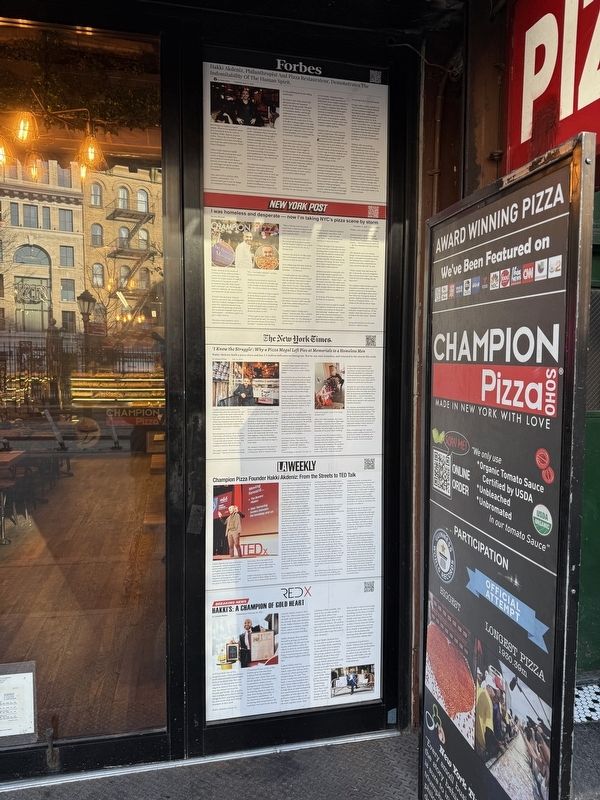
Hakki Akdeniz, Philanthropist And Pizza Restaurateur, Demonstrates The Indomitability Of The Human Spirit.
By News Desk
Published June 17, 2022
Bad things can happen to good people. What we are genuinely made of is revealed by how we react to hardship. Hakki Akdeniz is proof of this. This is the tale of how a guy who seemed to have lost everything rose from the ashes to become World Pizza Champion.
When Hakki Akdeniz’s buddy betrayed him by stealing four years’ worth of funds, he might have succumbed to hatred and despair. Instead, he secretly chose not to quit up and began saving for another five years before opening his own restaurant.
That eatery led to another, then another, and another. This extraordinary guy is now in charge of a restaurant business that is about much more than pizza and profit. Champion Pizza exemplifies Akdeniz’s beliefs by being highly devoted to community service. Akdeniz immigrated to New York twenty years ago and found himself homeless on the chilly winter streets. He will never forget the encounter. His understanding of the despair and humiliation of that situation has shaped his purpose and altered the lives of many others.
The obstacles he endured formed Akdeniz’s character’s drive and optimism. His entrepreneurial instinct was visible from an early age as he experimented with methods to earn while growing up in a low-income neighbourhood of Turkey. Before travelling to Canada and training at his brother’s pizza shop, he was polishing shoes and selling sandwiches.
He went to New York armed with optimism and a few hundred bucks, but things quickly fell apart without help. Akdeniz was living in a homeless shelter until he got employment as a dishwasher at a pizza restaurant in New Jersey. He couldn’t find the trains back to New York after working nights, so he slept on a bench. Akdeniz feared rejection when he informed his supervisor, but instead got a hug and a place to stay. “I was homeless, yet he welcomed me as a person,” Akdeniz explains.
There is a human divide between those who have a place to live and those who have not. The border between the two states might be as thin as paper. It just takes one decision or one set of circumstances to start the downhill spiral. Perhaps this is why we have preconceptions of homeless people being lazy, addicts, or otherwise ‘evil’ individuals. Perhaps we don’t want to look too carefully because we don’t want to see ourselves reflected back.
Akdeniz has heard hundreds of tales from the homeless population in New York that he assists. He claims that everyone has a narrative and that no one chooses to live on the streets. Champion Pizza has employed a wide spectrum of individuals, from combat veterans to ex-TV producers, but they all have one thing in common: they all want to avoid becoming homeless again. Akdeniz is convinced that these are individuals who want to work; people who want purpose, stability, and connection. He hopes that more company owners will be willing to consider employing them.
Akdeniz’s life was transformed by a pizza competition. The company was suffering when he eventually launched his first restaurant. He abandoned his flat and slept beneath the pizza oven to save money on rent. When the 2010 World Pizza Championship rolled around, he was on the verge of failure. Akdeniz won all four categories and performed breathtaking acrobatics with spinning dough on fire.
This accomplishment rescued his company and helped him to thrive, turning Champion Pizza into a franchise and emphasising the brand’s friendliness and respect. The company has expanded into a frozen pizza line and other culinary products. While growing his company to new heights of financial success, Akdeniz has never lost sight of the importance of helping people and giving back to the community.
It began with a weekly initiative on West 34th Street in which Akdeniz and his restaurant employees distributed warm clothes and hot meals. He had handed out over 200,000 pieces of pizza by 2018, never forgetting what it was like to be unable to purchase one. He has a soft one for the Bowery Mission, having been there when homeless himself. Champion Pizza has also provided assistance to victims of natural disasters such as Hurricanes Sandy and Maria.
Akdeniz, who received the 2019 Beacon Award as well as commendations from the New York City Council, the New York House of Representatives, and the L.E.S. Hispanic Council, among others, maintains perspective on these high-profile honours. Akdeniz’s sincere message to his 17 million Instagram followers is one of compassion and the value of keeping humble. Our contemporary, productivity-driven world may sometimes expect fulfilment without regard for others. Akdeniz is a positive energy who reminds us to be nice for no cause; to give without expecting anything in return; and, most importantly, to be a decent person.
I was homeless and desperate — now I'm taking NYC's pizza scene by storm
By Alex Mitchell
December 14, 2022 1:19pm Updated
Hakki Akdeniz is the owner of Champion Pizza, with six shops across New York City and Long Island. He boasts nearly 29 million followers on Instagram as well as celebrity fans like Mike Tyson and Courteney Cox. Not long ago, however, Akdeniz, 42, was homeless and desperate on the streets of NYC.
Whether the animated Akdeniz knows a person or not, crossing paths with this Turkish immigrant-turned-total NYC character entails being showered with greetings, food and the occasional reminder that God is indeed great — all before a guest can get a single word in.
The pizza man’s meteoric rise is captured in the new documentary, “Hi… I’m Hakki Akdeniz,” out this Friday on Discovery+.
Akdeniz first arrived on America’s doorstep more than two decades ago, in the middle of the harsh winter of 2001. He did so entirely by accident.
After unsuccessfully trying to migrate from his home country to Canada, Akdeniz wound up on a bus from Montreal to the Port Authority with just $240 in his pocket, not knowing a word of English and a promise of a spare bed from a buddy — the only person he knew in NYC.
“When I got to New York, I called my friend and he said ‘I’m coming, give me a few hours, I’ll be there, I promise,'” Akdeniz told The Post. “Then a full day went by and he wasn’t here. I slept on a bench at the bus [station] because I didn’t want to leave and miss him.”
One day quickly turned into two — the friend ended up ghosting him — and the hopeful Akdeniz was quickly becoming worried for his life in a foreign land.
Akdeniz was alone in the Big Apple with a third-grade education, and nowhere to stay or work.
After exhausting what little funds he had for a cheap hotel, Akdeniz was homeless — in February.
“I would spend my days walking around in the cold and then I would take the subway from end to end at night, it was the only way I could keep warm,” he said. “Then another homeless man from Senegal brought me to the Bowery Mission and I stayed there for a couple of months.”
Akdeniz’s luck turned around one day when a mission staffer was able to get him a dishwashing job at a pizzeria in Hoboken.
“I couldn’t believe I finally had a chance,” Akdeniz said. “But I couldn’t get back from work to the Bowery Mission in time, so I was sleeping on a park bench by the pizzeria for the first few days.”
When word of Akdeniz’s situation reached owner and fellow Turk Cumali Kurt — now a friend and “hero” — he invited his new employee to share his home.
“When I first got to his apartment I was so nervous. I remember the first morning after I stayed there I didn’t know how the shower worked and I was fumbling with the water to get done quickly. It kept going from burning to freezing,” he said. “Every time I take a warm shower now, I think back to that moment.”
Akdeniz was able to eventually save up enough money to get his own place, and in 2009, he even opened his own pizzeria — Hakki Pizza — on the Lower East Side. But, times were tough in the city, and the place didn’t make enough money for Akdeniz to pay rent for both his storefront and apartment.
So he let go of his home and slept on the floor of the pizzeria.
“I was in the store at night by myself. An employee would lock me in when we closed and unlock the door the next morning,” Akdeniz said. “I slept next to the oven and turned it on at night to keep warm. I could have gotten burned or started a fire, but I didn’t have many choices.”
Within a year, his luck began to turn.
Akdeniz made a name for himself by competing in the 2010 Las Vegas’ World Pizza Championship, winning awards — and international publicity — for his remarkable dough spinning tricks.
“My signature move was setting dough on fire and spinning it over my head. I remember it started burning my left hand but I couldn’t stop. I tried to win at this competition for years and never did well,” he said.
“When I finally won, that saved my life. I was on the cover of a magazine and everyone knew who I was. People from all over were coming into my shop now.”
The suddenly robust business quickly expanded to another store, then another and so on to the point that he owned a full-fledged chain across New York City. During the thrill of growth, Akdeniz decided to rebrand the biz as Champion Pizza — a tribute to the title he won in Vegas.
“I changed it because that became my nickname. People would say, ‘It’s the champ!’ when they saw me, so I had to make it the store name,” Akdeniz said.
Along with financial success came Akdeniz’s celebrity status.
'I Know the Struggle': Why a Pizza Mogul Left Pies at Memorials to 4 Homeless Men
Hakki Akdeniz built a pizza chain and has 3.5 million followers on Instagram. But he was once homeless, and returned to the streets this week.
By Michael Wilson
Oct. 11, 2019
Candles, flowers and handwritten tributes flow onto the sidewalk like surf filling a void in the sand, replacing the body just taken away. Memorials in Chinatown this week marked the spots where four homeless men were killed on Saturday, their heads smashed while they slept by an attacker wielding a metal bar.
But something else was left at the sites. Fresh boxes of hot pizza were stacked at each memorial. And with them, a note. “I wish with all my heart,” it read, “that I could have been there at that very moment to protect all of you guys.”
The author added, “you know me as the pizza guy.” Then he revealed something from his own past: “As a former homeless man, I know the struggle that all of you guys went through every day.”
The pizzas and notes came from Hakki Akdeniz, a 39-year-old immigrant who has built a small chain of pizza shops in the city and, with it, something of an unofficial, but solid, support network for the homeless in Manhattan. His visits to the memorials this week, each time lugging a stack of pizzas that reached his chin, follow a remarkable journey even in a city built on rags-to-riches tales.
Mr. Akdeniz is Kurdish, was raised in Turkey and emigrated to Canada as a young man. Back in Turkey, he had worked in cafes making lahmacun, flattened dough topped with spiced meat, and he aspired to make its Western cousin, pizza, in the United States.
He arrived by bus in New York in 2001 with $240 in his pocket and a promise of a bed at a friend’s apartment. When the friend changed his mind, Mr. Akdeniz moved into a dingy motel on 42nd Street and watched his meager savings dribble away at $30 a night.
Broke, he spent a few nights huddled with his bags in Grand Central Terminal. Someone pointed him to the Bowery Mission, one of the city’s most well-known homeless shelters, in the heart of the city’s skid row.
“I stayed there for 96 nights,” Mr. Akdeniz said. He busied himself in the kitchen, chopping onions and washing dishes, and he looked for work making pizza. His English was poor. He noticed a woman at the mission reading a Turkish language newspaper, and she helped him find a listing for a job at a Mediterranean pizza shop in Hoboken, N.J., near the PATH station.
He showed up in New Jersey in unwashed clothes. The owner was skeptical. “He thought I was so dirty, unclean,” recalled Mr. Akdeniz. Desperate, he asked, “Can I make a pizza?”
“I was shaking, so nervous,” he said. “It came out no good. I said, ‘Can I make another one?’”
After a few failed attempts, the owner hired him — to wash dishes. That night Mr. Akdeniz slept on a bench across from the restaurant, returning early the next day. The next night, he slept in the basement of the pizza shop’s building.
Later that week, the cook gave him a tip. There was a building in Sunnyside, Queens, where the super had an assistant who did odd jobs and lived rent-free in the basement. The assistant was looking for an assistant — same perks. “The boiler room, you can sleep in the corner,” Mr. Akdeniz was told.
A year later, he had saved enough to move into an apartment with a roommate. He got a new job in early 2003 washing dishes at a restaurant on Ninth Avenue in Hell’s Kitchen. On St. Patrick’s Day, the regular pizza maker didn’t show up to work, and Mr. Akdeniz was promoted on the spot.
He spent five years there, improving his skills. In 2009, he found a tiny pizza shop in the Lower East Side that was for sale. He had saved up $40,000 by then, and the shop — just an oven with a counter in front of it — cost twice that, but the owner agreed to sell, setting up monthly payments.
Mr. Akdeniz immediately fell behind in his first month, then his second and third. The man he owed told him, “Pay me, or I’ll put you in the oven.” Little did the man know that, to save money, Mr. Akdeniz was already sleeping under that oven, locked inside the shop every night until another worker opened a padlocked gate the next day.
Then, a breakthrough. Mr. Akdeniz entered a pizza-making contest in 2010 at the Javits Center. To stand out, he threw and spun his pizza dough after setting it on fire. He won first place.
Champion Pizza Founder Hakki Akdeniz: From the Streets to TED Talk
Hakki Akdeniz was once a homeless immigrant, without a penny in his pocket and unable to speak a word of English. Now he owns a chain of successful pizza restaurants across New York City, has over 26 million followers on Instagram, donates millions of dollars to charities, and has given a TEDx talk at Rutgers University. He is the epitome of the true American dream, a real success story, and he offers hope to anyone who is facing impossible circumstances.
Hakki is Kurdish, having begun life in the small Turkish village of Silvan. The area was economically depressed, and his family experienced poverty so severe that Hakki himself had to drop out of elementary school at the age of nine to work and help support his family. One of his jobs was working in cafes making lahmacun, a Middle Eastern flatbread topped with meat, vegetables, and a blend of spices. As a young adult, Hakki emigrated to Canada, and then on to New York City in 2001. He spoke no English and had hardly any money. A friend had lured him to the Big Apple with the promise of a job and a place to stay, but instead, Hakki found himself abandoned at the bus depot and forced to spend what little money he had on a few nights at a cheap hotel. After that, he was forced onto the streets. Cold, hungry, dirty, and in despair, Hakki finally found his way to a homeless mission called the Bowery, where he would stay for 96 nights.At last, he found a job in a pizzeria, washing dishes. He was still homeless, but soon found shelter in the corner of an apartment building boiler room, where he was allowed to sleep in exchange for performing maintenance around the building. Within a year, Hakki had saved enough to move into an apartment; and in 2003, he was finally making pizza in a restaurant in the Hell’s Kitchen neighborhood of Manhattan. In 2009, Hakki opened his own pizzeria on Manhattan’s Lower East Side.
He struggled financially and his business was in jeopardy until 2010, when he entered and won a pizza-making contest. Hakki performed a jaw-dropped feat of dexterity when he spun a flaming circle of pizza dough, a trick he’d become famous for. He was featured in PMQ Pizza Magazine, and his business began to thrive. He opened a second pizzeria and settled on a name: appropriately, Champion Pizza.
From there, Hakki’s life was a success story, as he opened more and more new locations and expanded the business to include online frozen pizza delivery across the country.
He then adopted a new mission: to give back to others facing homelessness and destitution and to pay forward the kindness he had received during his own struggles. He has since donated millions to places like the Bowery, where he once slept. He hires the homeless in his restaurants, and provides them places to sleep, showers, and haircuts – even medical expenses. In truth, he has paid forward much more than what he received, and he’s glad to do it. “My experience has taught me that even those in the worst of conditions can find a way to success,” he says. “It is all about living through giving. My goal is to help as many homeless people as I can, because I understand how it feels since I used to be homeless as well.”
His TEDxRutgers talk focused on the story of his rise from nothing and all the hardships he faced, and how simple hard work, a strong moral compass, and keeping his dream alive helped him survive. “I was deeply honored to be part of the elite group chosen to give a TEDx talk,” he shares. “I want a platform to inspire millions more. I want to reach the younger generation so they understand that anything is possible if you believe and work for it. If I made it, I promise you, everyone can make it.”
He goes on to say, “I ask that everyone gives those in need a chance. Not everyone goes through life with equal opportunities. Some are born far less fortunate than others. So please, do not judge and instead spread love, peace, positivity, and help as much as you can. This way, we can bring humanity up altogether toward a greater future.”
Hakki Akdeniz is determined to set an example for other business owners, who, in that TEDx talk, he implores to follow his lead in helping others whenever possible. He states that it’s key to not just talk about spreading hope, but to actively make it happen in every community. He gives others that vital hang up – not just a hand out – to turn their lives around and he has seen many success stories from those who have benefited from his generosity. As he goes on to expand the Champion Pizza business, he always keeps his humble origins in his mind. Wherever he goes, Hakki Akdeniz spreads hope and awareness that everyone deserves a second chance.
Hakki's: A Champion of Gold Heart
By Gerald Walker
Published on February 24, 2021
2020 has been one of the toughest years. From pandemics to all time unemployment highs, there is no doubt that this year will have its downturns forever edged in history. For most, this year has meant survival for friends and family. Yet, it seems that a simple pizza chef is taking things further, reaching beyond his own circle of people to help strangers in dire need.
Hakki Akdeniz, owner of Champion Pizza, is one of the hidden gens who has been helping feed the homeless during a year where they were hit the hardest. From hurricane to pandemic, https://www.instagram.com/p/CHudcMtFioW/?igshid=1d18mt8t7oe2a nothing seems to stop this man from being charitable to his greatest capabilities. Of his impressive charitable acts including delivering food to the homeless via food trucks during a recent charity event in New York City. That is just one event of many more events which he has already done and continues to do. Hakki Akdeniz recently began a new company, Hakki’s Pizza, which is now selling frozen pizza at supermarkets.
Hakki Akdeniz does not limit himself to giving out food to the homeless. He also gives out money and clothes, some of which as seen on social media even tend to be his own clothes. https://www.instagram.com/p/CJPQ0zxFkt0/?igshid=kfh8296lhjyy
I asked Hakki what his inspiration was for giving out so much, especially during times of scarcity where giving is the hardest thing. He said “You know, I really just want to give back. I once was homeless too, and I know what it’s like to be there. That’s why I feel the need to help those in need and spread love and kindness to everyone regardless of who they are. My goal is to inspire others to do the same. I believe that if we can all work together more, then anything will be possible. Just look at me, no one would’ve thought back when I was homeless that I would’ve created such a large brand. This is why we need to give back. We need to give everyone an equal chance to chase opportunities which they were never able to get because of their situation.”
I asked Hakki Akdeniz how he was able to spend so much on charitable deeds, assuming he must make a lot of money. I also asked how he expects the average person to do such charitable deeds if they don’t earn such large amounts of money. Hakki Akdeniz answered “I really don’t have as much money as people think. But, the one thing I believe in most is the cycle of life. When I give this money to the homeless, good things always come back. But I don’t do it for good things, I do it to genuinely help them. I am saying this because I want to encourage more people to do more to help. Anything can be done, it doesn’t have to be money. It can be as simple as giving advice to the homeless or some other simple actions. Charity does not always have to be glamorous, as it can be as simple as spreading kind words to the homeless and showing them the same respect you would show anyone else.”
A champion of gold heart, Hakki Akdeniz uses pizza and compassion to help the homeless and serves as an inspiration to others to do the same. To keep up with Hakki, you can follow him in Instagram @hakkiakdenizz
Erected by Champion
this page online
Topics. This historical marker is listed in these topic lists: Immigration • Industry & Commerce. A significant historical date for this entry is April 20, 2023.
Location. 40° 43.297′ N, 73° 59.836′ W. Marker is in Manhattan, New York, in New York County. It is in Nolita. It is on Cleveland Place just north of Kenmore Street, on the right when traveling north. Touch for map. Marker is at or near this postal address: 17 Cleveland Pl, New York NY 10012, United States of America. Touch for directions.

Regionally, this marker is in New York City. It is also in the American Northeast, in the Mid-Atlantic, and on the Eastern Seaboard. Globally, it is in the North Atlantic Region, North America, the Western Hemisphere, the Western World, and the Anglosphere. Historically, it finds itself in what was once New Netherland and also one of the original Thirteen Colonies.
Other nearby markers. At least 8 other markers are within walking distance of this marker: Tumbados (a few steps from this marker); Who Was Petrosino? (within shouting distance of this marker); Lieutenant Joseph Petrosino (within shouting distance of this marker);
Another marker is no longer nearby. Lieutenant Joseph Petrosino Park (was within shouting distance of this marker but has been permanently removed).
Also see . . . About Us page on the Champion Pizza site. (Submitted on January 29, 2025, by Devry Becker Jones of Washington, District of Columbia.)
Credits. This page was last revised on January 30, 2025. It was originally submitted on January 29, 2025, by Devry Becker Jones of Washington, District of Columbia. This page has been viewed 236 times since then and 41 times this year. Photos: 1, 2, 3. submitted on January 29, 2025, by Devry Becker Jones of Washington, District of Columbia.
