San Saba in Roma in Città metropolitana di Roma Capitale, Latium, Rome, Italy — Central Italy (Tyrrhenian Coast)
Frigidarium
⎯⎯⎯
Cold Room
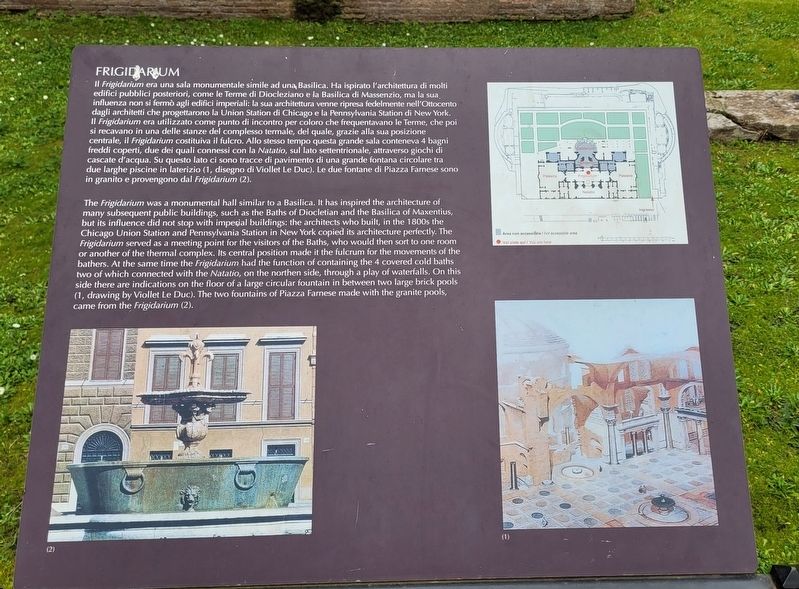
Photographed by James Hulse, February 27, 2024
1. Frigidarium / Cold Room Marker

Il Frigidarium era una sala monumentale simile ad una, Basilica. Ha ispirato l'architettura di molti edifici pubblici posteriori, come le Terme di Diocleziano e la Basilica di Massenzio, ma la sua influenza non si fermò agli edifici imperiali: la sua architettura venne ripresa fedelmente nell'Ottocento dagli architetti che progettarono la Union Station di Chicago e la Pennsylvania Station di New York. Il Frigidarium era utilizzato come punto di incontro per coloro che frequentavano le Terme, che poi si recavano in una delle stanze del complesso termale, del quale, grazie alla sua posizione centrale, il Frigidarium costituiva il fulcro. Allo stesso tempo questa grande sala conteneva 4 bagni freddi coperti, due dei quali connessi con la Natatio, sul lato settentrionale, attraverso giochi di cascate d'acqua. Su questo lato ci sono tracce di pavimento di una grande fontana circolare tra due larghe piscine in laterizio (1, disegno di Viollet Le Duc). Le due fontane di Piazza Farnese sono in granito e provengono dal Frigidarium (2).
The Frigidarium was a monumental hall similar to a Basilica. It has inspired the architecture of many subsequent public buildings, such as the Baths of Diocletian and the Basilica of Maxentius, but its influence did not stop with imperial buildings: the architects
this page online
Topics. This historical marker is listed in this topic list: Anthropology & Archaeology.
Location. 41° 52.766′ N, 12° 29.578′ E. Marker is in Roma, Lazio (Latium, Rome), in Città metropolitana di Roma Capitale. It is in San Saba. It is at the intersection of Viale delle Terme di Caracalla and Via Antonina on Viale delle Terme di Caracalla. The marker is located on the grounds to the Baths of Caracalla. Touch for map. Marker is in this post office area: Roma, Lazio 00153, Italy. Touch for directions.

Regionally, it is in Europe, the European
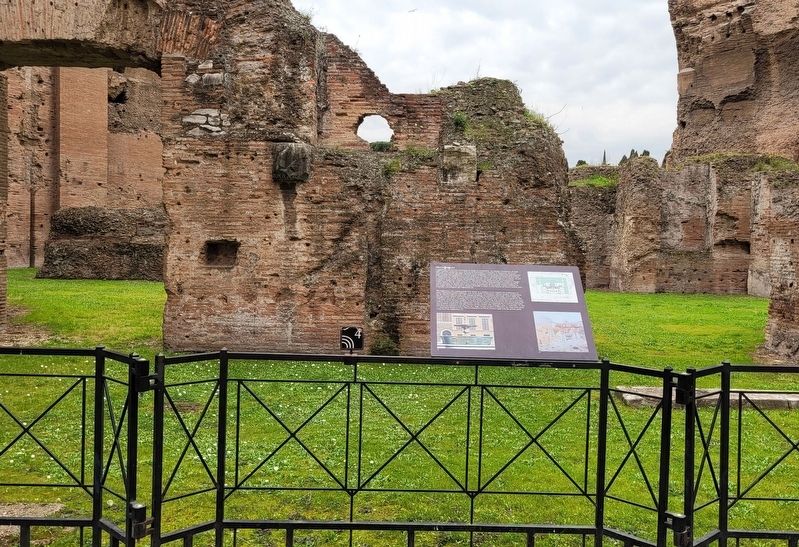
Photographed by James Hulse, February 27, 2024
2. Frigidarium / Cold Room Marker
Other nearby markers. At least 8 other markers are within walking distance of this marker: A different marker also named Frigidarium / Cold Room (a few steps from this marker); Natatio (within shouting distance of this marker); Tabula Lusoria / Game Board (within shouting distance of this marker); La Natatio E I Giochi / Swimming Pools and Games (within shouting distance of this marker); Palestra Occidentale / Western Gym (within shouting distance of this marker); Particolare di Mosaico a Motivo Figurato / Detail of Figurative Mosaic (within shouting distance of this marker); Palestra Orientale / Eastern Gym (about 90 meters away, measured in a direct line); Particolare di Mosaico a Motivo Geometrico / Detail of Geometric Mosaic Pattern (about 90 meters away). Touch for a list and map of all markers in Roma.
More about this marker. There is a small entry fee to visit the Baths of Caracalla
Also see . . . Baths of Caracalla. Wikipedia
The Baths of Caracalla (Italian: Terme di Caracalla) in Rome, Italy, were the city's second largest Roman public baths, or thermae, after the Baths of Diocletian. The baths were likely built between AD 212 (or 211) and 216/217, during(Submitted on February 3, 2025, by James Hulse of Medina, Texas.)the reigns of emperors Septimius Severus and Caracalla. They were in operation until the 530s and then fell into disuse and ruin.Photographed by James Hulse, February 27, 20243. The view of the ruins of the Cold Room and Marker

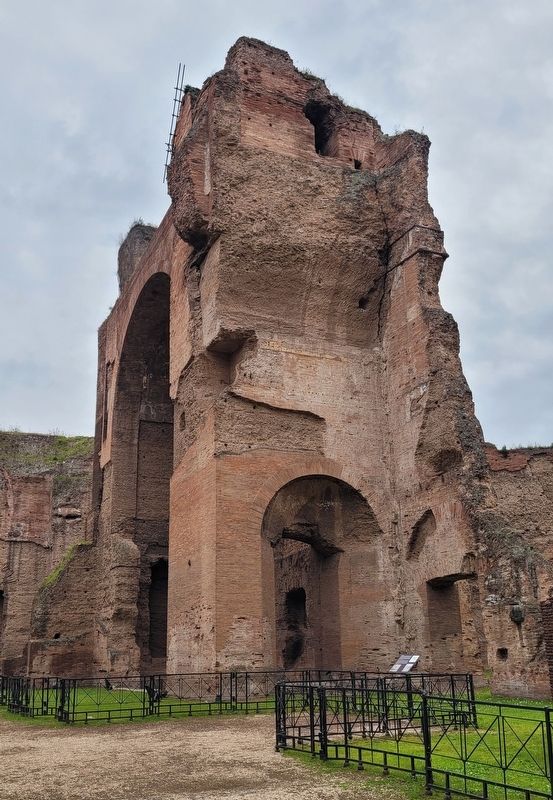
Photographed by James Hulse, February 27, 2024
4. Another view of the Cold Room ruins and Marker
Credits. This page was last revised on February 3, 2025. It was originally submitted on February 2, 2025, by James Hulse of Medina, Texas. This page has been viewed 148 times since then and 13 times this year. Photos: 1, 2, 3, 4. submitted on February 3, 2025, by James Hulse of Medina, Texas.
