
Cockburn Town in Grand Turk, Turks and Caicos Islands, British Overseas Territories — North Atlantic Ocean
Grand Turk and Salt Cay, World Leaders in Salting
Photographed by Sandra Hughes Tidwell, January 21, 2025
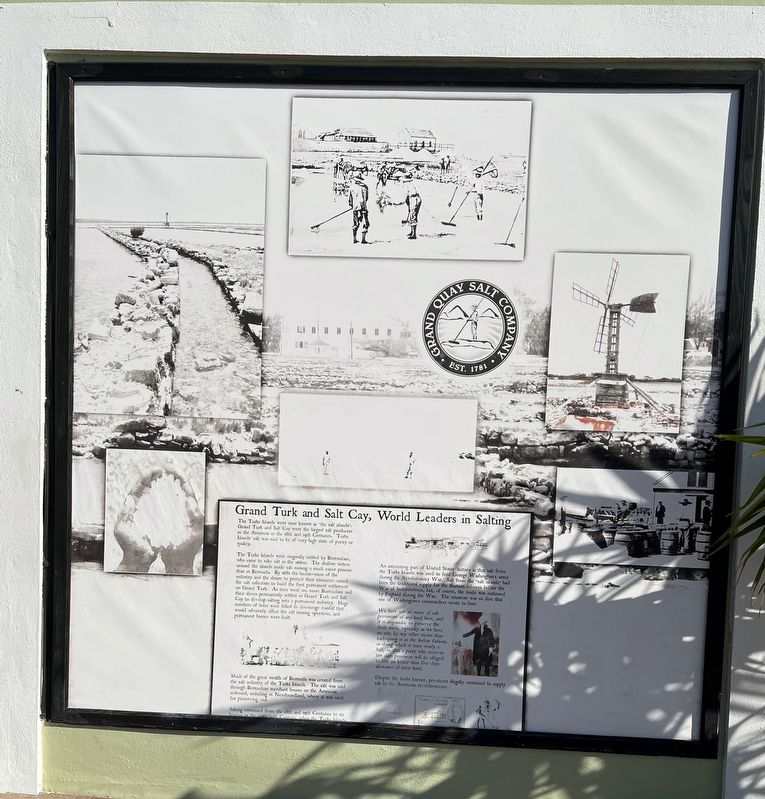
1. Grand Turk and Salt Cay, World Leaders in Salting Marker
The Turks Islands were once known as "the salt islands." Grand Turk and Salt Cay were the largest salt producers in the Americas in the 18th and 19th Centuries. Turks Islands salt was said to be of a very high purity or quality.
The Turks Islands were originally settled by Bermudans, who came to rake salt in the 1660s. The shallow waters around the islands made salt mining a much easier process than Bermuda. By 1681, the lucrativeness of the industry and the desire to protect their resources caused the salt collectors to build the first permanent settlement on Grand Turk. As time went on, more Bermudans and their slaves permanently settled in Grand Turk and Salt Cay to develop salting into a permanent industry. Huge number of trees were felled to discourage rainfall that would adversely affect the salt mining operations, and permanent homes were built.
Much of the great wealth of Bermuda was created from the salt industry of the Turks Islands. The salt was sold through Bermudian merchant houses on the American seaboard, including Newfoundland, where it was used for preserving cod.
Salting continued from the 18th and
this page online
An interesting part of the United States history is that salt from the Turks Islands was used to feed George Washington's army during the Revolutionary War. Salt from the "salt islands" had been the traditional supply for the thirteen colonies before the War of Independence, but of course, the trade was outlawed by England during the war.
The situation was so dire that one of Washington's commanders wrote to him: We have not an ounce of salt provisions of any kind here, and it is impossible to preserve the fresh meat, especially as we have no salt, by any other means that barbequing in the Indian fashion, in doing which it loses nearly a half, so that ta party who receives ten days provision will be obliged to live on better than five day s allowance of meat kind.
Despite the trade barrier, privateers illegally continued to supply to the American revolutionaries.
Topics. This historical marker is listed in these topic lists: Environment • Industry & Commerce • War, US Revolutionary. A significant historical year for this entry is 1660.
Location. 21° 25.677′ N,
Photographed by Sandra Hughes Tidwell, January 21, 2025
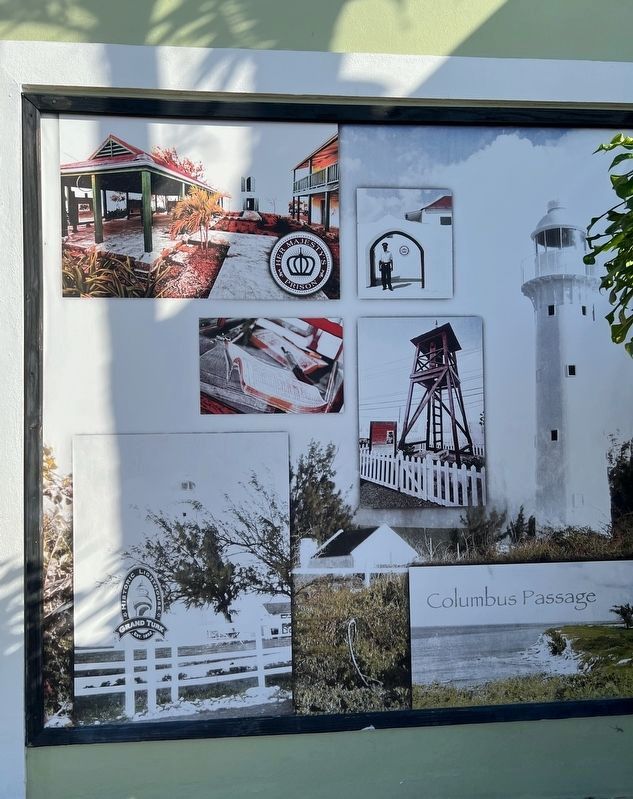
2. Columbus Passage, Her Majesty Prison, Historic Lighthouse Sign

Regionally, it is one of the Lesser Antilles on in the Atlantic Ocean, and in the Anglosphere.
Other nearby markers. At least 8 other markers are within 5 kilometers of this marker, measured as the crow flies: Splashdown Grand Turk (about 150 meters away, measured in a direct line); St. Mary’s Anglican Pro-Cathedral Church (approx. 4.4 kilometers away); Victoria Public Library (approx. 4.5 kilometers away); Todds (approx. 4.7 kilometers away); Timco (approx. 4.7 kilometers away); Grant Building (approx. 4.7 kilometers away); Crofton Coverley House (approx. 4.7 kilometers away); Free Mason's Lodge (approx. 4.8 kilometers away). Touch for a list and map of all markers in Cockburn Town.
Also see . . . Grand Turk salt Salinas. Along with South Caicos and
Photographed by Sandra Hughes Tidwell, January 21, 2025
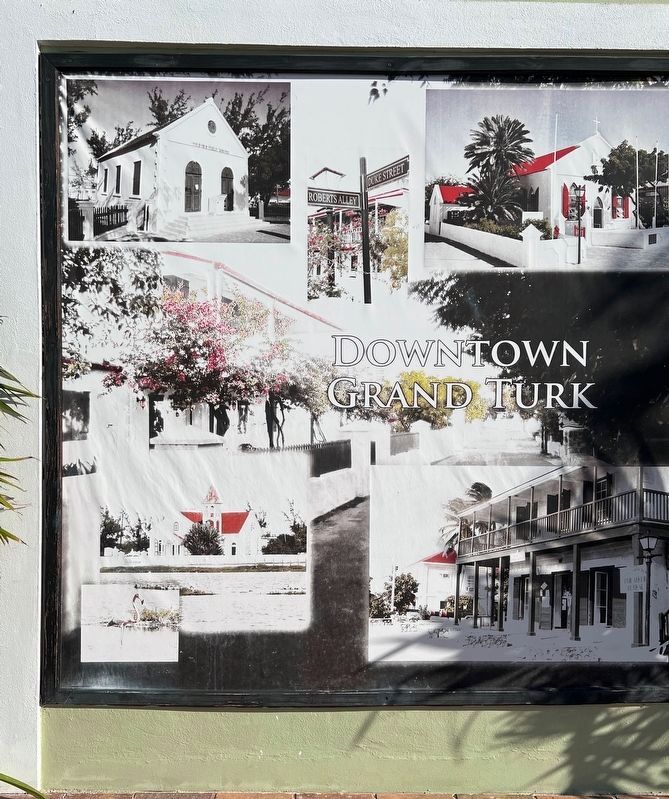
3. Downtown Grand Turk Sign
Photographed by Sandra Hughes Tidwell, January 21, 2025
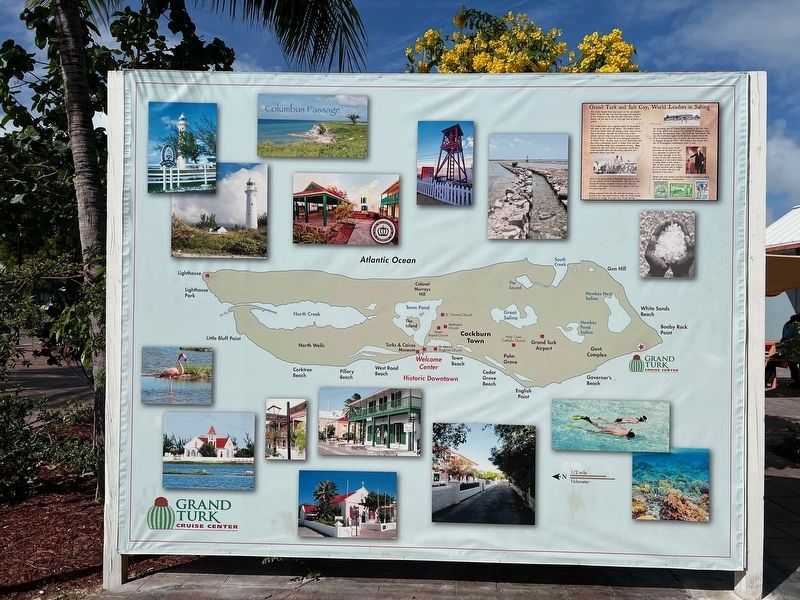
4. Grand Turk Cruise Center Sign
Credits. This page was last revised on April 14, 2026. It was originally submitted on February 4, 2025, by Sandra Hughes Tidwell of Killen, Alabama, USA. This page has been viewed 260 times since then and 74 times this year. Photos: 1, 2, 3, 4. submitted on February 4, 2025, by Sandra Hughes Tidwell of Killen, Alabama, USA. • J. Makali Bruton was the editor who published this page.
