Wilmington in New Hanover County, North Carolina — The American South (South Atlantic)
W. Houston Moore House
1921
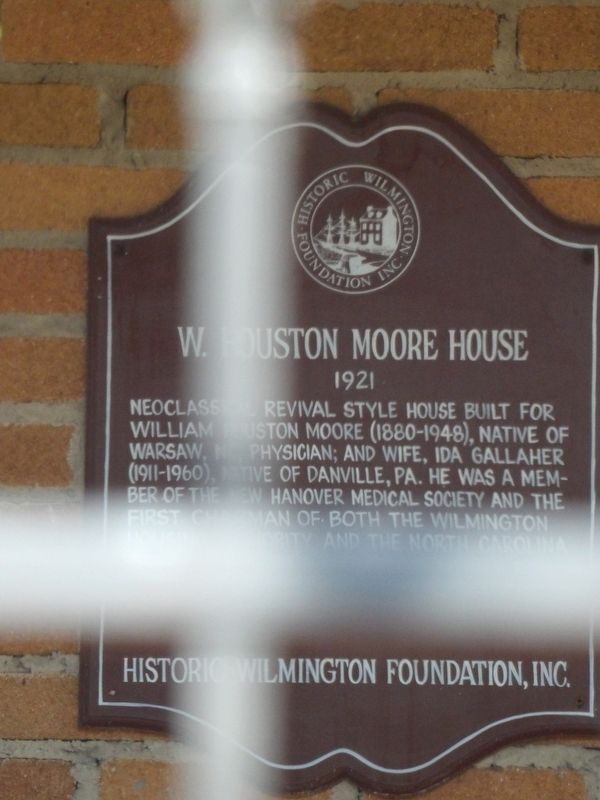
Photographed by Duane and Tracy Marsteller, November 24, 2024
1. W. Houston Moore House Marker
Topics and series. This historical marker is listed in these topic lists: Architecture • Science & Medicine. In addition, it is included in the National Register of Historic Places (NRHP), and the North Carolina, Historic Wilmington Foundation series lists. A significant historical year for this entry is 1921.
Location. 34° 14.254′ N, 77° 55.491′ W. Marker is in Wilmington, North Carolina, in New Hanover County. It is at the intersection of Market Street (Business U.S. 17) and North 19th Street, on the right when traveling west on Market Street. Touch for map. Marker is at or near this postal address: 1819 Market St, Wilmington NC 28403, United States of America. Touch for directions.

Regionally, this marker is in the Coastal Plain and on the Cape Fear Coast. It is also in the American South,
this page online
Other nearby markers. At least 8 other markers are within walking distance of this marker: Joseph D. Edwards House (within shouting distance of this marker); Smith-Willoughby House (within shouting distance of this marker); Hinton-Seale House (within shouting distance of this marker); Bass-Oliver House (within shouting distance of this marker); Woodward House (about 300 feet away, measured in a direct line); Schaefer House (about 300 feet away); Dosher-Lowenstein House (about 300 feet away); Foltz-Gibson (about 300 feet away). Touch for a list and map of all markers in Wilmington.
Regarding W. Houston Moore House. Dr. Moore also served seven years on the North Carolina Medical Board, including as its chairman in 1929. During
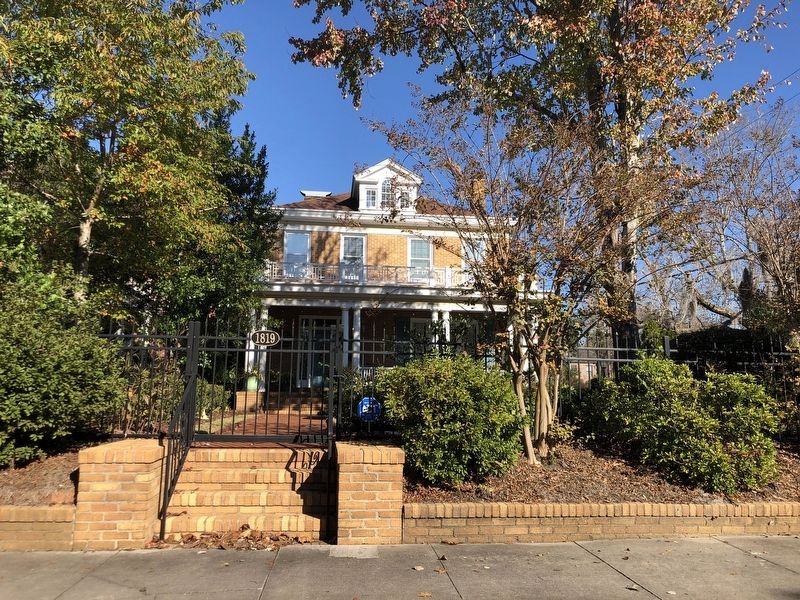
Photographed by Duane and Tracy Marsteller, November 25, 2024
2. W. Houston Moore House Marker
Also see . . .
1. Dr. W. Houston Moore House (PDF). Research report on the house contains more details about its history and those who've owned it. (Prepared by Beth Keane, 2006; via Port City Architecture collection, New Hanover County Public Library) (Submitted on February 8, 2025, by Duane and Tracy Marsteller of Murfreesboro, Tennessee.)
2. Carolina Heights Historic District (PDF). National Register of Historic Places nomination for the district, which includes this house as a contributing property and was listed in 1998. (Prepared by Beth Keane; via National Archives) (Submitted on February 8, 2025, by Duane and Tracy Marsteller of Murfreesboro, Tennessee.)
3. History. The Azalea Festival’s roots go back to 1934 with Dr. Houston
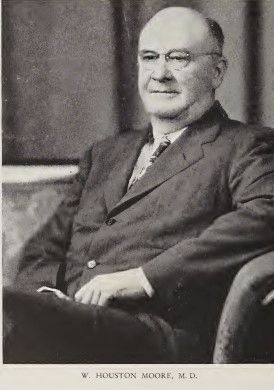
The Epitome (1949), James Walker Memorial Hospital School of Nursing; Internet Archive (Public Domain)
3. Dr. W. Houston Moore
Credits. This page was last revised on February 8, 2025. It was originally submitted on February 8, 2025, by Duane and Tracy Marsteller of Murfreesboro, Tennessee. This page has been viewed 280 times since then and 69 times this year. Photos: 1, 2, 3. submitted on February 8, 2025, by Duane and Tracy Marsteller of Murfreesboro, Tennessee.
Editor’s want-list for this marker. Clear, daylit closeup photograph of marker • Can you help?
