Castro Pretorio in Roma in Città metropolitana di Roma Capitale, Latium, Rome, Italy — Central Italy (Tyrrhenian Coast)
Cippi Funerari
⎯⎯⎯
Tomb Markers
Photographed by James Hulse, March 1, 2024
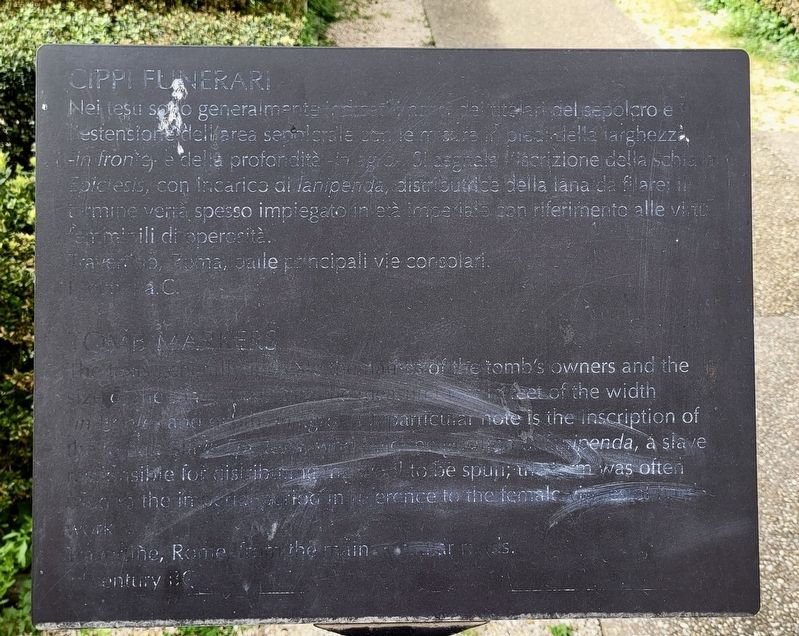
1. Cippi Funerari / Tomb Markers Marker

Nei testi sono generalmente dei titolari del sepolcro e l'estensione dell'area sepolcrale con le misure in piedi della larghezza -in fronte- e della profondità -in agro-. Si segnala l'iscrizione della schiava Epictesis, con incarico di lanipenda distributrice della lana da filare il termine verrà spesso impiegato in età imperiale con riferimento alle virtù femminili di operosità.
Travertino, Roma, dalle principali vie consolari.
I secolo a.C.
The texts generally include the names of the tomb's owners and the size of the tomb area, with measurements in feet of the width -in fronte- and depth -in agro-. The inscription of the slave Epictesis is noted, with the role of lanipenda, distributor of spinning wool. This term will often be used in Imperial times in reference to feminine virtues of industriousness.
Travertine, Rome, from the main consular roads.
1st century BC.
Topics. This historical marker is listed in this topic list: Anthropology & Archaeology.
Location. 41° 54.211′ N, 12° 29.954′ E. Marker is in Roma, Lazio (Latium,
this page online

Regionally, it is in Europe, the European Union, the Schengen Area, a coastal Mediterranean country, and the Western World. Historically, it finds itself in what was once the Roman Empire.
Other nearby markers. At least 8 other markers are within walking distance of this marker: Stele Funeraril / Funerary Steles (here, next to this marker); Stele Funerarie di Soldati e Delle Guardie del Corpo di Nerone (here, next to this marker); Grandi Altari Funerari Iscritti / Large Inscribed Funerary Altars (a few steps from this marker); Cratere Colossale / Colossal Krater (within shouting distance of this marker); Sarcofagi / Sarcophagi (within shouting distance of this marker); Altari Funerari Iscritti / Inscribed Funerary Altars (within shouting distance of
Photographed by James Hulse, March 1, 2024
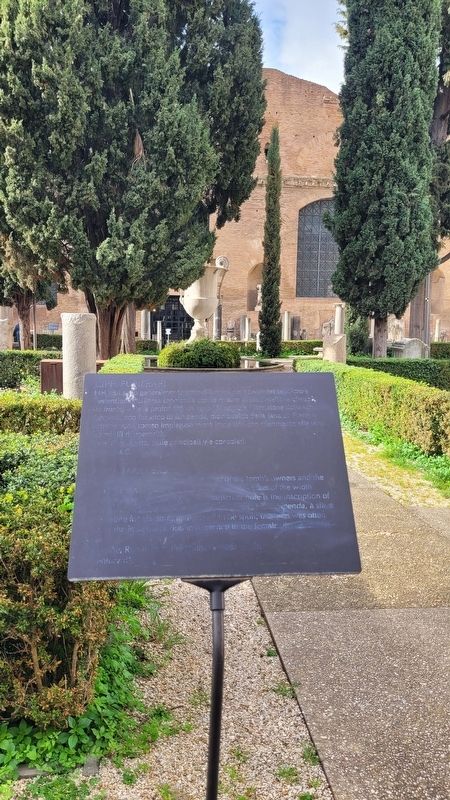
2. Cippi Funerari / Tomb Markers Marker
More about this marker. There is a small fee to visit the Baths of Diocletian National Roman Museum.
Also see . . . Baths of Diocletian. Wikipedia
The Baths of Diocletian (Latin: Thermae Diocletiani, Italian: Terme di Diocleziano) were public baths in ancient Rome. Named after emperor Diocletian and built from AD 298 to 306, they were the largest of the imperial baths. The project was originally commissioned by Maximian upon his return to Rome in the autumn of 298 and was continued after his and Diocletian's abdication under Constantius, father of Constantine.(Submitted on March 1, 2025, by James Hulse of Medina, Texas.)
Photographed by James Hulse, March 1, 2024
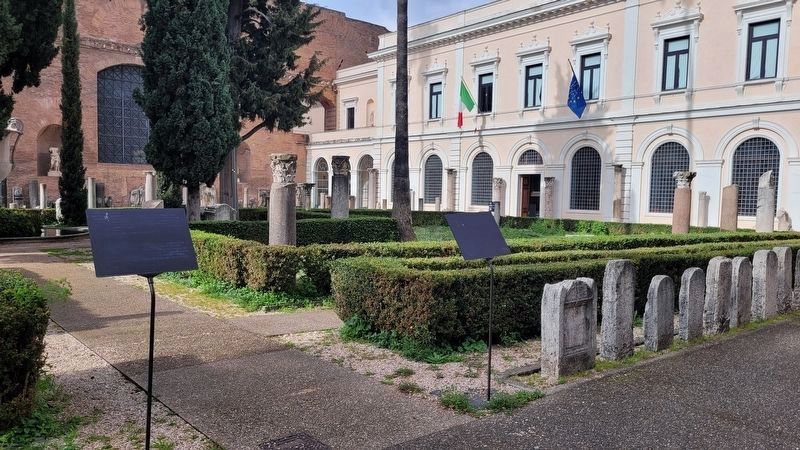
3. The view of the Tomb Markers in the garden
The Tomb Marker is the left marker of the two markers.
Credits. This page was last revised on March 2, 2025. It was originally submitted on March 1, 2025, by James Hulse of Medina, Texas. This page has been viewed 114 times since then and 13 times this year. Photos: 1, 2, 3. submitted on March 2, 2025, by James Hulse of Medina, Texas.
