Castro Pretorio in Roma in Città metropolitana di Roma Capitale, Latium, Rome, Italy — Central Italy (Tyrrhenian Coast)
Le Terme di Diocleziano e La Certosa si Santa Maria Degli Angeli
The Baths of Diocletian and the Charterhouse of Santa Maria Degli Angeli
Photographed by James Hulse, March 1, 2024
1. Le Terme di Diocleziano e La Certosa si Santa Maria Degli Angeli Marker

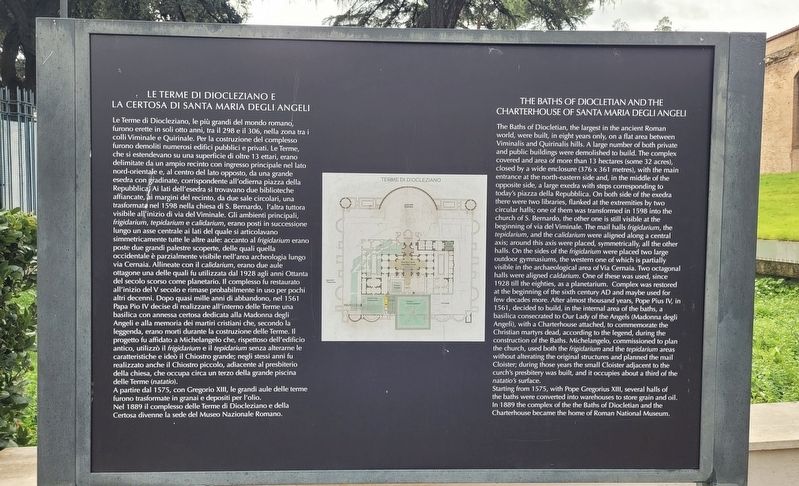
Le Terme di Diocleziano, le più grandi del mondo romano, furono erette in soli otto anni, tra il 298 e il 306, nella zona tra i colli Viminale e Quirinale. Per la costruzione del complesso furono demoliti numerosi edifici pubblici e privati. Le Terme, che si estendevano su una superficie di oltre 13 ettari, erano delimitate da un ampio recinto con ingresso principale nel lato nord-orientale e, al centro del lato opposto, da una grande esedra con gradinate, corrispondente all'odierna piazza della Repubblica. Ai lati dell'esedra si trovavano due biblioteche affiancate, ai margini del recinto, da due sale circolari, una trasformata nel 1598 nella chiesa di S. Bernardo, l'altra tuttora visibile all'inizio di via del Viminale. Gli ambienti principali, frigidarium, tepidarium e calidarium, erano posti in successione lungo un asse centrale ai lati del quale si articolavano simmetricamente tutte le altre aule: accanto al frigidarium erano poste due grandi palestre scoperte, delle quali quella occidentale è parzialmente visibile nell'area archeologia lungo via Cernaia. Allineate con il calidarium, erano due aule
this page online
A partire dal 1575, con Gregorio XIII, le grandi aule delle terme furono trasformate in granai e depositi per l'olio. Nel 1889 il complesso delle Terme di Diocleziano e della Certosa divenne la sede del Museo Nazionale Romano.
The Baths of Diocletian, the largest in the ancient Roman world, were built,
Photographed by James Hulse, March 1, 2024
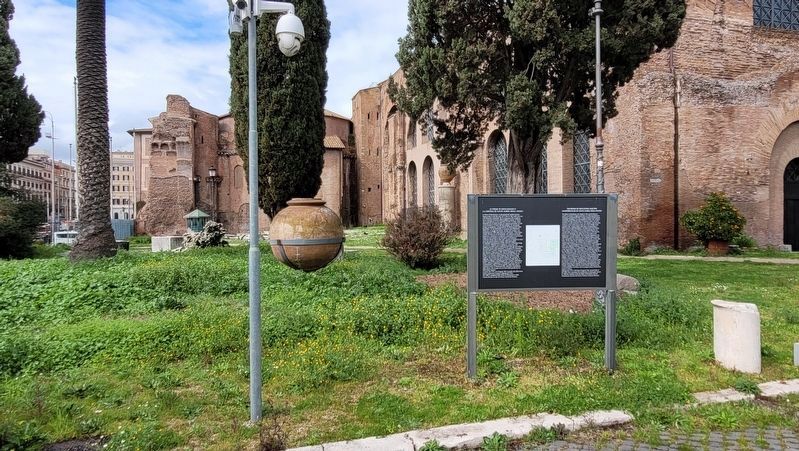
2. The view of the marker near the exit to the museum grounds
Photographed by James Hulse, March 1, 2024
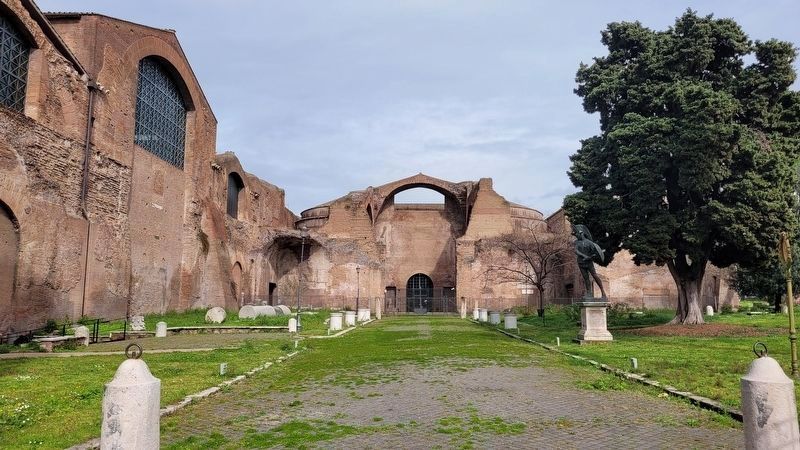
3. The southwest exterior view of the Baths of Diocletian
Starting from 1575, with Pope Gregorius XIII, several halls of the baths were converted into warehouses to store grain and oil. In 1889 the complex of the the Baths of Diocletian and the Charterhouse became the home of Roman National Museum.
Topics. This historical marker is listed in this topic list: Anthropology & Archaeology. A significant historical year for this entry is 1598.
Location. 41° 54.181′ N, 12° 29.965′ E. Marker is in Roma, Lazio (Latium, Rome),
Photographed by James Hulse, March 1, 2024
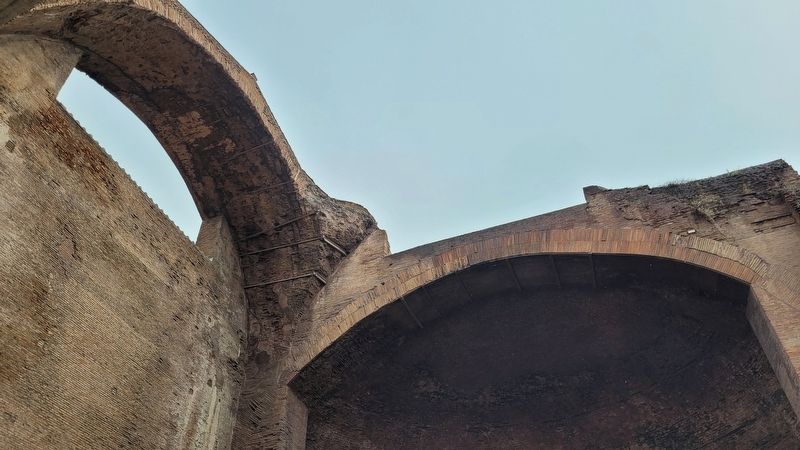
4. A section of the roof of the Baths of Diocletian

Regionally, it is in Europe, the European Union, the Schengen Area, a coastal Mediterranean country, and the Western World. Historically, it finds itself in what was once the Roman Empire.
Other nearby markers. At least 8 other markers are within walking distance of this marker: Il Giardivο / The Garden (a few steps from this marker); Altari Funerari Iscritti / Inscribed Funerary Altars (within shouting distance of this marker); a different marker also named Altari Funerari Iscritti / Inscribed Funerary Altars (within shouting distance of this marker); Grandi Altari Funerari Iscritti / Large Inscribed Funerary Altars (within shouting distance of this marker); Cratere Colossale / Colossal Krater (within shouting distance of this marker); Cippi Funerali / Tomb Markers
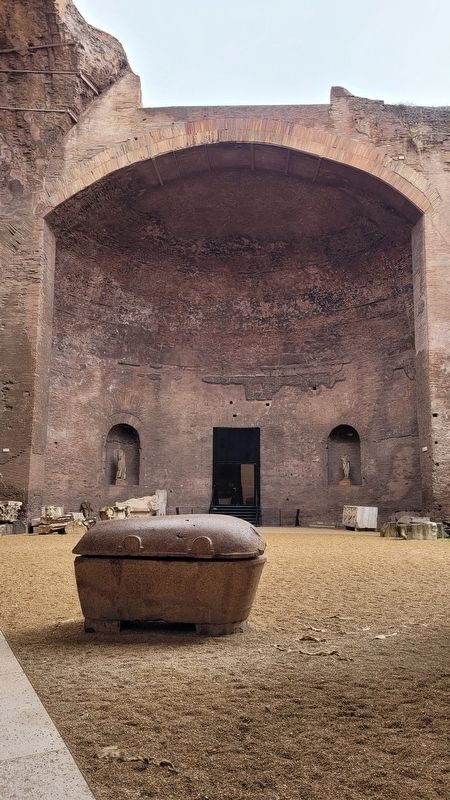
Photographed by James Hulse, March 1, 2024
5. A section of the Baths of Diocletian
More about this marker. There is a small fee to visit the Baths of Diocletian National Roman Museum.
Also see . . . Baths of Diocletian. Wikipedia
The Baths of Diocletian (Latin: Thermae Diocletiani, Italian: Terme di Diocleziano) were public baths in ancient Rome. Named after emperor Diocletian and built from AD 298 to 306, they were the largest of the imperial baths. The project was originally commissioned by Maximian upon his return to Rome in the autumn of 298 and was continued after his and Diocletian's abdication under Constantius, father of Constantine.(Submitted on March 4, 2025, by James Hulse of Medina, Texas.)
Credits. This page was last revised on March 5, 2025. It was originally submitted on March 4, 2025, by James Hulse of Medina, Texas. This page has been viewed 128 times since then and 22 times this year. Photos: 1, 2, 3, 4, 5. submitted on March 5, 2025, by James Hulse of Medina, Texas.
