South Loop in Chicago in Cook County, Illinois — The American Midwest (Great Lakes)
20th Century Healthcare: St. Luke's Hospital
Photographed by Sean P. Flynn, February 28, 2025
1. 20th Century Healthcare: St. Luke's Hospital Marker
Inscription.
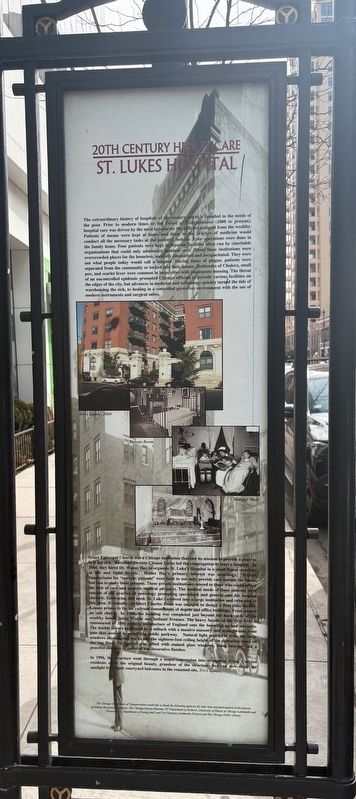
20th Century Healthcare: St. Luke's Hospital. . The extraordinary history of hospitals of the modern world is founded in the needs of the poor. Prior to modern times or the Period of Enlightenment (1800 to present), hospital care was driven by the need to separate the afflicted indigent from the wealthy. Patients of means were kept at home and those in the practice of medicine would conduct all the necessary tasks at the patient's bedside. Even operations were done in the family home. Poor patients were kept in separate facilities often run by charitable organizations that could only administer nominal care. Often, these institutions were overcrowded places for the homeless, mentally diminished and incapacitated. They were not what people today would call a hospital. During times of plague, patients were separated from the community or locked into their homes. Outbreaks of Cholera, small pox, and scarlet fever were common in large cities with inadequate housing. The threat of an uncontrolled epidemic prompted Chicago officials to provide various facilities on the edges of the city, but advances in medicine and technology quickly turned the tide of warehousing the sick, to healing in a controlled germ-free environment with the use of modern instruments and surgical suites. , , Grace Episcopal Church was a Chicago institution that saw its mission to provide a place to heal the sick. Reverend Dewitte Clinton Locke led the congregation to start a hospital. In 1864, they hired Dr. Walter Hay to organize St. Luke's Hospital in a small frame structure at 8th and State Streets. Walter Hay's primary interest was neurology. Private Sanatoriums for "nervous patients" were built to not only provide care outside the home, but also to study these patients. These private institutions catered to those who could afford the best of care and modern medical advances. The medical needs of these patients went outside of the practice of neurology prompting specialized and general care for hospital clientele. Embracing this need, St. Luke's evolved into a large institution and relocated in this area. Eventually, architect Charles Frost was engaged to design a first class facility. Known primarily for his railroad commissions of depots and office buildings, Frost seemed an odd choice. In 1908, the building was completed just beyond the backyards of the wealthy homes lining Prairie and Indiana Avenues. The heavy facade of the first level is reminiscent of 19th century architecture of England sans the beautiful arched windows. The double towers are joined by a setback with a massive masonry and wrought iron front gate that seemed to engulf the public parkway. Natural light poured in from the large windows illuminating wards and the eighteen-foot ceiling height of the operating room on the top floor. The chapel was gifted with stained glass windows, wood benches and a peaceful elegance of material and decorative finishes. , , In 1996, the structure went through a major conversion into residential living. Current residents enjoy the original beauty, grandeur of the structure, but can now enjoy the sunlight from their courtyard balconies in the renamed site, Trevi Square.
The extraordinary history of hospitals of the modern world is founded in the needs of the poor. Prior to modern times or the Period of Enlightenment (1800 to present), hospital care was driven by the need to separate the afflicted indigent from the wealthy. Patients of means were kept at home and those in the practice of medicine would conduct all the necessary tasks at the patient's bedside. Even operations were done in the family home. Poor patients were kept in separate facilities often run by charitable organizations that could only administer nominal care. Often, these institutions were overcrowded places for the homeless, mentally diminished and incapacitated. They were not what people today would call a hospital. During times of plague, patients were separated from the community or locked into their homes. Outbreaks of Cholera, small pox, and scarlet fever were common in large cities with inadequate housing. The threat of an uncontrolled epidemic prompted Chicago officials to provide various facilities on the edges of the city, but advances in medicine and technology quickly turned the tide of warehousing the sick, to healing in a controlled germ-free environment with the use of modern instruments and surgical suites.
Grace Episcopal Church was a Chicago institution that saw its mission to provide a place to heal the sick. Reverend Dewitte Clinton Locke led the congregation to start a hospital. In 1864, they hired Dr. Walter Hay to organize St. Luke's Hospital in a small frame structure at 8th and State Streets. Walter Hay's primary interest was neurology. Private Sanatoriums for "nervous patients" were built to not only provide care outside the home, but also to study these patients. These private institutions catered to those who could afford the best of care and modern medical advances. The medical
Click or scan to see this page online
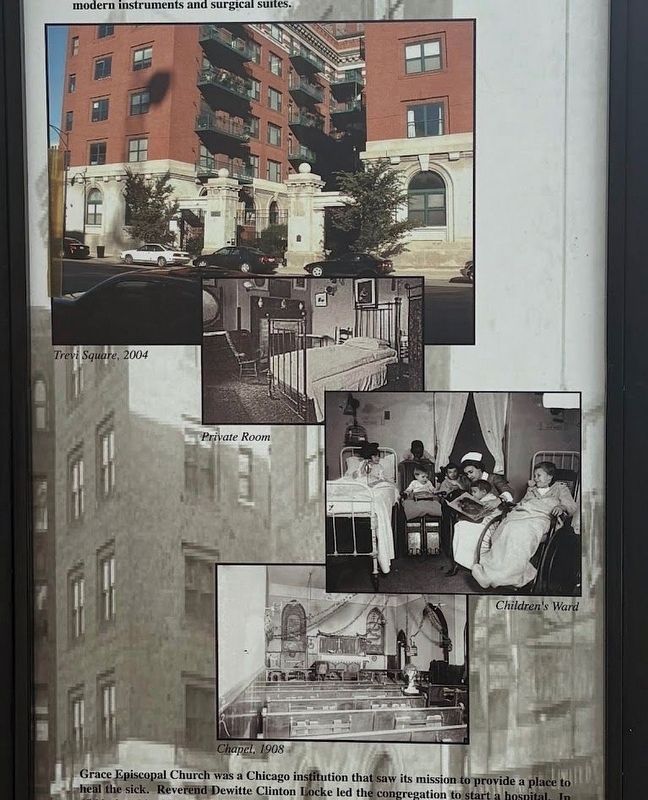
needs of these patients went outside of the practice of neurology prompting specialized and general care for hospital clientele. Embracing this need, St. Luke's evolved into a large institution and relocated in this area. Eventually, architect Charles Frost was engaged to design a first class facility. Known primarily for his railroad commissions of depots and office buildings, Frost seemed an odd choice. In 1908, the building was completed just beyond the backyards of the wealthy homes lining Prairie and Indiana Avenues. The heavy facade of the first level is reminiscent of 19th century architecture of England sans the beautiful arched windows. The double towers are joined by a setback with a massive masonry and wrought iron front gate that seemed to engulf the public parkway. Natural light poured in from the large windows illuminating wards and the eighteen-foot ceiling height of the operating room on the top floor. The chapel was gifted with stained glass windows, wood benches and a peaceful elegance of material and decorative finishes.
In 1996, the structure went through a major conversion into residential living. Current residents
Photographed by Sean P. Flynn, February 28, 2025
2. 20th Century Healthcare: St. Luke's Hospital Marker
enjoy the original beauty, grandeur of the structure, but can now enjoy the sunlight from their courtyard balconies in the renamed site, Trevi Square.
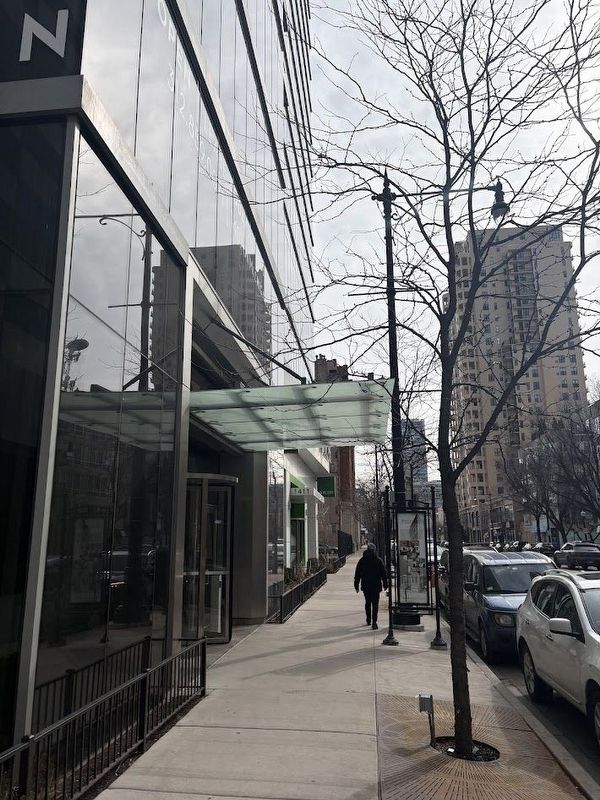
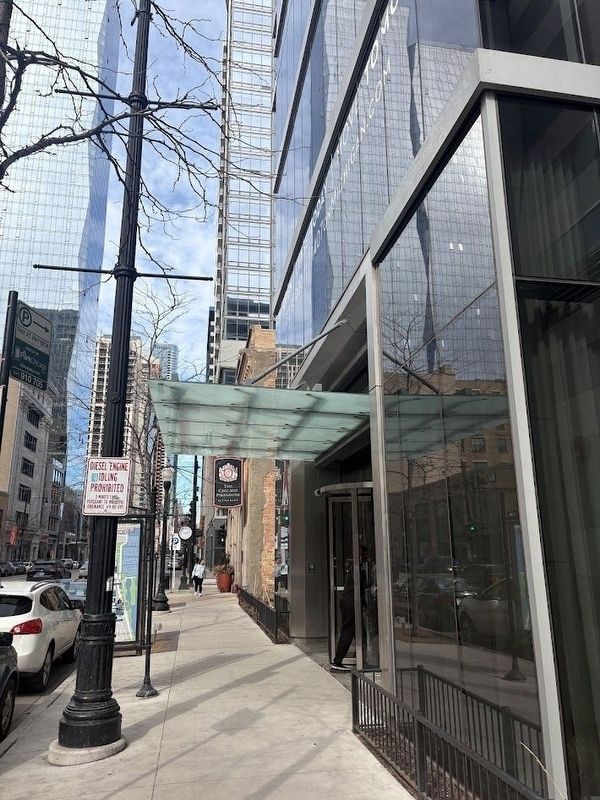
Location. 41° 51.824′ N, 87° 37.46′ W. Marker is in Chicago, Illinois, in Cook County. It is in South Loop. It is on South Michigan Avenue south of 14th Street, on the right when traveling north. Touch for map. Marker is at or near this postal address: 1401 South Michigan Avenue, Chicago IL 60605, United States of America. Touch for directions.
Regionally, this marker is in the American Midwest. Globally, it is in North America, on the Great Lakes, in the Western Hemisphere, in the Western World, and in the Anglosphere. Historically, it finds itself in what was once the Viceroyalty of New France, the territory of the Mississippian Culture, and the Northwest Territory.
Other nearby markers. At least 8 other markers are within walking distance of this
Photographed by Sean P. Flynn, February 28, 2025
3. Motor Row District marker
This north-facing marker shows the other side of the sign, featuring the Motor Row historic district.
More about this marker. The other side of the sign is separate marker about Chicago's Motor Row district.
Also see . . . Rush University: St. Luke's Institutional Records. St. Luke's merged with Presbyterian Hospital in 1956 and moved operations to Presbyterian's hospital campus on the west side in 1959. In 1969, the hospital merged with Rush Medical College. (Submitted on March 10, 2025, by Sean P. Flynn of Oak Park, Illinois.)
Photographed by Sean P. Flynn, February 28, 2025
4. Close-up of the photos of St. Luke's
Credits. This page was last revised on March 10, 2025. It was originally submitted on March 10, 2025, by Sean P. Flynn of Oak Park, Illinois. This page has been viewed 223 times since then and 59 times this year. Photos:1, 2, 3. submitted on March 10, 2025, by Sean P. Flynn of Oak Park, Illinois. 4. submitted on March 4, 2025, by Sean P. Flynn of Oak Park, Illinois.