Elkton in Rockingham County, Virginia — The American South (Mid-Atlantic)
Making a Living on the Mountain
Photographed by Craig Swain, September 16, 2024
1. Making a Living on the Mountain Marker
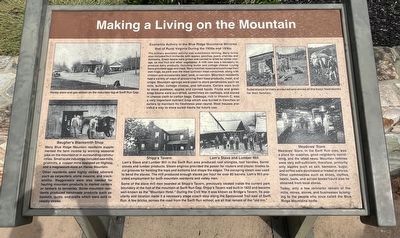
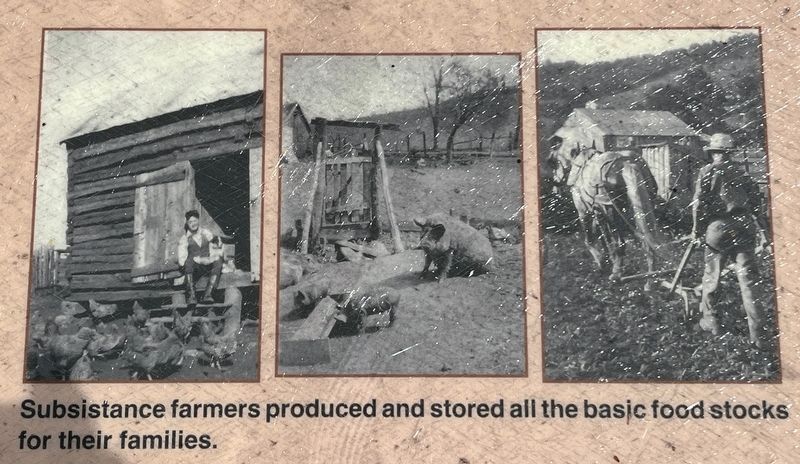
The primary economic activity was subsistence farming. Many farms also included fruit orchards, with apples, peaches, pears, cherries, and damsons. Green beans were grown and canned or dried for winter storage, as was fruit and other vegetables. A milk cow was a necessity to produce dairy products, including butter and cottage cheese. Laying hens provided eggs and meat. Many families raised and butchered their own hogs, as pork was the most common meat consumed, along with chicken and occasionally beef, lamb, or venison. Mountain residents had a variety of ways of preserving their food products, meat, and crops. Mountain springs were used to store perishables such as milk, butter, cottage cheese, and left-overs. Cellars were built to store potatoes, apples and canned foods. Fruits and green snap beans were sun-dried, sometimes on rooftops, and stored in cheese cloth or cotton bags. Cabbage, rich in Vitamin C, was a very important nutrient crop which was buried in trenches or cellars to maintain its freshness year-round.
this page online
Many Blue Ridge Mountain residents supplemented the farm income by working seasonal jobs on the mountain or in surrounding communities. Small scale industries included saw mills, gristmills, a copper mine operated on Hightop, and a magnesium mine on Hanse Mountain.
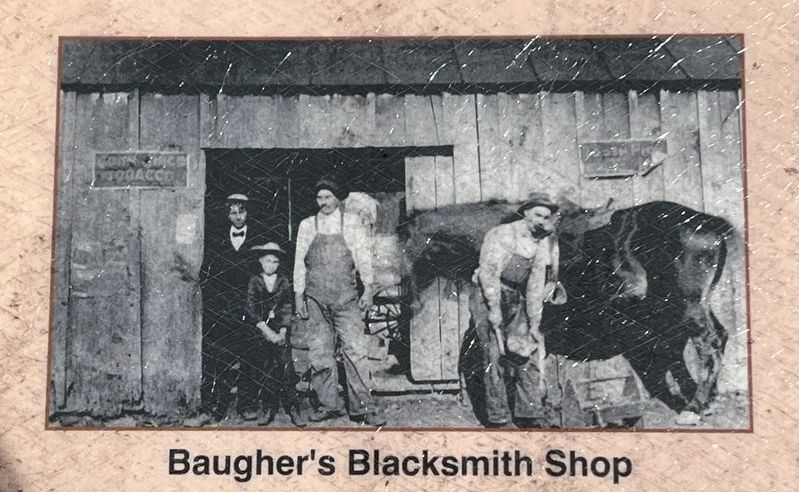
Other residents were highly skilled laborers such as carpenters, stone masons, and blacksmiths. Waggoneers were also needed for hauling mountain products to market centers or tanbark to tanneries. Some mountain residents produced handmade products such as baskets, quilts, and crafts which were sold to nearby stores.
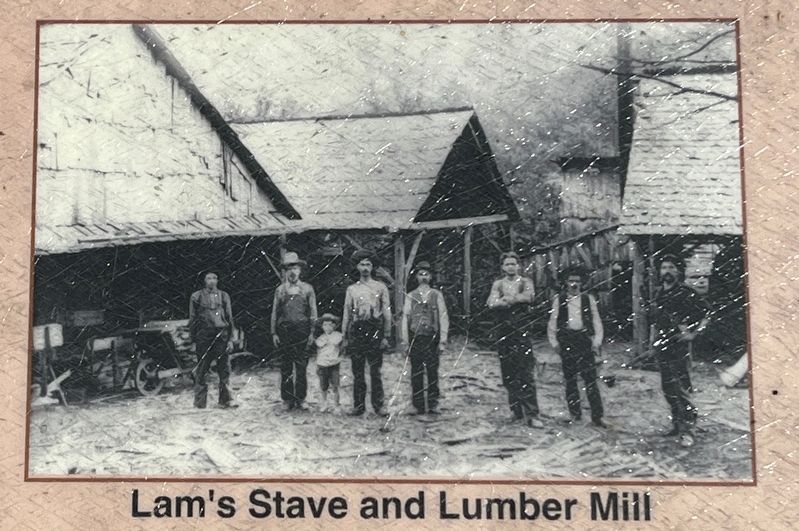
Lam's Stave and Lumber Mill in the Swift Run area produced roof shingles, tool handles, barrel staves and lumber products. Steam engines provided the power for routers and crozier blades to cut grooves for holding the tops and bottoms and shape the edges. The escaping steam was used to bend the staves. The mill produced enough staves per hour for over 80 barrels. Lam's Mill provided employment for both mountain residents and valley men.
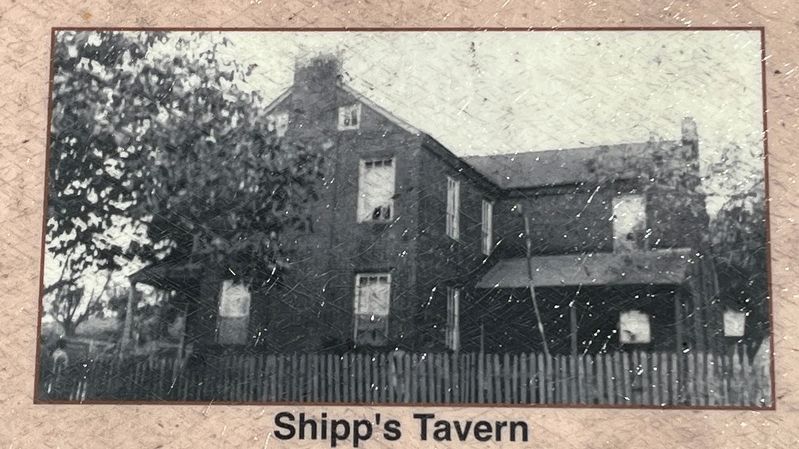
Some of the stave mill men boarded at Shipp's Tavern,
Photographed by Craig Swain, September 16, 2024
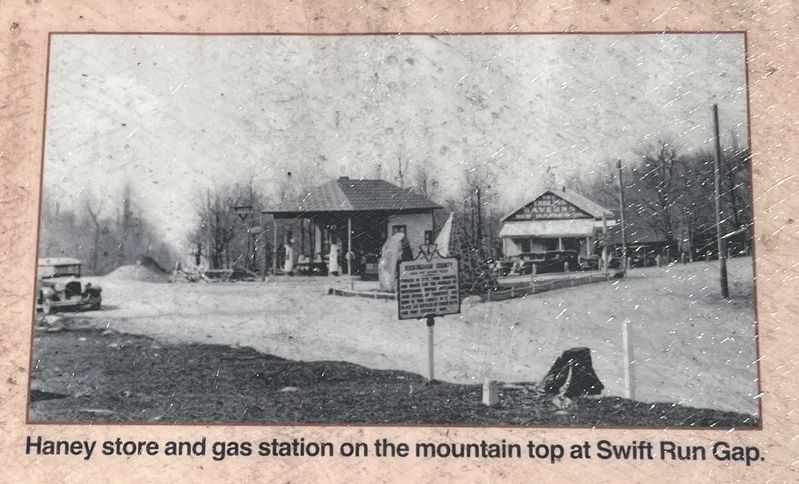
2. Haney store and gas station on the mountain top at Swift Run Gap
Photo on the upper left of the marker.
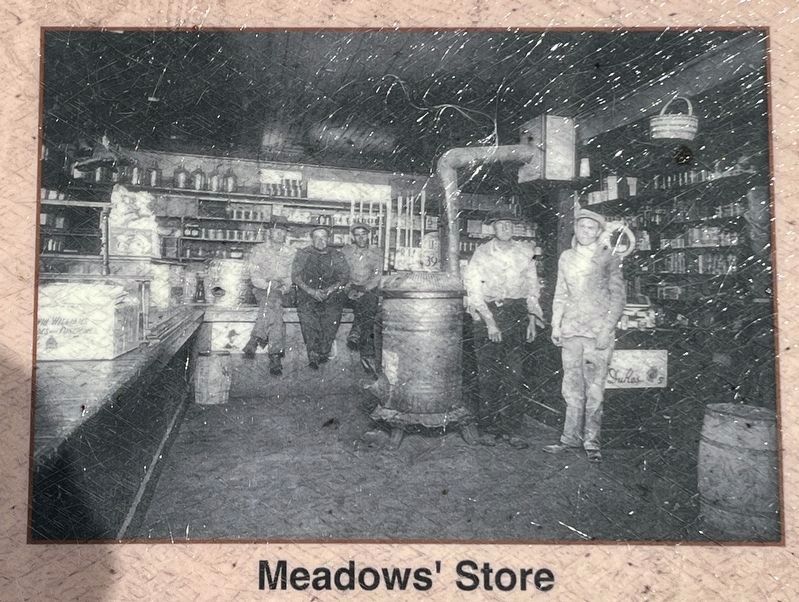
Meadow's Store, in the Swift Run area, was a place for supplies, good neighborly socializing, and the latest news. Mountain families were very self-sufficient, therefore, primarily only staples such as salt, kerosene, sugar, and coffee were purchased or traded at stores. Other commodities such as shoes, clothes, fabric, tools, and school books could also be obtained from local stores.
Today, only a few remnants remain of the mills, mines, stores, and businesses belonging to the people who once called the Blue Ridge Mountains home.
Erected 2024 by Blue Ridge Heritage Project.
Topics. This historical marker is listed in these topic lists: Agriculture • Industry & Commerce. A significant historical year for this entry is 1832.
Location. 38° 24.369′ N,
Photographed by Craig Swain, September 16, 2024
3. Baugher's Blacksmith Shop
Photo on the left center of the marker.

Regionally, this marker is in Virginia’s Shenandoah Valley. It is also in the American South and specifically in the Upper South. Globally, it is in North America, the Western Hemisphere, the Western World, and the Anglosphere. Historically, it finds itself in what was once the territory of the Mississippian Culture, one of the original Thirteen Colonies, one of the Confederate States of America, and the Antebellum South.
Other nearby markers. At least 8 other markers are within walking distance of this marker: Schools and Churches (here, next to this marker); Rockingham Memorial for Families Displaced (here, next to this marker); Family and Community Life (here, next to this marker); Displacement (here, next to this marker); Miller-Kite House (approx. 0.2 miles away); Jennings House
Photographed by Craig Swain, September 16, 2024
4. Shipp's Tavern
Photo in the center of the marker.
Another marker is no longer nearby. Miller-Argabright-Cover-Kite House (was approx. 0.2 miles away but has been replaced with another marker now near it).
Also see . . . Blue Ridge Heritage Project. Website for the project which placed this and other memorials, with additional details about the displaced families and the creation of Shenandoah National Park. (Submitted on April 12, 2025, by Craig Swain of Leesburg, Virginia.)
Photographed by Craig Swain, September 16, 2024
5. Lam's Stave and Lumber Mill
Photo in the center of the marker.
Photographed by Craig Swain, September 16, 2024
6. Subsistence Farmers
Photo on the right side of the marker, captioned, "Subsistance farmers produced and stored all the basic food stocks for their families."
Photographed by Craig Swain, September 16, 2024
7. Meadow's Store
Photo on the lower right of the marker.
Photographed by Craig Swain, September 16, 2024
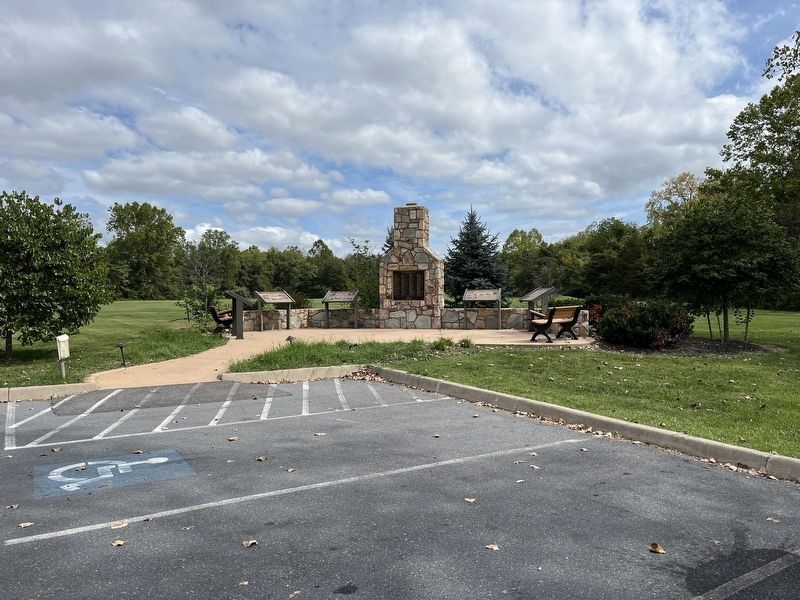
8. Rockingham Memorial and Markers
Credits. This page was last revised on April 13, 2025. It was originally submitted on April 12, 2025, by Craig Swain of Leesburg, Virginia. This page has been viewed 219 times since then and 55 times this year. Photos: 1, 2, 3, 4, 5, 6, 7. submitted on April 12, 2025, by Craig Swain of Leesburg, Virginia. 8. submitted on October 26, 2024, by Craig Swain of Leesburg, Virginia.
