Blanding in San Juan County, Utah — The American Mountains (Southwest)
Exposure and Safe Keeping
Photographed by James Hulse, March 28, 2025
1. Exposure and Safe Keeping Marker
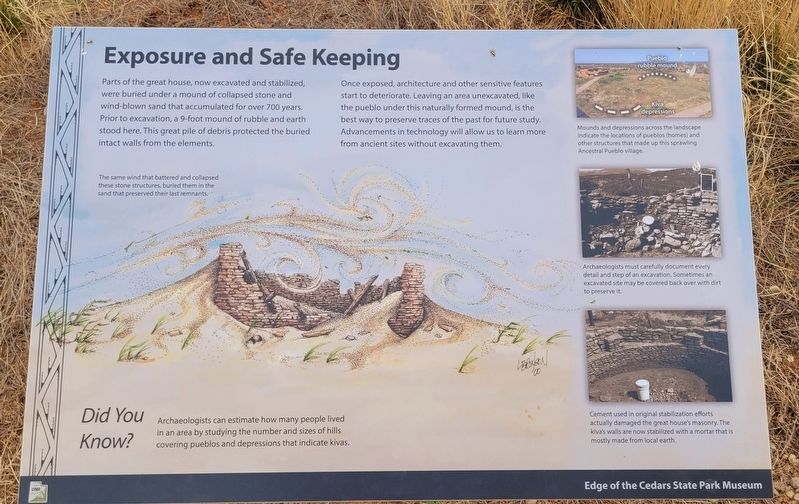
Once exposed, architecture and other sensitive features start to deteriorate. Leaving an area unexcavated, like the pueblo under this naturally formed mound, is the best way to preserve traces of the past for future study. Advancements in technology will allow us to learn more from ancient sites without excavating them.
Did You Know?
Archaeologists can estimate how many people lived in an area by studying the number and sizes of hills covering pueblos and depressions that indicate kivas.
Captions
(Photo #1) The same wind that battered and collapsed these stone structures, buried them in the sand that preserved their last remnants.
(Photo #2) Mounds and depressions across the landscape indicate the locations of pueblos (homes) and other structures that made up this sprawling Ancestral Pueblo village.
(Photo #3) Archaeologists must carefully document every detail and step of an excavation. Sometimes an excavated site may be covered back over with dirt to preserve it.
(Photo #4) Cement used in original stabilization efforts actually damaged the great house's masonry. The kiva's walls are now stabilized with a mortar that is mostly made from local earth.
Erected by Edge
this page online
Topics. This historical marker is listed in these topic lists: Anthropology & Archaeology • Settlements & Settlers.
Location. 37° 37.883′ N, 109° 29.451′ W. Marker is in Blanding, Utah, in San Juan County. It is at the intersection of West 400 North and 600 W on West 400 North. The marker is located on the grounds of the Edge of the Cedars State Park Museum. Touch for map. Marker is at or near this postal address: 660 W 400 N, Blanding UT 84511, United States of America. Touch for directions.

Regionally, this marker is in Canyon Country. It is also in the American Mountain West, on the Colorado Plateau, and at the Four Corners. Globally, it is in North America, the Western Hemisphere, the Western World, and the Anglosphere. Historically, it finds itself in what was once New Spain and also Mexico’s Alta California.

Other nearby markers. At least 8 other markers are within walking distance of this marker: Leaving the Pieces In Place (here, next to this marker); Drought, Frost, and Migration in the 1200s (here, next to this marker);
Photographed by James Hulse, March 28, 2025
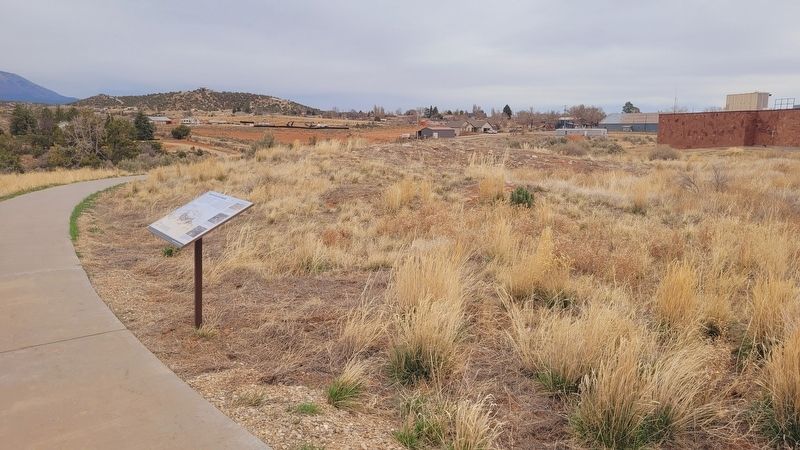
2. Exposure and Safe Keeping Marker
Photographed by James Hulse, March 28, 2025
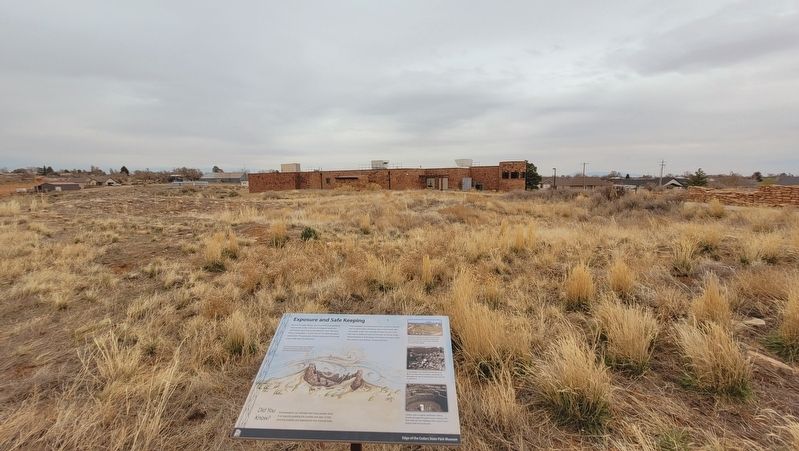
3. The unexcavated area and the marker
Credits. This page was last revised on April 19, 2025. It was originally submitted on April 19, 2025, by James Hulse of Medina, Texas. This page has been viewed 99 times since then and 14 times this year. Photos: 1, 2, 3. submitted on April 19, 2025, by James Hulse of Medina, Texas.
