Maison Reid Wilson

La maison Reid Wilson
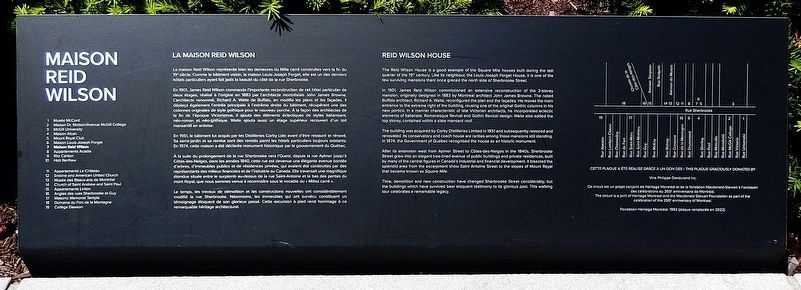
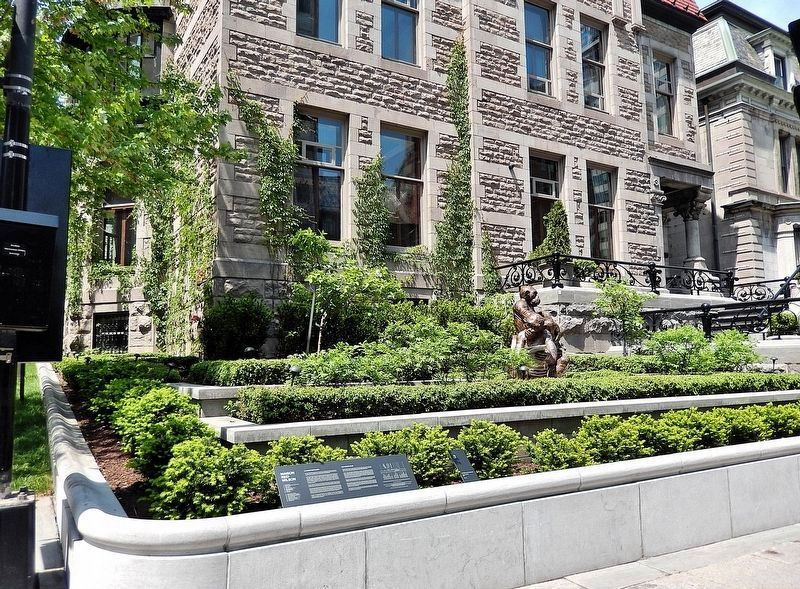
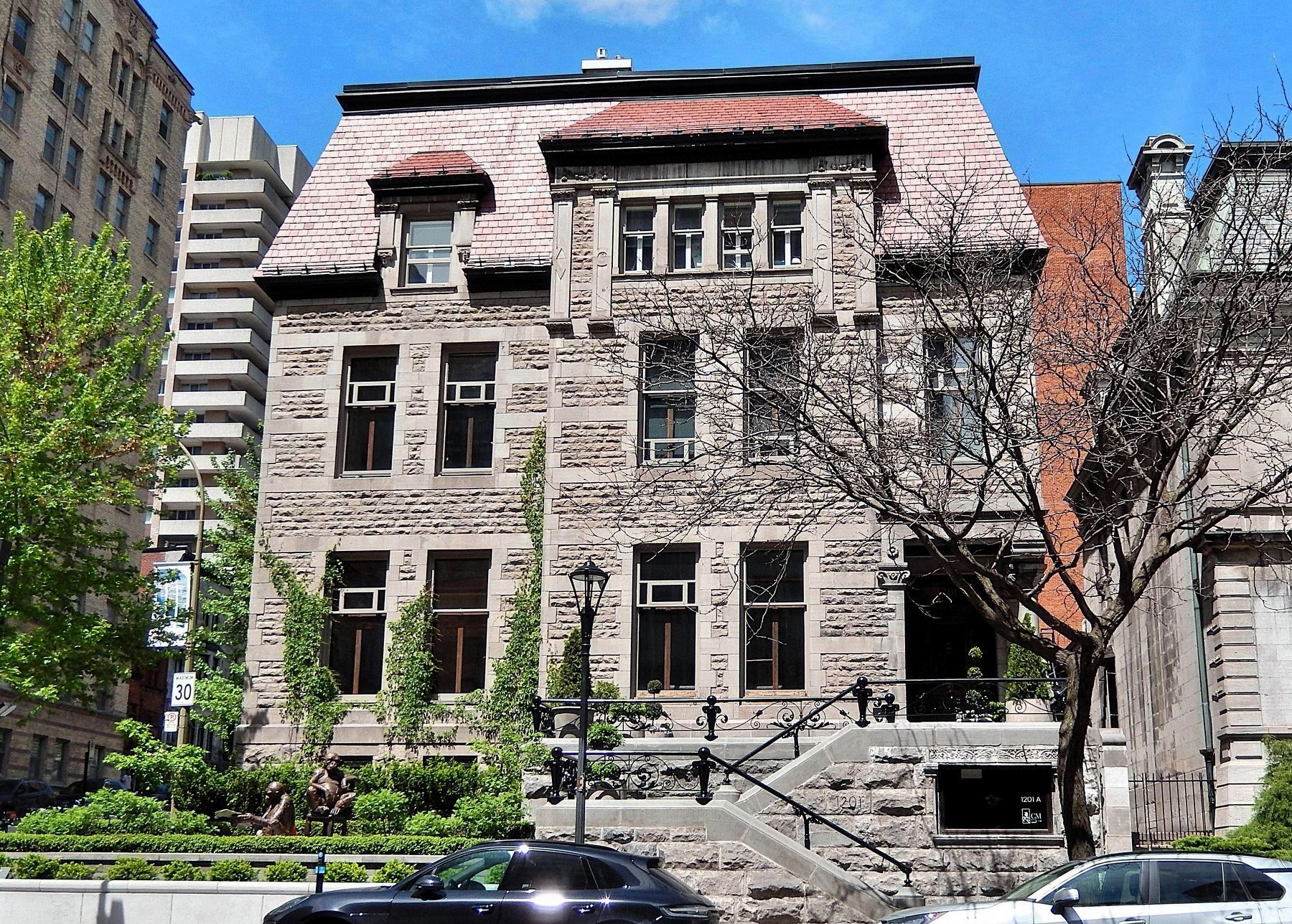
La maison Reid Wilson représente bien les demeures du Mille carré construites vers la fin du 19e siècle. Comme le bâtiment voisin, la maison Louis-Joseph Forget, elle est un des derniers hôtels particuliers ayant fait jadis la beauté du côté de la rue Sherbrooke.
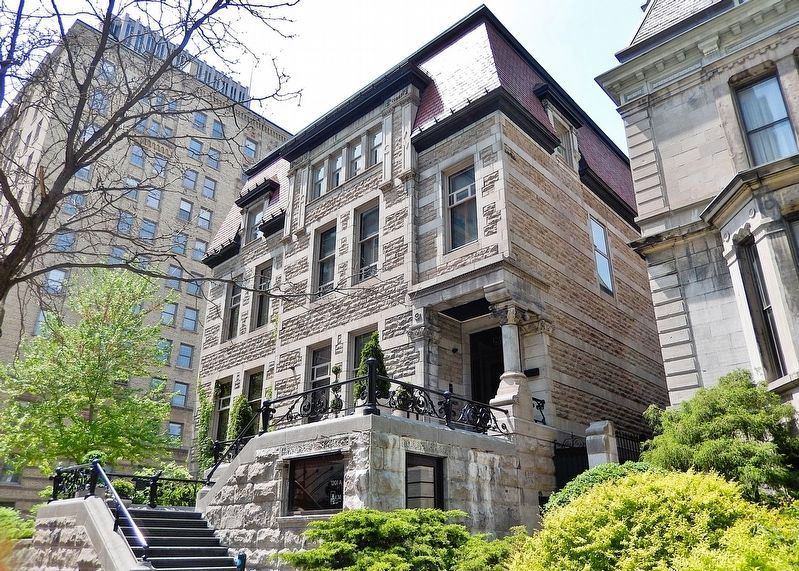
En 1901, James Reid Wilson commanda l'importante reconstruction de cet hôtel particulier de deux étages, réalisé à l'origine en 1883 par l'architecte montréalais John James Browne. L'architecte renommé, Richard A. Waite de Buffalo, en modifia les plans et les façades. Il déplaça également l'entrée principale à l'extrême droite du bâtiment, récupérant une des colonnes originales de style gothique pour le nouveau porche. À la façon des architectes de la fin de l'époque Victorienne, il ajouta des éléments éclectiques de styles italianisant, néo-roman et néo-gothique. Waite ajouta aussi un étage supérieur recouvert d'un toit mansardé en ardoise.
En 1951, le bâtiment fut acquis par les Distilleries Corby Ltée avant d'être restauré et rénové. Sa serre-jardin et sa remise sont des raretés parmi les hôtels particuliers toujours existants.
this page online
À la suite du prolongement de la rue Sherbrooke vers l'Ouest, depuis la rue Aylmer jusqu'à Côtes-des-Neiges, dans les années 1840, cette rue est devenue une élégante avenue bordée d'arbres, d'immeubles publics et de résidences privées, qui avaient été construites par des représentants des milieux financiers et de l'industrie au Canada. Elle traversait une magnifique étendue située entre le surplomb au-dessus de la rue Saint-Antoine et le bas des pentes du mont Royal, que nous sommes venus à reconnaître sous le vocable du « Milles carré ».
Le temps, les travaux de démolition et les constructions nouvelles ont considérablement modifié la rue Sherbrooke. Néanmoins, les immeubles qui ont survécu constituent un témoignage éloquent de son glorieux passé. Cette excursion à pied rend hommage à ce remarquable héritage architectural.
Reid Wilson House
The Reid Wilson House is a good example of the Square Mile houses built during the last quarter of the 19th century. Like its neighbour, the Louis-Joseph Forget House, it is one of the few surviving mansions
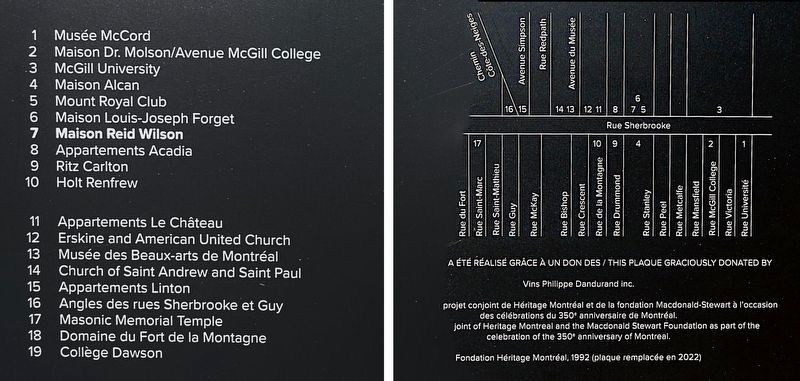
2 Maison Dr. Molson/Avenue McGill College
3 McGill University
4 Maison Alcan
5 Mount Royal Club
6 Maison Louis-Joseph Forget
7 Maison Reid Wilson
8 Appartements Acadia
9 Ritz Carlton
10 Holt Renfrew
11 Appartements Le Château
12 Erskine and American United Church
13 Musée des Beaux-arts de Montréal
14 Church of Saint Andrew and Saint Paul
15 Appartements Linton
16 Angles des rues Sherbrooke et Guy
17 Masonic Memorial Temple
18 Domaine du Fort de la Montagne
19 Collège Dawson
In 1901, James Reid Wilson commissioned an extensive reconstruction of the 2-storey mansion, originally designed in 1883 by Montreal architect John James Browne. The noted Buffalo architect, Richard A. Waite, reconfigured the plan and the façades. He moves the main entrance to the extreme right of the building, reusing one of the original Gothic columns in his new portico. In a manner characteristic of late Victorian architects, he incorporated eclectic elements of Italianate, Romanesque Revival and Gothic Revival design. Waite also added the top story, contained within a slate mansard roof.
The building was acquired by Corby Distilleries Limited in 1951 and subsequently restored and renovated. Its conservatory and coach house are rarities among those mansions still standing. In 1974, the Government of Quebec recognised the house as an historic monument.
After its extension west from Aylmer Street to Cotes-des-Neiges in the 1840s, Sherbrooke Street grew into an elegant tree-lined avenue of public buildings and private residences, built by many of the central figures in Canada's industrial
Time, demolition and new construction have changed Sherbrooke Street considerably, but the buildings which have survived bear eloquent testimony to its glorious past. This walking tour celebrates a remarkable legacy.
Fondation Héritage Montréal, 1992. (plaque remplacée en 2022)
Erected 2022 by Fondation Héritage Montréal / Montreal Heritage Foundation. (Marker Number 7.)
Topics. This historical marker is listed in these topic lists: Architecture • Roads & Vehicles. A significant historical year for this entry is 1883.
Location. 45° 30.034′ N,

Regionally, this marker is in Central Canada. Globally, it is in North America, the Western Hemisphere, and the Western World. Historically, it finds itself in what was once a British colony, the Viceroyalty of New France, the Haudenosaunee (Iroquois) Confederacy, and Rupert’s Land.
Other nearby markers. At least 8 other markers are within walking distance of this marker: Appartements Acadia (a few steps from this marker); Maison Louis-Joseph Forget (within shouting distance of this marker); Ritz-Carlton (within shouting distance of this marker); Maison Alcan (within shouting distance of this marker); Mount Royal Club (within shouting distance of this

Related markers. Click here for a list of markers that are related to this marker. La Rue Sherbrooke / Sherbrooke Street
Also see . . . Maison James-Reid-Wilson (Canada Register of Historic Places).
Excerpt (English translation): The James Reid Wilson House, a designated historic monument, is a bourgeois residence built in 1882 and significantly altered in 1901. The tripartite façade features a front section that terminates in the form of a hanging dormer framed by pilasters supporting an entablature. A two-flight staircase leads to the entrance at the eastern end of the façade. This is protected by a porch within the work, including pilasters and a column with ornate capitals. Erected at the corner of two streets, the building has a neat side façade with a rusticated gray stone wall and an oriel window, the upper part of which is composed of metal elements. The house(Submitted on April 23, 2025, by Cosmos Mariner of Cape Canaveral, Florida.)bears witness to the presence of the upper middle class in this sector of the city beginning in the second half of the 19th century. Between 1850 and 1930, this area was home to some of the wealthiest and most influential members of the Canadian bourgeoisie. The house was successively inhabited by three bankers: Thomas Craig, James Baxter, and James Reid Wilson.Photographed by Cosmos Mariner, May 23, 20246. Maison Reid WilsonMonumentally designed, the building rests on a rusticated stone base and comprises three levels. The rusticated stone elevations include quoins, doorjambs, and successive bands that punctuate the composition. The entrance at the east end is protected by a built-in porch. The James Reid Wilson House, the work of two renowned architects, reflects the prestige sought by its owner-builder through its monumentality and the variety of its architectural elements. The heritage value of the house also lies in the interest of its interior decor. Crafted with noble materials, it is distinguished by its elegance and richness. The entrance hall opens onto a monumental mahogany staircase lit by a skylight, with carpentry balusters and stringers decorated with coffered panels. The rooms are
furnished with carpentry elements from the United States, among others. They include mahogany door frames, radiator covers and ceiling moldings. The former living room has an embossed metal ceiling. Finally, several rooms have a fireplace mantel, including the former dining room and the former living room.
Credits. This page was last revised on April 26, 2025. It was originally submitted on April 21, 2025, by Cosmos Mariner of Cape Canaveral, Florida. This page has been viewed 279 times since then and 70 times this year. Photos: 1, 2, 3, 4, 5, 6. submitted on April 23, 2025, by Cosmos Mariner of Cape Canaveral, Florida.
