Sobro in Nashville in Davidson County, Tennessee — The American South (East South Central)
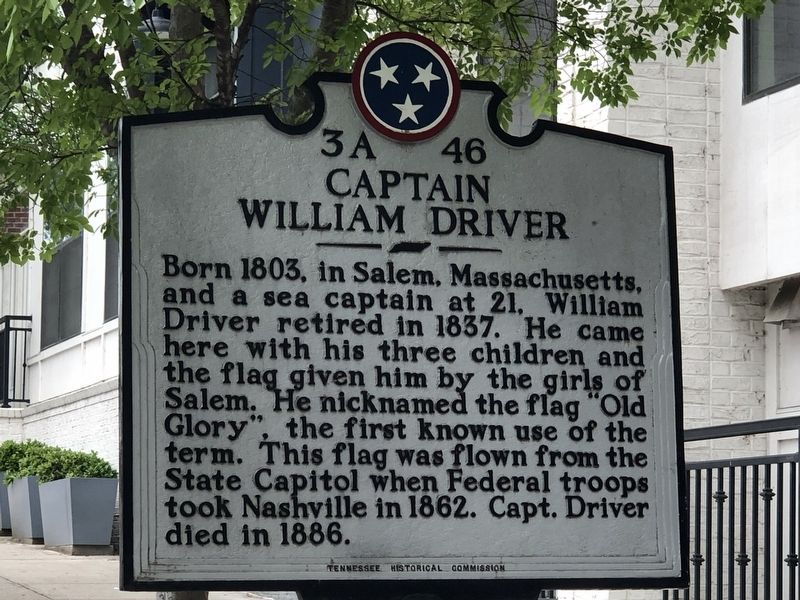
Captain William Driver
Photographed by Duane and Tracy Marsteller, May 4, 2025
1. Captain William Driver Marker
Erected by Tennessee Historical Commission. (Marker Number 3A 46.)
Topics and series. This historical marker is listed in these topic lists: Patriots & Patriotism • War, US Civil. In addition, it is included in the Tennessee Historical Commission series list. A significant historical year for this entry is 1803.
Location. 36° 9.295′ N, 86° 46.491′ W. Marker is in Nashville, Tennessee, in Davidson County. It is in Sobro. It is on Rep. John Lewis Way South south of Peabody Street, on the right when traveling south. Touch for map. Marker is at or near this postal address: 511 Rep John Lewis Way S, Nashville TN 37203, United States of America. Touch for directions.

Regionally, this marker is in Middle Tennessee. It is also in the American South and specifically
this page online
Other nearby markers. At least 8 other markers are within walking distance of this marker: William Driver (here, next to this marker); Primo Bartolini / Primo Bartolini’s Home (a few steps from this marker); Frank Maxwell Andrews (about 400 feet away, measured in a direct line); Nettie Napier Day Home Club (about 600 feet away); Holy Trinity Episcopal Church (about 700 feet away); Elm Street Methodist Church (approx. 0.2 miles away); Captain Ryman's Home (approx. 0.2 miles away); Immaculate Mother Academy (approx. ¼ mile away). Touch for a list and map of all markers in Nashville.
Also see . . .
1. William Driver. On an 1831 voyage to the South Pacific, Driver's ship was the sole surviving vessel of six that departed Salem the same day. He subsequently escorted sixty-five descendants of the Bounty survivors from Tahiti back to their home
Photographed by Duane and Tracy Marsteller, May 4, 2025
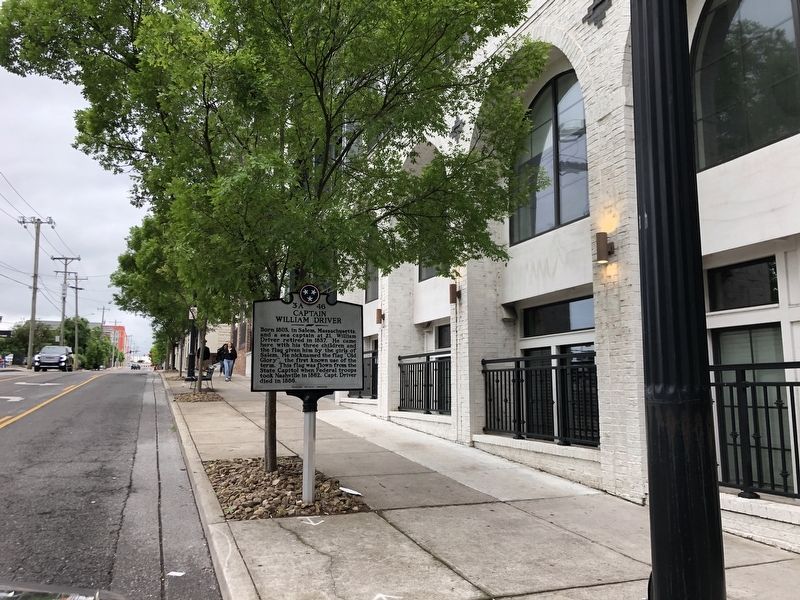
2. Captain William Driver Marker
2. How the Flag Came to be Called Old Glory: New research may settle a family feud over the origins …. As a prominent Union symbol in a southern city, Driver's prized flag caused fractures within his family that still remained after 150 years. (Sally Jenkins, Smithsonian Magazine, October 2013) (Submitted on May 5, 2025, by Duane and Tracy Marsteller of Murfreesboro, Tennessee.)
Salem Vessels and their Voyages, Vol. II, George Granville Putnam (1924) (Public Domain), circa 1870/80
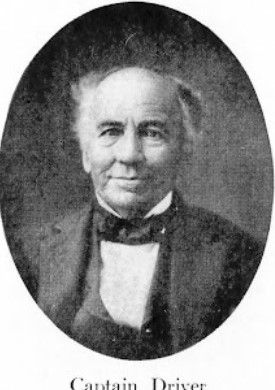
3. Capt. William C. Driver, Sr. (1803-1886)
He displayed "Old Glory" every holiday, using a rope between his house and a tree across the street to hoist the large banner. During the Civil War, he had the flag sewn inside a coverlet to hide it from Confederates. The flag is now in the Smithsonian Institute.
Credits. This page was last revised on May 5, 2025. It was originally submitted on May 5, 2025, by Duane and Tracy Marsteller of Murfreesboro, Tennessee. This page has been viewed 279 times since then and 58 times this year. Photos: 1, 2, 3. submitted on May 5, 2025, by Duane and Tracy Marsteller of Murfreesboro, Tennessee.
