
Near McConnells in York County, South Carolina — The American South (South Atlantic)
Brick Kitchen
Photographed by Michael Sean Nix, November 25, 2009
1. Brick Kitchen Marker
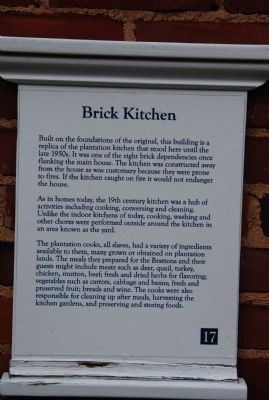
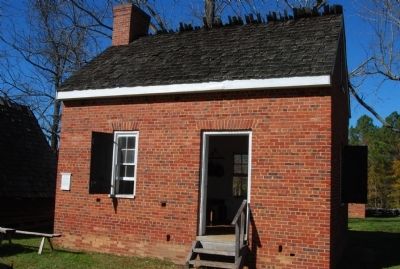
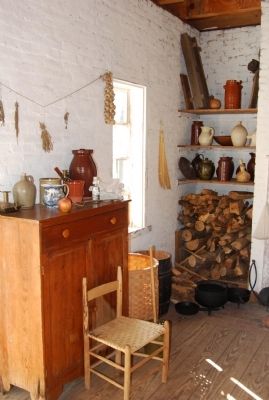
Built on the foundations of the original, this building is a replica of the plantation kitchen that stood here until the late 1950s. It was one of the eight brick dependencies once flanking the main house. The kitchen was constructed away from the house as was customary because they were prone to fires. If the kitchen caught on fire it would not endanger the house.
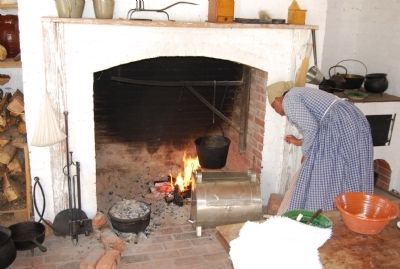
As in homes today, the 19th century kitchen was a hub of activities including cooking, conversing and cleaning. Unlike the indoor kitchens of today, cooking, washing and other chores were performed outside around the kitchen in an area known as the yard.
The plantation cooks, all slaves, had a variety of ingredients available to them, many grown or obtained on plantation lands. The meals they prepared for the Brattons and their guests might include meats such as deer, quail, turkey, chicken, mutton, beef; fresh and dried herbs for flavoring; vegetables such as carrots, cabbage, and beans; preserved fruit; breads and wine. The cooks were also responsible for cleaning up after meals, harvesting the kitchen gardens, and preserving and storing foods.
Topics. This historical marker is listed in these topic lists: African Americans • Agriculture • Industry & Commerce • Settlements & Settlers.
Location. This marker has been replaced by another marker nearby. It was located near 34° 51.903′ N, 81° 10.578′ W. Marker was near McConnells, South Carolina, in York County. It could be reached from Brattonsville Road 0.1 miles north of Percival Road, on the right when traveling south. Touch for map. Marker was at or near this postal address: 1444 Brattonsville Rd, Rock Hill SC 29730, United States of America. Touch for directions.

Regionally, this marker was in the Midlands and in the
this page online
Other nearby markers. At least 8 other markers are within walking distance of this location: A different marker also named Brick Kitchen (here, next to this marker); Slave Cabin (within shouting distance of this marker); Battle of Huck's Defeat (within shouting distance of this marker); William Bratton Plantation / Battle of Huck's Defeat (about 300 feet away, measured in a direct line); Field of Huck's Defeat (about 300 feet away); Watt (about 300 feet away); Brattonsville (about 300 feet away); A House of Untold Stories (about 300 feet away). Touch for a list and map of all markers in McConnells.
Other markers no longer nearby. The Homestead (was within shouting distance of this marker but has been
Photographed by Michael Sean Nix, November 14, 2009
2. Brick Kitchen
More about this marker. The marker is located on the side of the brick kitchen and can not be seen from the road way. The marker is part of the Brattonsville historic site.
Also see . . .
1. Brattonsville Historic District. Brattonsville is a small but important area of York County significant for its architectural record of South Carolina development. (Submitted on January 10, 2010, by Brian Scott of Anderson, South Carolina.)
2. Historic Brattonsville. Historic Brattonsville is a 775-acre American Revolution living history site and is a member of the Culture & Heritage Museums of York County, South Carolina. (Submitted on January 10, 2010, by Brian Scott of Anderson, South Carolina.)
Photographed by Michael Sean Nix, November 14, 2009
3. Reenactor in the Brick Kitchen
Photographed by Michael Sean Nix, November 14, 2009
4. Brick Kitchen
Credits. This page was last revised on May 6, 2025. It was originally submitted on November 27, 2009, by Michael Sean Nix of Spartanburg, South Carolina. This page has been viewed 1,292 times since then and 15 times this year. Last updated on May 5, 2025, by Mark Parker of Hickory, North Carolina. Photos: 1, 2, 3, 4. submitted on November 27, 2009, by Michael Sean Nix of Spartanburg, South Carolina. • Devry Becker Jones was the editor who published this page.
