Speyer, Rhineland-Palatinate, Germany — Central Europe
Der Speyerer Jakobspilger
⎯⎯⎯
The Speyer St. James Pilgrim
Photographed by James Hulse, May 20, 2025
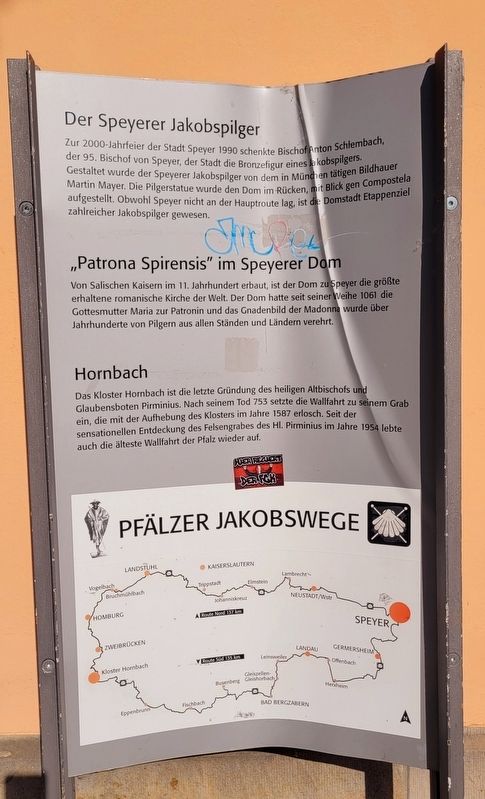
1. Der Speyerer Jakobspilger / The Speyer St. James Pilgrim Marker

Der Speyerer Jakobspilger
Zur 2000-Jahrfeier der Stadt Speyer 1990 schenkte Bischof Anton Schlembach, der 95. Bischof von Speyer, der Stadt die Bronzefigur eines Jakobspilgers. Gestaltet wurde der Speyerer Jakobspilger von dem in München tätigen Bildhauer Martin Mayer. Die Pilgerstatue wurde den Dom im Rücken, mit Blick gen Compostela aufgestellt. Obwohl Speyer nicht an der Hauptroute lag, ist die Domstadt Etappenziel zahlreicher Jakobspilger gewesen.
„Patrona Spirensis" im Speyerer Dom
Von Salischen Kaisern im 11. Jahrhundert erbaut, ist der Dom zu Speyer die größte erhaltene romanische Kirche der Welt. Der Dom hatte seit seiner Weihe 1061 die Gottesmutter Maria zur Patronin und das Gnadenbild der Madonna wurde über Jahrhunderte von Pilgern aus allen Ständen und Ländern verehrt.
Hornbach
Das Kloster Hornbach ist die letzte Gründung des heiligen Altbischofs und Glaubensboten Pirminius. Nach seinem Tod 753 setzte die Wallfahrt zu seinem Grab ein, die mit der Aufhebung des Klosters im Jahre 1587 erlosch. Seit der sensationellen Entdeckung des Felsengrabes des Hl. Pirminius im Jahre 1954 lebte auch die älteste Wallfahrt der Pfalz wieder auf.
The Speyer St. James Pilgrim
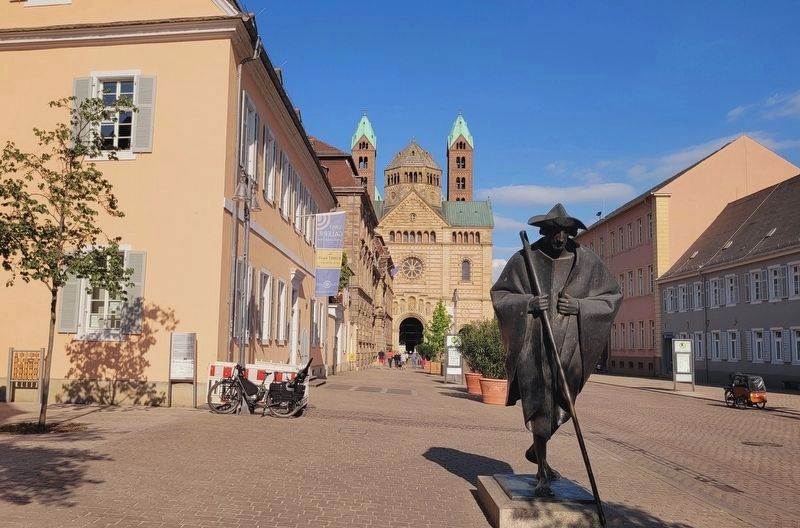
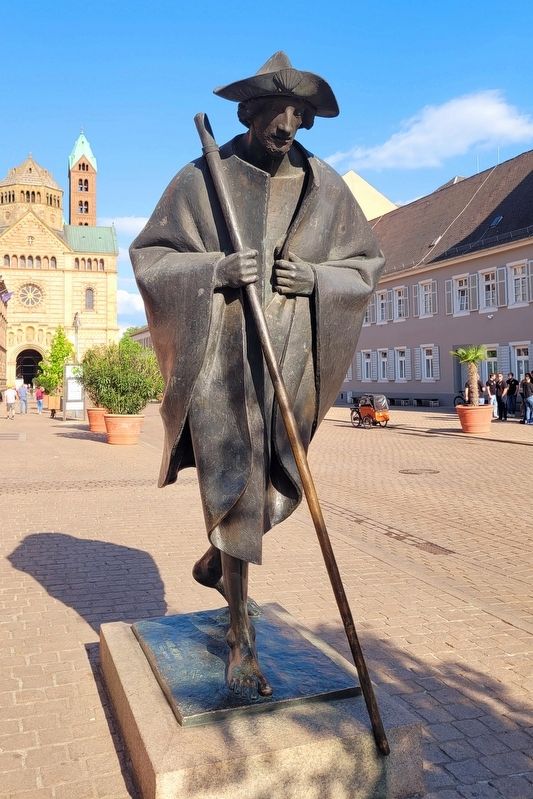
For the 2000th anniversary of the city of Speyer in 1990, Bishop Anton Schlembach, the 95th Bishop of Speyer, presented the city with a bronze statue of a St. James pilgrim. The Speyer St. James Pilgrim was created by the Munich-based sculptor Martin Mayer. The statue was placed with its back to the cathedral, facing toward Compostela. Although Speyer was not located on the main pilgrimage route, the imperial cathedral city was a destination for numerous St. James pilgrims.
“Patrona Spirensis” in Speyer Cathedral
Built by the Salian emperors in the 11th century, Speyer Cathedral is the largest
this page online
Hornbach
Hornbach Monastery is the final foundation of Saint Pirminius, the missionary and former bishop. After his death in 753, pilgrimages to his grave began, which came to an end with the dissolution of the monastery in 1587. Since the sensational discovery of Saint Pirminius’ rock-cut tomb in 1954, the pilgrimage tradition has been revived.
Topics. This historical marker is listed in these topic lists: Arts, Letters, Music • Religion & Religious Structures • Roads & Vehicles. A significant historical year for this entry is 1990.
Location. 49° 19.048′ N, 8° 26.362′ E. Marker is in Speyer, Rheinland-Pfalz (Rhineland-Palatinate). It is on Große Himmelsgasse 0.2 kilometers west of Domplatz, on the right when traveling west. The marker is located north of the statue at the corner of the building. Touch for map. Marker is at or near this postal address: Große Himmelsgasse
Photographed by James Hulse, May 20, 2025
2. The view of the bronze statue of a St. James pilgrim walking away from the cathedral
The marker is located at the corner of the building on the left side.

Regionally, it is in Europe, the European Union, Atlantic Europe, Central Europe, the Schengen Area, Western Europe, and the Western World. Historically, it finds itself in what was once the Roman Empire and specifically also the Holy Roman Empire.
Other nearby markers. At least 8 other markers are within walking distance of this marker: Hohenfeldtischer Hof / Court of Hohenfeldt (a few steps from this marker); Dreifaltigkeitskirche / Trinity Church (within shouting distance of this marker); Bücherverbrennung in Speyer 1933 / Book Burning in Speyer, 1933 (within shouting distance of this marker); Läutturm / Bell Tower (about 90 meters away, measured in a direct line); Rathhof (about 90 meters away); Domnapf / Cathedral Bowl (about 90 meters away); Große Himmelsgasse (about 90 meters away); St. Georgsbrunnen / St. George’s Fountain (about 120 meters away). Touch for a list and map of all markers in Speyer.
Also see . . . Palatine Ways of St. James - Pfälzer Jakobswege. Wikipedia
The Palatine Ways of St. James (German: Pfälzer Jakobswege) are those sections of the(Submitted on May 23, 2025, by James Hulse of Medina, Texas.)Way of St. James in the Palatinate region of Germany and part of the historic pilgrimage route to the northwest Spanish town of Santiago de Compostela. It was there that, according to Christian tradition, the Apostle Saint James the Greater was buried.Photographed by James Hulse, May 20, 20253. The Speyer St. James Pilgrim statue
Photographed by James Hulse, May 20, 2025
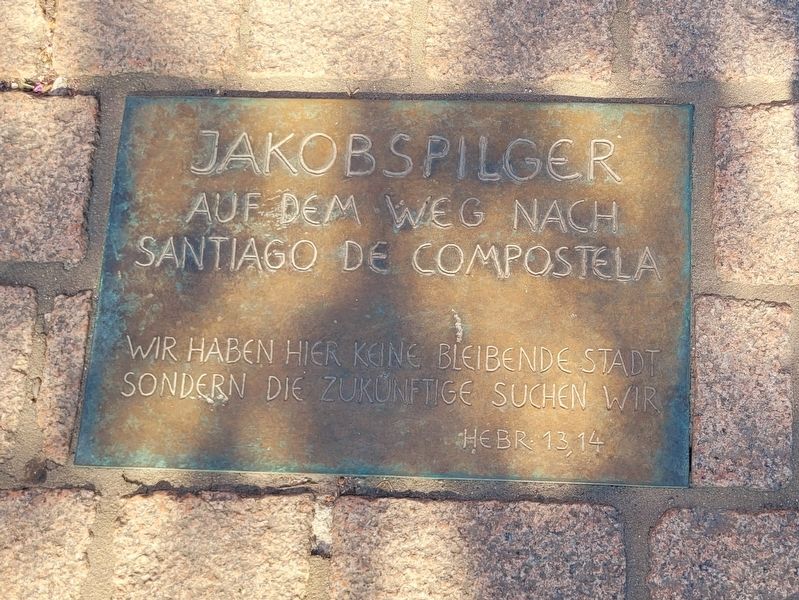
4. The Speyer St. James Pilgrim plaque
Credits. This page was last revised on May 23, 2025. It was originally submitted on May 22, 2025, by James Hulse of Medina, Texas. This page has been viewed 305 times since then and 90 times this year. Photos: 1, 2, 3, 4. submitted on May 23, 2025, by James Hulse of Medina, Texas.
