Augusta in Richmond County, Georgia — The American South (South Atlantic)
Magnolia Cemetery
Photographed by Jonathan Newell, July 1, 2006
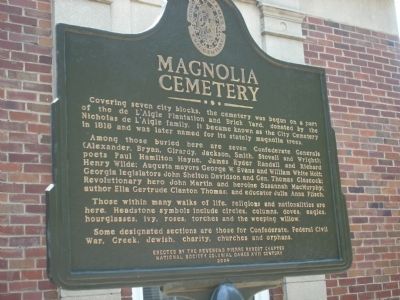
1. Magnolia Cemetery Marker
Covering seven city blocks, the cemetery was begun on a part of the de L’Aigle Plantation and Brick Yard, donated by the Nicholas de L’Aigie family. It became known as the City Cemetery in 1818 and was later named for its stately magnolia trees.
Among those buried here are seven Confederate Generals (Alexander, Bryan, Girardy, Jackson, Smith, Stovall and Wright); poets Paul Hamilton Hayne, James Ryder Randall and Richard Henry Wilde; Augusta mayors George W. Evans and William White Holt; Georgia legislators John Shelton Davidson and Gen. Thomas Glascock; Revolutionary hero John Martin and heroine Susannah MacMurphy; author Ella Gertrude Clanton Thomas; and educator Julia Anna Flisch.
Those within many walks of life, religions and nationalities are here. Headstone symbols include circles, columns, doves, eagles, hourglasses, ivy, roses, torches and the weeping willow.
Some designated sections are those for Confederate, Federal Civil War, Greek, Jewish, charity, churches and orphans.
Erected 2004 by Reverend Pierre Robert Chapter National Society Colonial Dames XVII Century.
Topics and series. This historical
this page online
Location. 33° 27.851′ N, 81° 57.455′ W. Marker is in Augusta, Georgia, in Richmond County. It is on 3rd Street near Walton Way, on the right when traveling north. Touch for map. Marker is in this post office area: Augusta GA 30901, United States of America. Touch for directions.

Regionally, this marker is in the American South and specifically in the Deep South. Globally, it is in North America, the Western Hemisphere, the Western World, and the Anglosphere. Historically, it finds itself in what was once the territory of the Mississippian Culture, one of the original Thirteen Colonies, one of the Confederate States of America, and the Antebellum South.
Other nearby markers. At least 8 other markers are within walking distance of this marker: De Laigle Brick Yards (within shouting distance of this marker); Prisoners Of War Memorial (about 800 feet away, measured in a direct line); This Memorial (about 800 feet away);

Photographed by J.T. Lambrou, April 11, 2025
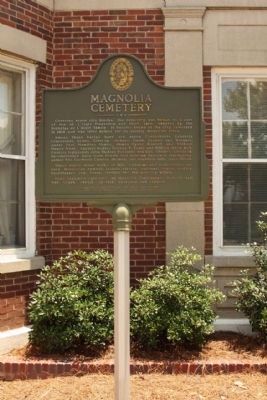
2. Magnolia Cemetery Marker
Also see . . . Magnolia Cemetery - Augusta,. Although it was not officially designated as a cemetery until 1818, the oldest marked grave at Magnolia is that of J. Hartford Montgomery who died on December 24, 1800. It likely was used even before then. Among the more unique landmarks of Magnolia Cemetery is the grave of John Martin, a soldier of the American Revolution who died on February 14, 1843, at the age of 105. Not only did he serve in the Revolution, but Martin also fought in the French and Indian War, in which he received a tomahawk blow to the head from a Cherokee warrior. (Submitted on January 21, 2013, by Mike Stroud of Bluffton, South Carolina.)
Additional keywords. Cemetery, Confederate
Photographed by Mike Stroud, June 6, 2010
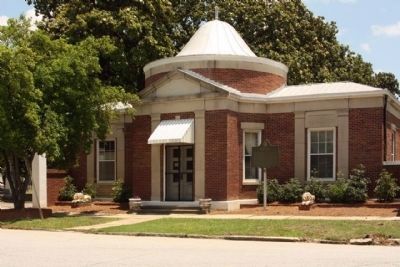
3. Magnolia Cemetery Marker
Photographed by Mike Stroud, June 6, 2010
4. Magnolia Cemetery Marker
Photographed by David Seibert, November 12, 2010
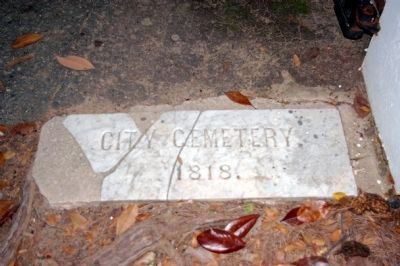
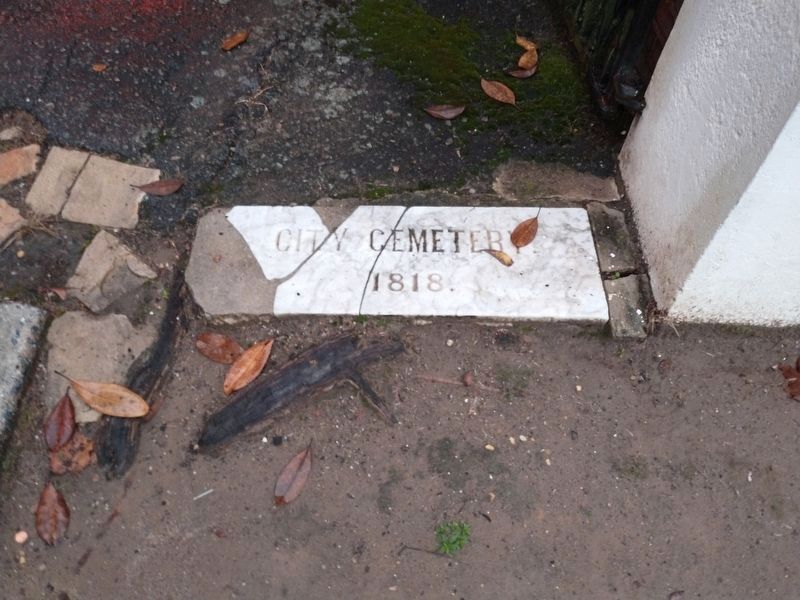
5. Old City Cemetery 1818
This stone is set in the entrance to Magnolia Demetery.
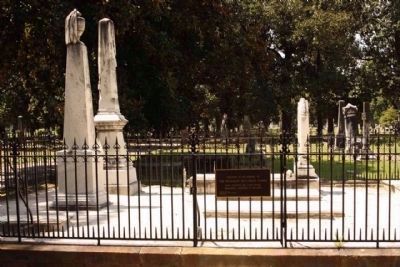
Photographed by Mike Stroud, July 25, 2010
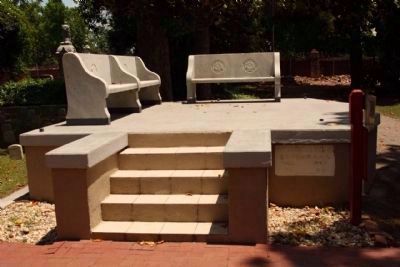
6. Magnolia Cemetery
Dedicated to the Memory of
The Nicholas de L Aigle Family
who dedicated the land which
Magnolia Cemetery is located
The Nicholas de L Aigle Family
who dedicated the land which
Magnolia Cemetery is located
Photographed by Mike Stroud, June 6, 2010
7. Magnolia Cemetery
Phineas Butler Hanson
S.C. Cavalry, C.S.A.
1835 1864
Me. S.C.
Photographed by Mike Stroud, June 6, 2010
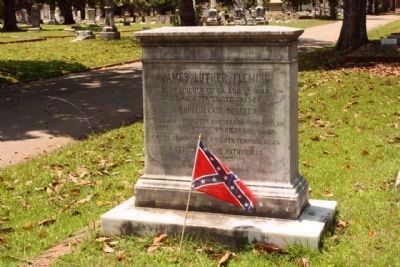
8. Magnolia Cemetery
James Luther Fleming
Born Lincoln Co. Ga., Aug. 12, 1842
Died Augusta, Ga Dec. 13, 1926
A Confederate Soldier
Pres. Board Trustees Augusta Orphan Asylum,
Pres. Board Education Richmond Co. Ga.
Grand Commander Knights Templar of Ga.
A Father To The Fatherless
Born Lincoln Co. Ga., Aug. 12, 1842
Died Augusta, Ga Dec. 13, 1926
A Confederate Soldier
Pres. Board Trustees Augusta Orphan Asylum,
Pres. Board Education Richmond Co. Ga.
Grand Commander Knights Templar of Ga.
A Father To The Fatherless
Photographed by Mike Stroud, June 6, 2010
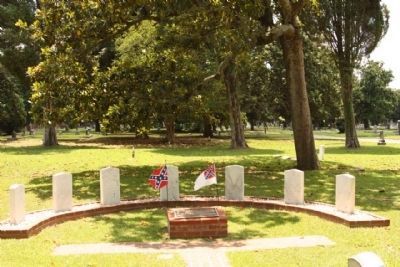
9. Magnolia Cemetery 7 Generals Tribute
Photographed by Mike Stroud, June 6, 2010
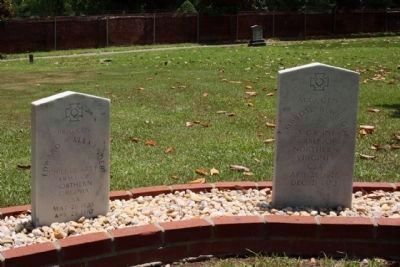
10. Magnolia Cemetery 7 Generals Tribute left
Brig Gen
Edward P Alexander
Chief of Arty
Army of
Northern
Virginia
CSA
May 26 1835
Apr 28 1910
Maj Gen
Ambrose R Wright
3 Ga Inf
Army of
Northern
Virginia
CSA
Apr 26 1826
Dec 21 1872
Edward P Alexander
Chief of Arty
Army of
Northern
Virginia
CSA
May 26 1835
Apr 28 1910
Maj Gen
Ambrose R Wright
3 Ga Inf
Army of
Northern
Virginia
CSA
Apr 26 1826
Dec 21 1872
Photographed by Mike Stroud, June 6, 2010
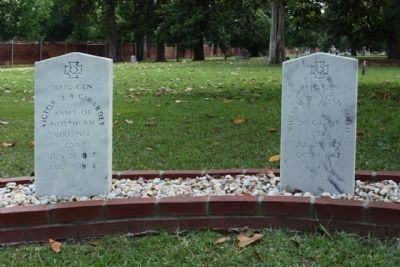
11. Magnolia Cemetery 7 Generals Tribur Center
Brig Gen
Victor J B Girardey
Army of
Northern
Virginia
CSA
Jun 26 1837
Aug 16 1864
Brig Gen
William Duncan Smith
20 Ga Inf
CSA
July 28 1825
Oct 4 1862
Victor J B Girardey
Army of
Northern
Virginia
CSA
Jun 26 1837
Aug 16 1864
Brig Gen
William Duncan Smith
20 Ga Inf
CSA
July 28 1825
Oct 4 1862
Photographed by Mike Stroud, June 6, 2010
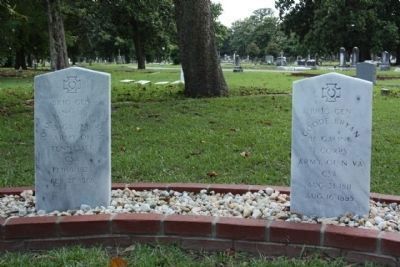
12. Magnolia Cemetery 7 Generals Tribute right
Brig Gen
John King Jackson
5 Ga Inf
Army of
Tennessee
CSA
Feb 8 1828
Feb 27 1866
Brig Gen
Goode Bryan
16 Ga Inf
I Corps
Army of N Va
CSA
Aug 31 1811
Aug 16 1885
John King Jackson
5 Ga Inf
Army of
Tennessee
CSA
Feb 8 1828
Feb 27 1866
Brig Gen
Goode Bryan
16 Ga Inf
I Corps
Army of N Va
CSA
Aug 31 1811
Aug 16 1885
Photographed by Mike Stroud, June 6, 2010
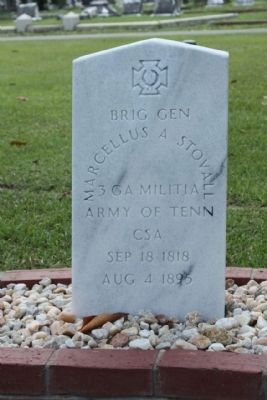
13. 7 Generals Tribute far right
Brig Gen
Marcellus A Stovall
3 Ga Militia
Army of Tenn
CSA
Sep 18 1818
Aug 4 1895
Marcellus A Stovall
3 Ga Militia
Army of Tenn
CSA
Sep 18 1818
Aug 4 1895
Photographed by Mike Stroud, August 7, 2011
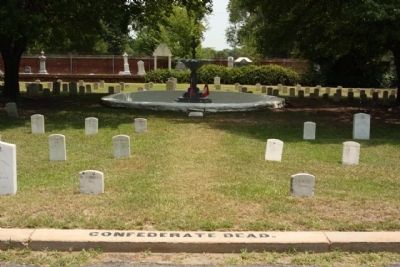
14. Magnolia Cemetery Confederate Dead
Photographed by Mike Stroud, August 7, 2011
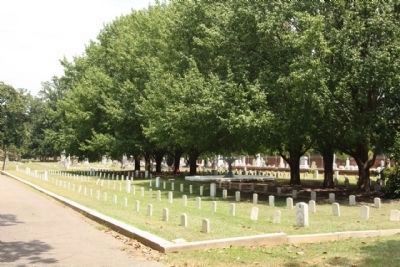
15. Magnolia Cemetery Confederate Dead section
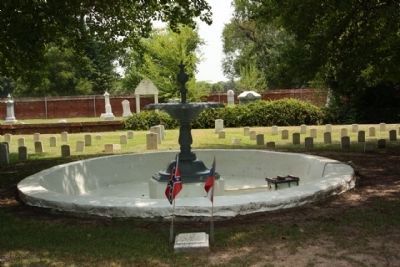
Approximately 337 Confederate soldiers are buried on Fourth Street near the east wall;
Photographed by Mike Stroud, August 7, 2011
16. Magnolia Cemetery Confederate Dead Memorial Fountain
Photographed by Mike Stroud, August 7, 2011
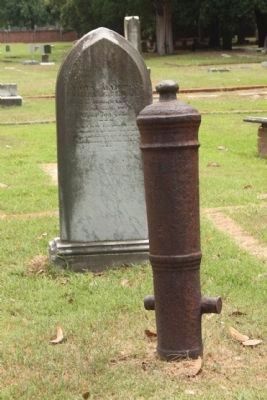
17. Magnolia Cemetery - John Martin
Soldier of the American Revolution who died on February 14, 1843 at the age of 105; served in the Cherokee War of 1755 and was wounded in the head by a tomahawk; served through the whole of the Revolutionary War with honor; the ladies of Augusta erected a monument at the head of the grave as a tribute of respect; the revolutionary cannon that he supposedly brought back from the war serves as a marker at the foot of his grave, the cannon stands upright; grave is located north of First Street, approximately in the middle of the block (Magnolia Cemetery)
Photographed by Craig Doda, November 11, 2022
18. Magnolia Cemetery Cornerstone
Right side of the arch.
Photographed by J.T. Lambrou, April 11, 2025
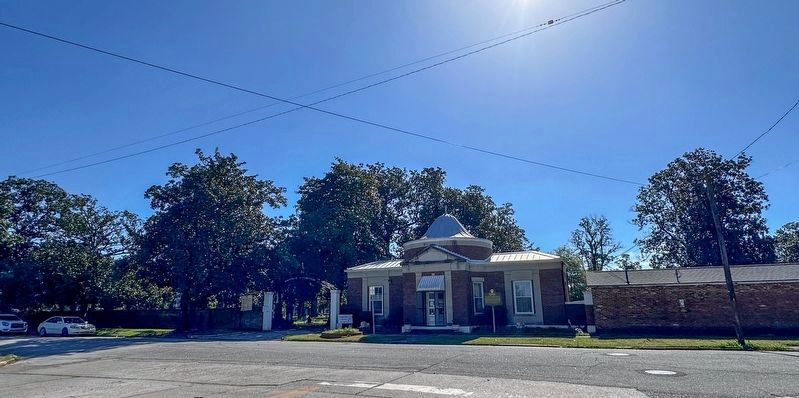
19. Magnolia Cemetery
Photo is taken from Walton Way of the main entrance to the cemetery.
Credits. This page was last revised on May 27, 2025. It was originally submitted on March 26, 2008, by Jonathan Newell of Taylors, South Carolina. This page has been viewed 3,244 times since then and 96 times this year. Last updated on May 26, 2025, by J.T. Lambrou of New Boston, Michigan. Photos: 1. submitted on March 26, 2008, by Jonathan Newell of Taylors, South Carolina. 2. submitted on May 26, 2025, by J.T. Lambrou of New Boston, Michigan. 3, 4. submitted on June 6, 2010, by Mike Stroud of Bluffton, South Carolina. 5. submitted on November 18, 2010, by David Seibert of Sandy Springs, Georgia. 6. submitted on August 5, 2010, by Mike Stroud of Bluffton, South Carolina. 7, 8, 9, 10, 11, 12, 13. submitted on June 6, 2010, by Mike Stroud of Bluffton, South Carolina. 14, 15, 16, 17. submitted on September 22, 2011, by Mike Stroud of Bluffton, South Carolina. 18. submitted on November 15, 2022, by Craig Doda of Napoleon, Ohio. 19. submitted on May 26, 2025, by J.T. Lambrou of New Boston, Michigan. • Devry Becker Jones was the editor who published this page.
Editor’s want-list for this marker. Photos of the gravesites of the persons named on the marker and other interesting headstones • Can you help?
