Bernalillo in Sandoval County, New Mexico — The American Mountains (Southwest)
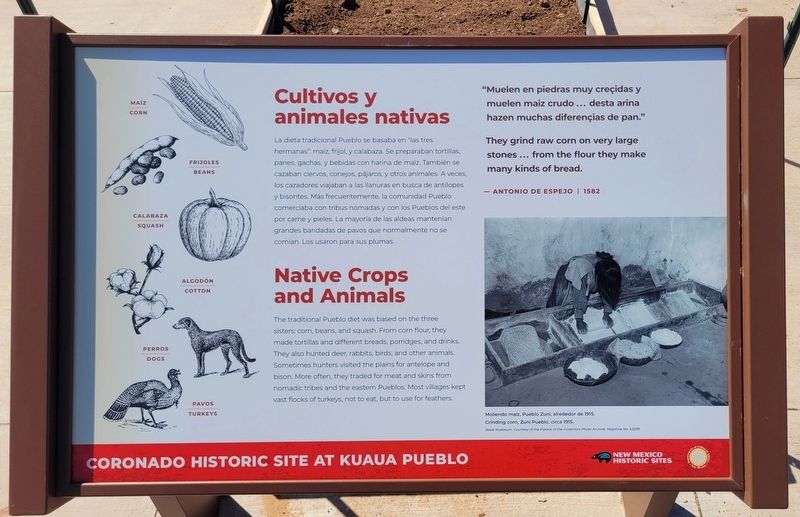
Cultivos y animales nativas
⎯⎯⎯
Native Crops and Animals
Photographed by James Hulse, April 9, 2025
1. Cultivos y animales nativas / Native Crops and Animals Marker

La dieta tradicional Pueblo se basaba en "las tres hermanas": maíz, frijol, y calabaza. Se preparaban tortillas, panes, gachas, y bebidas con harina de maíz. También se cazaban ciervos, conejos, pájaros, y otros animales. A veces, los cazadores viajaban a las llanuras en busca de antílopes y bisontes. Más frecuentemente, la comunidad Pueblo comerciaba con tribus nómadas y con los Pueblos del este por carne y pieles. La mayoría de las aldeas mantenían grandes bandadas de pavos que normalmente no se comían. Los usaron para sus plumas.
"Muelen en piedras muy creçidas y muelen maiz crudo ... desta arina hazen muchas diferençias de pan."
Antonio De Espejo | 1582
Subtítulos
(Foto #1) Algodón • Perros • Pavos • Maíz • Frijoles • Calabaza
(Foto #2) Moliendo maíz, Pueblo Zuni, alrededor de 1915.
The traditional Pueblo diet was based on the three sisters: corn, beans, and squash. From corn flour, they made tortillas and different breads, porridges, and drinks. They also hunted deer, rabbits, birds, and other animals. Sometimes hunters visited the plains for antelope and bison. More often, they
this page online
They grind raw corn on very large stones from the flour they make many kinds of bread.
Antonio De Espejo | 1582
Captions
(Photo #1) Cotton • Dogs • Turkeys • Corn • Beans • Squash
(Photo #2) Grinding corn, Zuni Pueblo, circa 1915. Jesse Nusbaum, Courtesy of the Palace of the Governors Photo Archive, Negative No. 432.39
Erected by Coronado Historic Site Kuaua Pueblo and New Mexico Historic Sites.
Topics. This historical marker is listed in these topic lists: Architecture • Indigenous Peoples and Communities. A significant historical year for this entry is 1582.
Location. 35° 19.777′ N, 106° 33.403′ W. Marker is in Bernalillo, New Mexico, in Sandoval County. It is on Kuaua Road half a mile east of Route 550. The marker is located in the Kuaua Ruins (Coronado Historic Site. Touch for map. Marker is at or near this postal address: 485 Kuaua Rd, Bernalillo NM 87004, United States of America. Touch for directions.

Regionally, this marker is in the San Juan Basin and in
Photographed by James Hulse, April 9, 2025
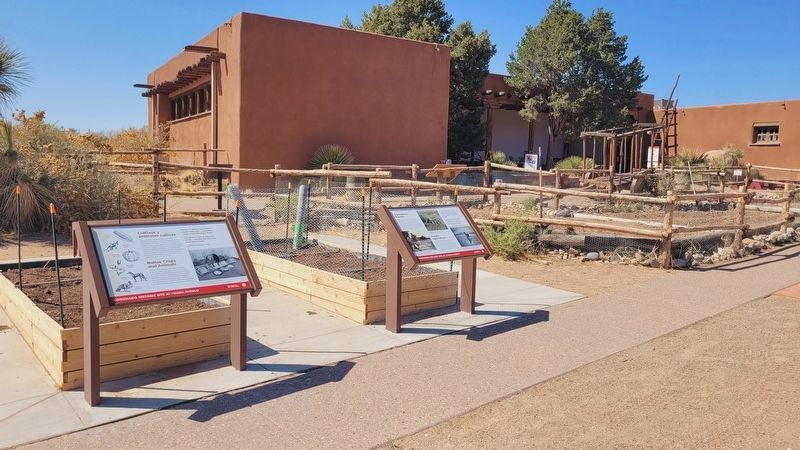
2. Native Crops and Animals Marker (left side)
Other nearby markers. At least 8 other markers are within walking distance of this marker: Agricultura Pueblo / Pueblo Agriculture (here, next to this marker); Recursos del desierto / Desert Resources (here, next to this marker); Las Montañas / The Mountains (here, next to this marker); El Bosque / The Bosque (a few steps from this marker); Francisco Vasquez de Coronado (a few steps from this marker); Cultivos y animales no nativos / Non-Native Crops and Animals (a few steps from this marker); Was Coronado Ever at Kuaua? (a few steps from this marker); El Pueblo de Kuaua / Kuaua Pueblo (a few steps from this marker). Touch for a list and map of all markers in Bernalillo.
More about this marker. There is a small fee to visit the Kuaua Ruins (Coronado Historic Site).
Also see . . . Coronado Historic Site.
Photographed by James Hulse, April 9, 2025
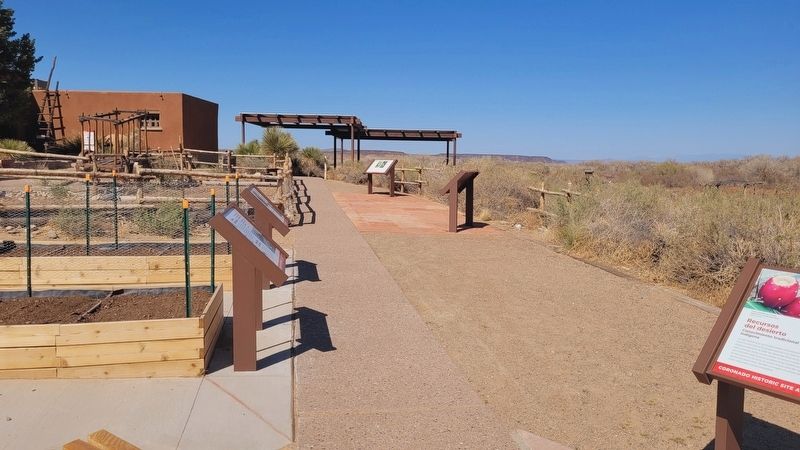
3. Native Crops and Animals Marker (left side)
Coronado Historic Site and the ancient Kuaua Pueblo are located just minutes north of Albuquerque (off of I-25, Exit 242) in Bernalillo. In 1540, Francisco Vásquez de Coronado—with 500 soldiers and 2,000 Indigenous allies from New Spain—entered the Rio Grande valley somewhere near this site. Coronado was searching for the fabled Seven Cities of Gold.(Submitted on May 28, 2025, by James Hulse of Medina, Texas.)
Credits. This page was last revised on May 28, 2025. It was originally submitted on May 28, 2025, by James Hulse of Medina, Texas. This page has been viewed 104 times since then and 6 times this year. Photos: 1, 2, 3. submitted on May 28, 2025, by James Hulse of Medina, Texas.
