Bernalillo in Sandoval County, New Mexico — The American Mountains (Southwest)
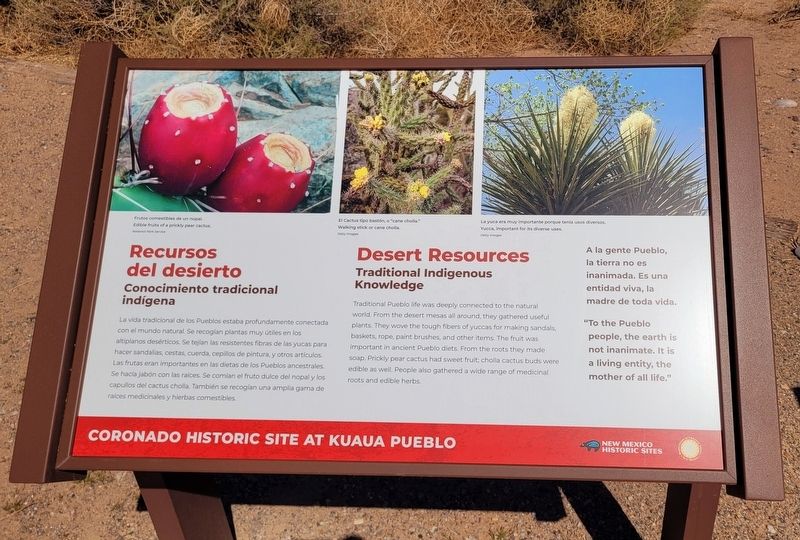
Recursos del desierto
⎯⎯⎯
Desert Resources
Photographed by James Hulse, April 9, 2025
1. Recursos del desierto / Desert Resources Marker

Conocimiento tradicional indígena
La vida tradicional de los Pueblos estaba profundamente conectada con el mundo natural. Se recogían plantas muy útiles en los altiplanos desérticos. Se tejían las resistentes fibras de las yucas para hacer sandalias, cestas, cuerda, cepillos de pintura, y otros artículos. Las frutas eran importantes en las dietas de los Pueblos ancestrales. Se hacía jabón con las raíces. Se comían el fruto dulce del nopal y los capullos del cactus cholla. También se recogían una amplia gama de raíces medicinales y hierbas comestibles.
A la gente Pueblo, la tierra no es inanimada. Es una entidad viva, la madre de toda vida.
Subtítulos
(Foto #1) Frutos comestibles de nopal.
(Foto #2) El Cactus tipo bastón, o "cane cholla."
(Foto #3) La yuca era muy importante porque tenía usos diversos.
Traditional Indigenous Knowledge
Traditional Pueblo life was deeply connected to the natural world. From the desert mesas all around, they gathered useful plants. They wove the tough fibers of yuccas for making sandals, baskets, rope, paint brushes, and other items. The fruit was
this page online
"To the Pueblo people, the earth is not inanimate. It is a living entity, the mother of all life."
Captions
(Photo #1) Edible fruits of a prickly pear cactus. National Park Service
(Photo #2) Walking stick or cane cholla. Getty Images
(Photo #3) Yucca, important for its diverse uses. Getty Images
Erected by Coronado Historic Site Kuaua Pueblo and New Mexico Historic Sites.
Topics. This historical marker is listed in these topic lists: Indigenous Peoples and Communities • Settlements & Settlers.
Location. 35° 19.775′ N, 106° 33.402′ W. Marker is in Bernalillo, New Mexico, in Sandoval County. It is on Kuaua Road half a mile east of U.S. 550. The marker is located in the Kuaua Ruins (Coronado Historic Site. Touch for map. Marker is at or near this postal address: 485 Kuaua Rd, Bernalillo NM 87004, United States of America. Touch for directions.

Regionally,
Photographed by James Hulse, April 9, 2025
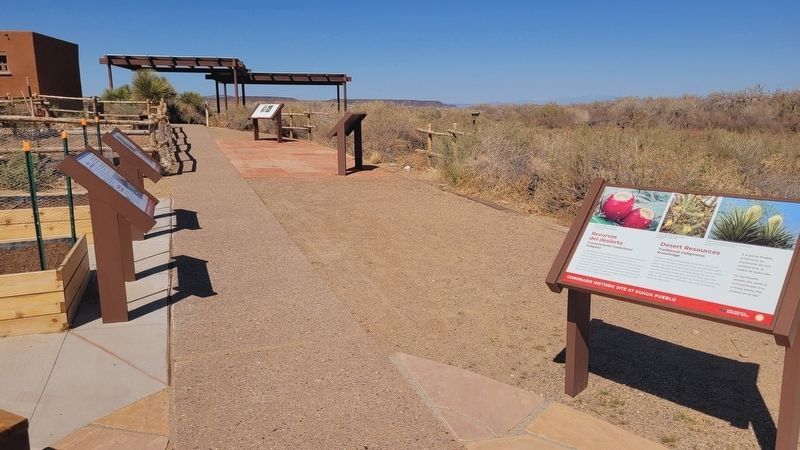
2. Desert Resources Marker (right side)
Other nearby markers. At least 8 other markers are within walking distance of this marker: Las Montañas / The Mountains (here, next to this marker); Cultivos y animales nativas / Native Crops and Animals (here, next to this marker); El Bosque / The Bosque (here, next to this marker); Cultivos y animales no nativos / Non-Native Crops and Animals (a few steps from this marker); Agricultura Pueblo / Pueblo Agriculture (a few steps from this marker); Francisco Vasquez de Coronado (a few steps from this marker); El Pueblo de Kuaua / Kuaua Pueblo (a few steps from this marker); Was Coronado Ever at Kuaua? (a few steps from this marker). Touch for a list and map of all markers in Bernalillo.
More about this marker. There is a small fee to visit the Kuaua Ruins (Coronado Historic
Photographed by James Hulse, April 9, 2025
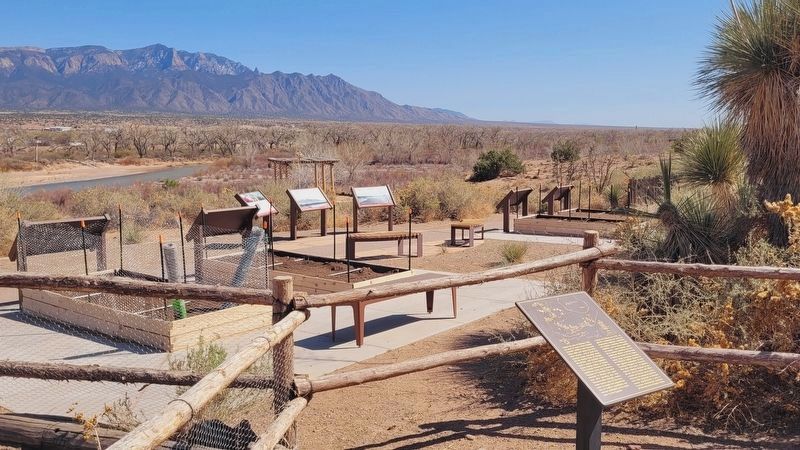
3. The view of the markers with the Rio Grande and Sandia Mountains
Also see . . . Coronado Historic Site. New Mexico Historic Sites
Coronado Historic Site and the ancient Kuaua Pueblo are located just minutes north of Albuquerque (off of I-25, Exit 242) in Bernalillo. In 1540, Francisco Vásquez de Coronado—with 500 soldiers and 2,000 Indigenous allies from New Spain—entered the Rio Grande valley somewhere near this site. Coronado was searching for the fabled Seven Cities of Gold.(Submitted on May 28, 2025, by James Hulse of Medina, Texas.)
Credits. This page was last revised on May 28, 2025. It was originally submitted on May 28, 2025, by James Hulse of Medina, Texas. This page has been viewed 108 times since then and 12 times this year. Photos: 1, 2, 3. submitted on May 28, 2025, by James Hulse of Medina, Texas.
