Bernalillo in Sandoval County, New Mexico — The American Mountains (Southwest)
El Bosque
⎯⎯⎯
The Bosque
Photographed by James Hulse, April 9, 2025
1. El Bosque / The Bosque Marker

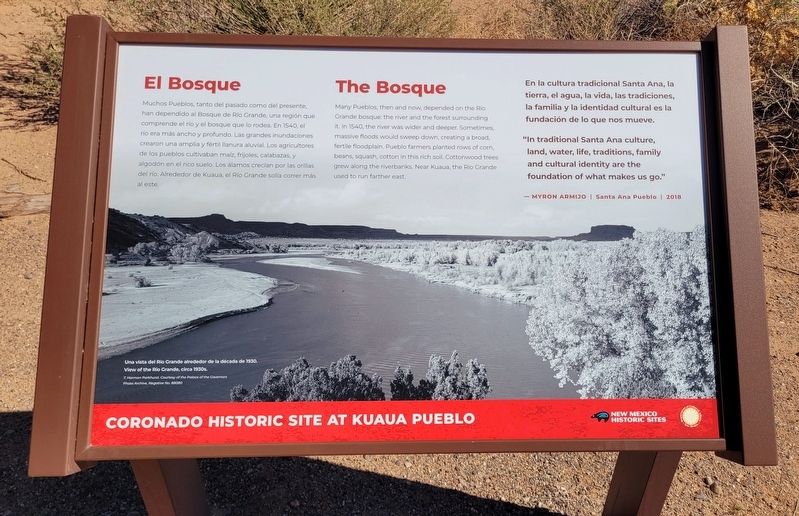
Muchos Pueblos, tanto del pasado como del presente, han dependido al Bosque de Río Grande, una región que comprende el río y el bosque que lo rodea. En 1540, el río era más ancho y profundo. Las grandes inundaciones crearon una amplia y fértil llanura aluvial. Los agricultores de los pueblos cultivaban maíz, frijoles, calabazas, y algodón en el rico suelo. Los álamos crecían por las orillas del río. Alrededor de Kuaua, el Río Grande solía correr más al este.
En la cultura tradicional Santa Ana, la tierra, el agua, la vida, las tradiciones, la familia y la identidad cultural es la fundación de lo que nos mueve.
Myron Armijo Santa Ana Pueblo 2018
Subtítulos
(Foto #1) Una vista del Rio Grande alrededor de la década de 1930.
Many Pueblos, then and now, depended on the Rio Grande bosque: the river and the forest surrounding it. In 1540, the river was wider and deeper. Sometimes, massive floods would sweep down, creating a broad, fertile floodplain. Pueblo farmers planted rows of corn, beans, squash, cotton in this rich soil. Cottonwood trees grew along the riverbanks. Near Kuaua, the Rio
this page online
"In traditional Santa Ana culture, land, water, life, traditions, family and cultural identity are the foundation of what makes us go."
Myron Armijo Santa Ana Pueblo 2018
Captions
(Photo #1) View of the Rio Grande, circa 1930s. T. Harmon Parkhurst. Courtesy of the Palace of the Governors Photo Archive, Negative No. 88080
Erected by Coronado Historic Site Kuaua Pueblo and New Mexico Historic Sites.
Topics. This historical marker is listed in these topic lists: Indigenous Peoples and Communities • Settlements & Settlers. A significant historical year for this entry is 1540.
Location. 35° 19.771′ N, 106° 33.404′ W. Marker is in Bernalillo, New Mexico, in Sandoval County. It is on Kuaua Road half a mile east of U.S. 550. The marker is located in the Kuaua Ruins (Coronado Historic Site. Touch for map. Marker is at or near this postal address: 485 Kuaua Rd, Bernalillo NM 87004, United States of America. Touch for directions.

Regionally, this marker is in the San Juan Basin and in Greater Albuquerque. It is also in the American Southwest and at the Four Corners. Globally, it is in North
Photographed by James Hulse, April 9, 2025
2. The Bosque Marker (Right side)
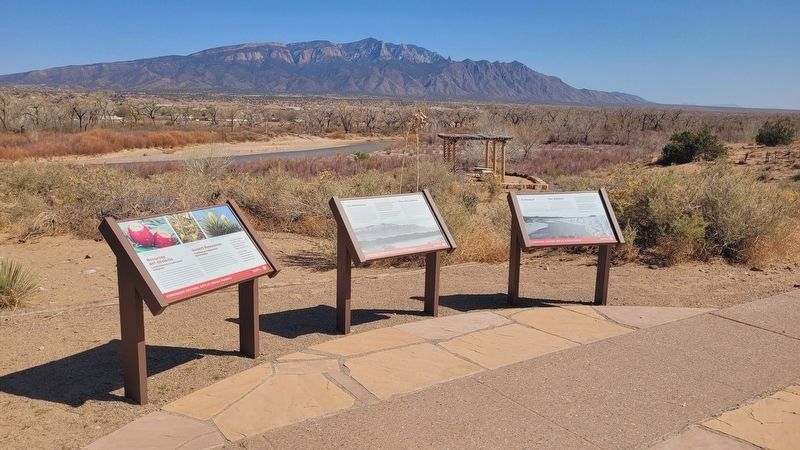
Other nearby markers. At least 8 other markers are within walking distance of this marker: Cultivos y animales no nativos / Non-Native Crops and Animals (here, next to this marker); Las Montañas / The Mountains (here, next to this marker); Recursos del desierto / Desert Resources (here, next to this marker); Cultivos y animales nativas / Native Crops and Animals (a few steps from this marker); Agricultura Pueblo / Pueblo Agriculture (a few steps from this marker); Francisco Vasquez de Coronado (a few steps from this marker); Was Coronado Ever at Kuaua? (within shouting distance of this marker); El Pueblo de Kuaua / Kuaua Pueblo (within shouting distance of this marker). Touch for a list and map of all markers in Bernalillo.
More about this marker. There is a small fee to visit the Kuaua Ruins (Coronado Historic Site).
Also see . . . Coronado Historic Site. New Mexico Historic Sites
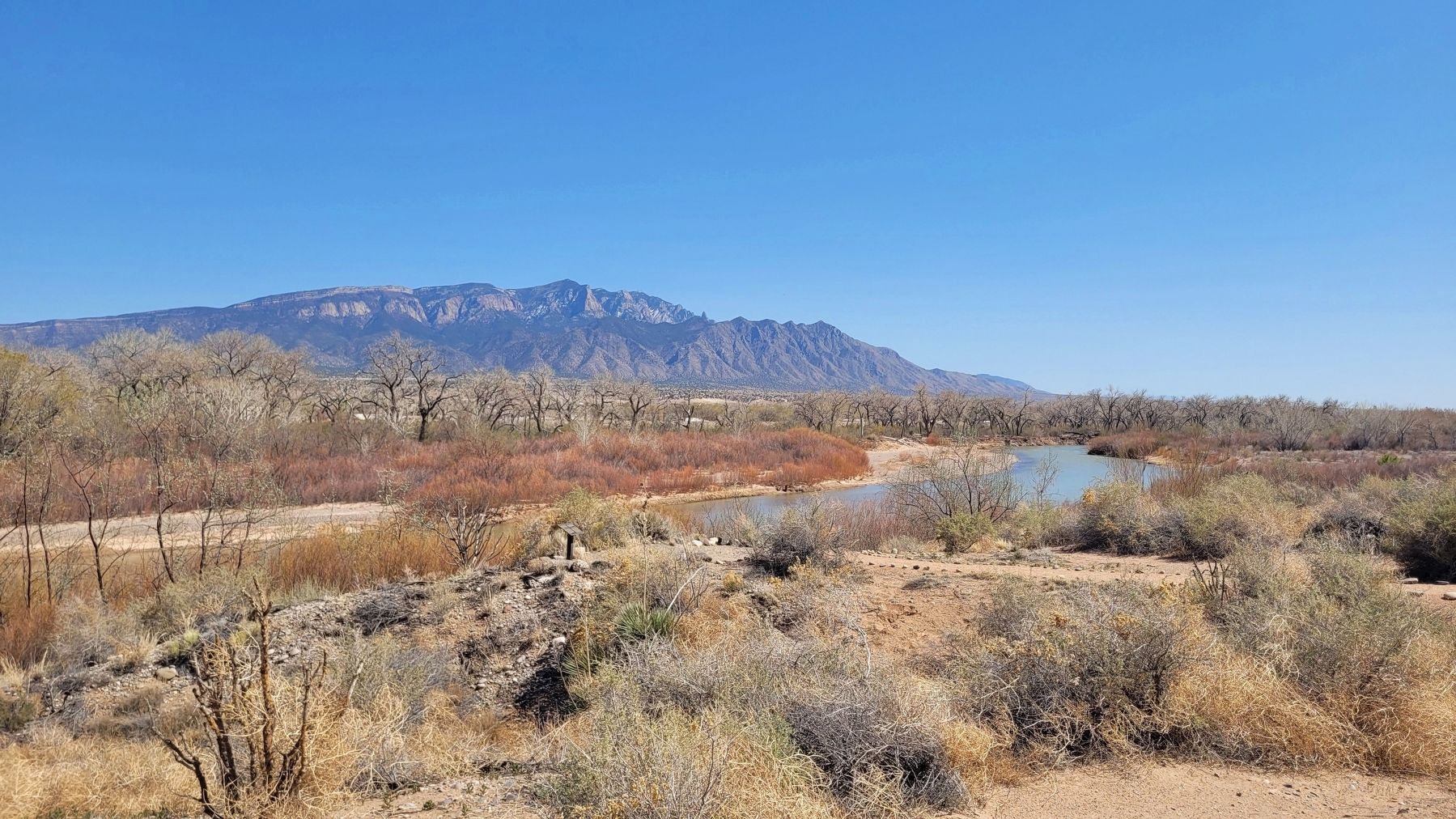
Coronado Historic Site and the(Submitted on May 28, 2025, by James Hulse of Medina, Texas.)ancient Kuaua Pueblo are located just minutes north of Albuquerque (off of I-25, Exit 242) in Bernalillo. In 1540, Francisco Vásquez de Coronado—with 500 soldiers and 2,000 Indigenous allies from New Spain—entered the Rio Grande valley somewhere near this site. Coronado was searching for the fabled Seven Cities of Gold.Photographed by James Hulse, April 9, 20253. The cottonwood trees line the far side of the Rio Grande River
Credits. This page was last revised on May 28, 2025. It was originally submitted on May 28, 2025, by James Hulse of Medina, Texas. This page has been viewed 108 times since then and 11 times this year. Photos: 1, 2, 3. submitted on May 28, 2025, by James Hulse of Medina, Texas.
