Bremen-East in Schwachhausen, Germany — Central Europe
Antikolonialdenkmal „Der Elefant“
⎯⎯⎯
Anticolonial Memorial “The Elephant”
Photographed by Andrew Ruppenstein, May 19, 2025
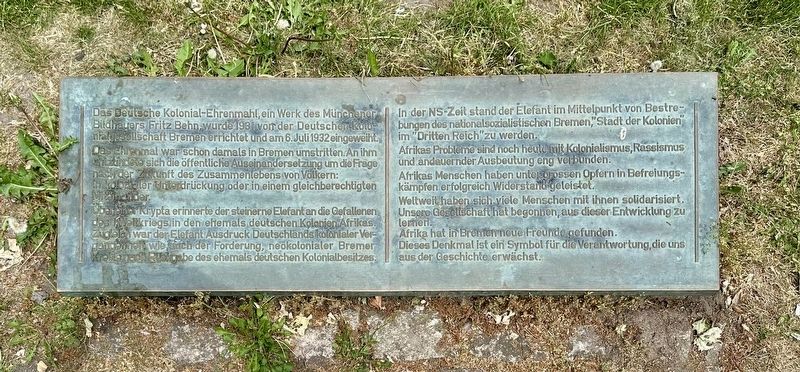
1. Antikolonialdenkmal „Der Elefant“ / Anticolonial Memorial “The Elephant” Marker

Das Ehrenmal war schon damals in Bremen umstritten. An ihm entzundete sich die öffentliche Auseinandersetzung um die Frage nach der Zukunft des Zusammenlebens von Völkern: in kolonialer Unterdrückung oder in einem gleichberechtigten Miteinander.
Über einer Krypta erinnerte der steinerne Elefant an die Gefallenen des I.Weltkriegs in den ehemals deutschen Kolonien Afrikas. Zugleich war der Elefant Ausdruck Deutschlands kolonialer Vergangenheit wie auch der Forderung, neokolonialer Bremer Kreise nach Rückgabe des ehemals deutschen Kolonialbesitzes.
In der NS-Zeit stand der Elefant im Mittelpunkt von Bestre- bungen des nationalsozialistischen Bremen,” Stadt der Kolonien im "Dritten Reich” zu werden.
Afrikas Probleme sind noch heute mit Kolonialismus, Rassismus und andauernder Ausbeutung eng verbunden.
Afrikas Menschen haben unter grossen Opfern in Befreiungs- kämpfen erfolgreich Widerstand geleistet.
Weltweit haben
this page online
Afrika hat in Bremen neue Freunde gefunden. Dieses Denkmal ist ein Symbol für die Verantwortung, die uns aus der Geschichte erwächst.
The German Colonial Memorial, a work by the Munich sculptor Fritz Behn, was erected in 1931 by the Deutschen Kolonialgesellschaft Bremen (“German Colonial Society of Bremen”) and inaugurated on July 6, 1932.
The memorial was already controversial in Bremen at the time. It sparked a public debate about the future of coexistence between nations: colonial oppression or equal coexistence.
Above a crypt, the stone elephant commemorated the fallen soldiers of World War I in the former German colonies of Africa. At the same time, the elephant was an expression of Germany's colonial past as well as the demands of neo-colonial circles in Bremen for the return of former German colonial possessions.
During the Nazi era, the elephant was at the center of efforts by National Socialist Bremen to become a "city of colonies" in the "Third Reich."
Africa's problems
Photographed by Andrew Ruppenstein, May 19, 2025
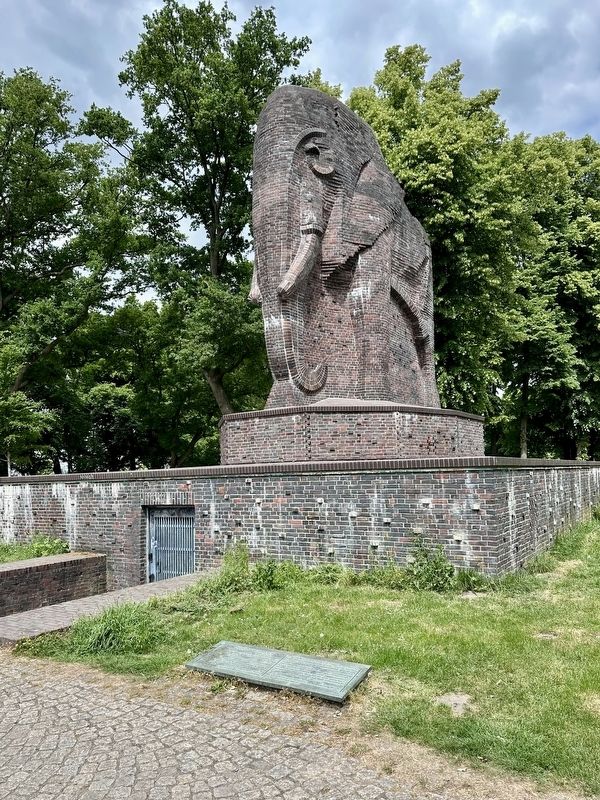
2. The Elephant and marker
Africa's people have successfully resisted with liberation struggles, making great sacrifices.
Many people around the world have expressed their solidarity with them. Our society has begun to learn from this development.
Africa has found new friends in Bremen. This monument is a symbol of the responsibility that arises from history.
Topics. This memorial is listed in these topic lists: Animals • Government & Politics • Man-Made Features. A significant historical date for this entry is July 6, 1932.
Location. 53° 5.039′ N, 8° 49.049′ E. Memorial is in Bremen, in Schwachhausen. It is in Bremen-East. It is on Gustav-Deetjen-Allee, on the right when traveling south. The memorial is located in Bremen Bürgerpark, in the “panhandle”. Touch for map. Memorial is in this post office area: Bremen 28209, Germany. Touch for directions.

Regionally, it is in Europe, the European Union, Atlantic Europe, Central Europe, the Schengen Area, Western Europe, and the Western World. Historically, it finds itself in what was once the Holy Roman Empire and also the
Photographed by Andrew Ruppenstein, May 19, 2025
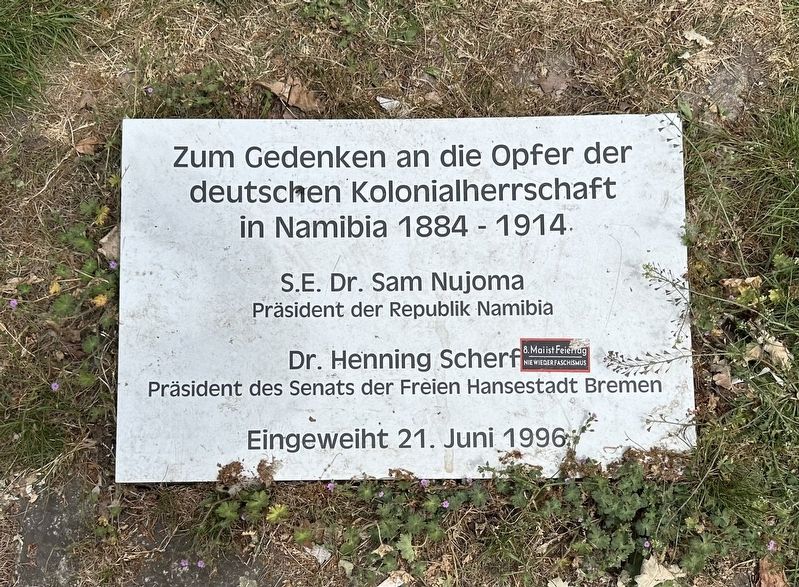
3. Memorial plaque for the Namibian victims of German colonial rule (1884-1914)
A few meters to the left of the marker there is memorial plaque for the victims of German colonial rule in Namibian, dedicated in 1996.
Other nearby markers. At least 8 other markers are within walking distance of this marker: Ohamakari (here, next to this marker); Hermann-Böse-Gymnasium (about 90 meters away, measured in a direct line); Khatchkar - Armenian Genocide Memorial (about 210 meters away); Hauptbahnhof / Main Railway Station (approx. 0.3 kilometers away); Bremen-Minsk Jewish Deportation Memorial (approx. 0.4 kilometers away); Übersee-Museum / Overseas Museum (approx. 0.4 kilometers away); Fruchthof (approx. 0.6 kilometers away); Familie-Schwarz-Platz (approx. 0.7 kilometers away). Touch for a list and map of all markers in Bremen.
Also see . . .
1. Anticolonial Memorial “The Elephant” (Lausch Orte). A history-story of the Elephant. Includes a 10 minute audio version. (Submitted on May 31, 2025.)
2. Bremen’s Elephant (Contested Histories). Full title: Bremen’s Elefant: Memorialisation, politics, and memory surrounding German colonialism (Submitted on May 31, 2025.)
Additional keywords. Gedenktafel
Photographed by Andrew Ruppenstein, May 19, 2025
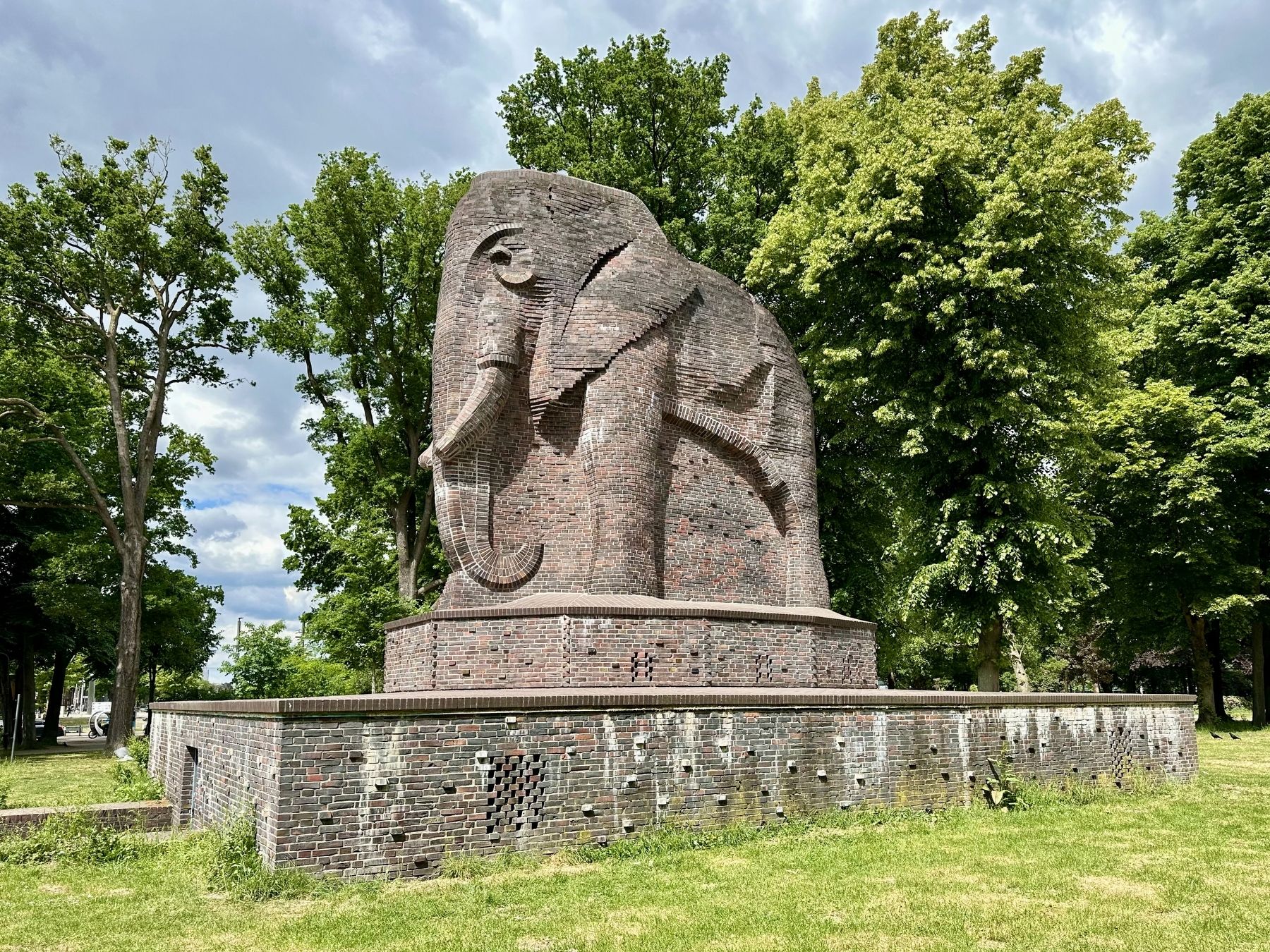
4. The Elephant
Credits. This page was last revised on June 1, 2025. It was originally submitted on May 31, 2025, by Andrew Ruppenstein of Lamorinda, California. This page has been viewed 199 times since then and 67 times this year. Photos: 1, 2, 3, 4. submitted on May 31, 2025, by Andrew Ruppenstein of Lamorinda, California.
