
Park City in Summit County, Utah — The American Mountains (Southwest)
Snyderville Pioneer Cemetery
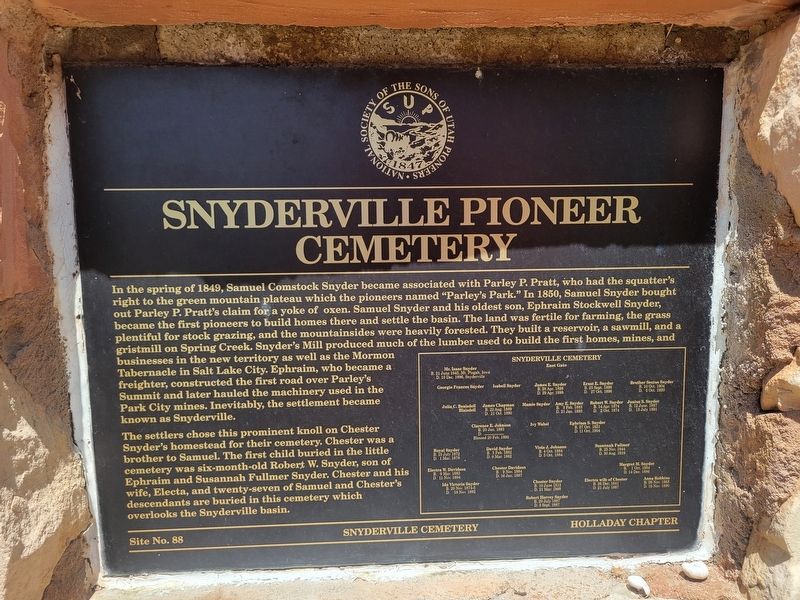
Photographed by Jeremy Snow, June 20, 2025
1. Snyderville Pioneer Cemetery Marker
The settlers chose this prominent knoll on Chester Snyder's homestead for their cemetery. Chester was a brother to Samuel. The first child buried in the little. cemetery was six-month-old
this page online
Erected by Sons of Utah Pioneers. (Marker Number 88.)
Topics and series. This historical marker is listed in these topic lists: Cemeteries & Burial Sites • Settlements & Settlers. In addition, it is included in the Sons of Utah Pioneers series list. A significant historical year for this entry is 1850.
Location. 40° 41.876′ N, 111° 32.734′ W. Marker is in Park City, Utah, in Summit County. It is on Roffe Road, on the right when traveling west. Located a short distance up the hill from the parking area. Touch for map. Marker is at or near this postal address: 1916 Roffe Rd, Park City UT 84098, United States of America. Touch for directions.

Regionally, this marker is in Utah’s Uinta Mountains, in the Wasatch Front, and in Greater Provo. It is also in the American Mountain West and on the Colorado Plateau. Globally, it is in North America, the Rocky Mountains, the Western Hemisphere, the Western World,
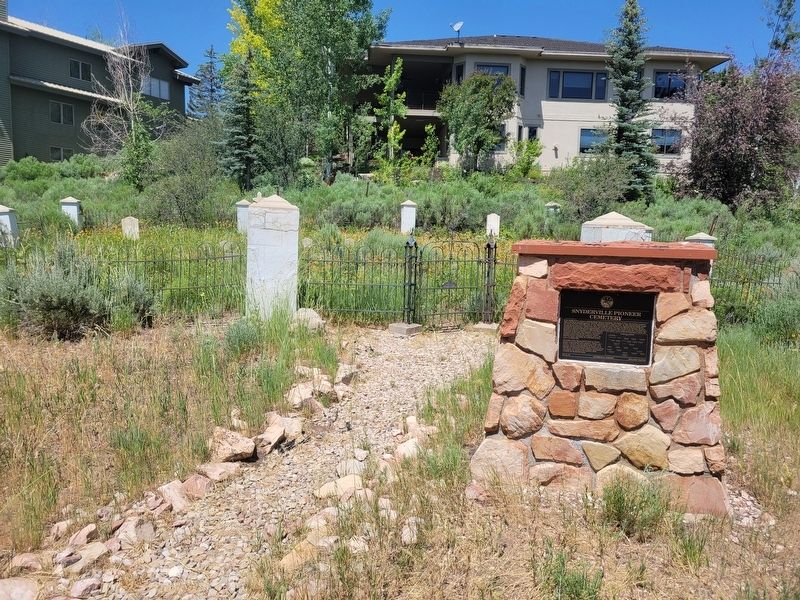
Photographed by Jeremy Snow, June 20, 2025
2. Snyderville Pioneer Cemetery Marker
Other nearby markers. At least 8 other markers are within 5 miles of this marker, measured as the crow flies: A different marker also named Snyderville Pioneer Cemetery (a few steps from this marker); Park City Pioneers (approx. 3.3 miles away); City Park (approx. 3.8 miles away); Park City Miners Hospital (approx. 3.8 miles away); John C. Green, Jr. (approx. 3.8 miles away); The Roger Harlan Memorial Skate Park (approx. 3.9 miles away); Library & Education Center & Park (approx. 3.9 miles away); Union Pacific Depot (approx. 4.4 miles away). Touch for a list and map of all markers in Park City.
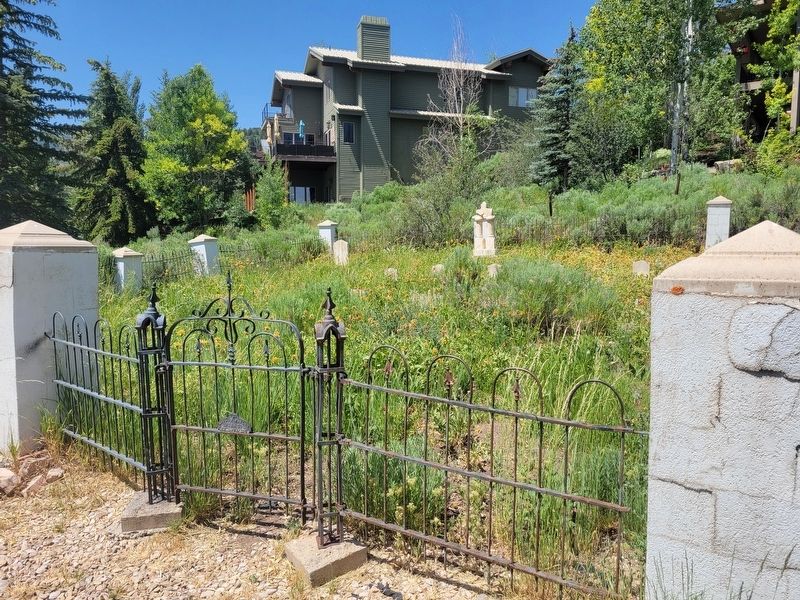
Photographed by Jeremy Snow, June 20, 2025
3. Snyderville Pioneer Cemetery
Credits. This page was last revised on June 21, 2025. It was originally submitted on June 20, 2025, by Jeremy Snow of Cedar City, Utah. This page has been viewed 153 times since then and 29 times this year. Photos: 1, 2, 3. submitted on June 20, 2025, by Jeremy Snow of Cedar City, Utah. • Andrew Ruppenstein was the editor who published this page.
