New York Botanical Garden in the Bronx in Bronx County, New York — The American Northeast (Mid-Atlantic)
Forest Conservation
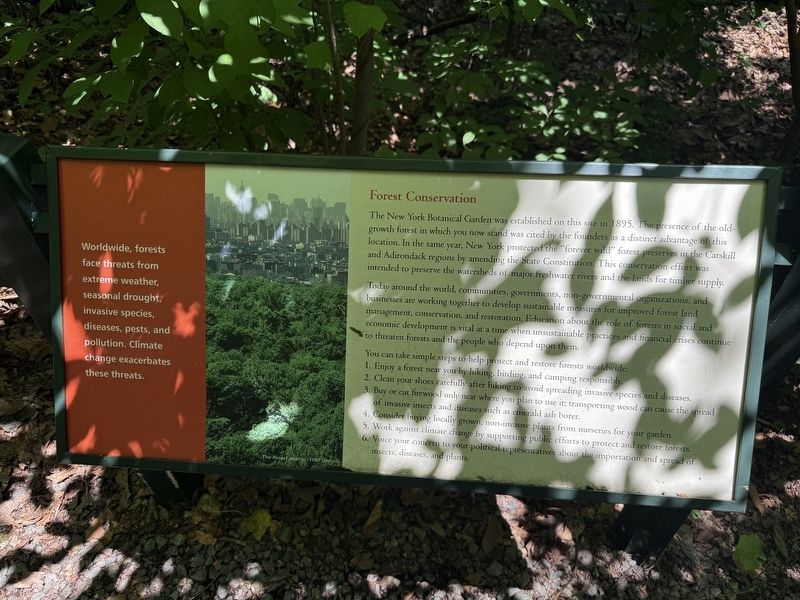
Worldwide, forests face threats from extreme weather, seasonal drought, invasive species, diseases, pests, and pollution. Climate change exacerbates these threats.
The New York Botanical Garden was established on this site in 1895. The presence of the old-growth forest in which you now stand was cited by the founders as a distinct advantage of this location. In the same year, New York protected the "forever wild" forest, preserves in the Catskills and Adirondack regions by amending the State Constitution. This conservation effort was intended to preserve the watersheds of major freshwater rivers and the lands for timber supply.
Today around the world, communities, governments, non-governmental organizations, and businesses are working together to develop sustainable measures for improved forest land management, conservation, and restoration. Education about the role of forests in social and economic development is vital at a time when unsustainable practices and financial crises continue to threaten forests and the people who depend upon them.
You can take simple steps to help protect and restore forests worldwide:
1.Enjoy a forest near you by hiking, birding, and camping responsibly.
Click or scan to see
this page online
2. Clean your shoes carefully after hiking to avoid spreading invasive species and diseases.
3. Buy or cut firewood only near where you plan to use it; transporting wood can cause the spread of invasive insects and diseases such as emerald ash borer.
4. Consider buying locally grown, non-invasive plants from nurseries for your garden.
5. Work against climate change by supporting public efforts to protect and restore forests.
6. Voice your concern to your political representatives about the importation and spread of insects, diseases, and plants.
Erected by New York Botanical Garden.
Topics. This historical marker is listed in these topic lists: Horticulture & Forestry • Parks & Recreational Areas. A significant historical year for this entry is 1895.
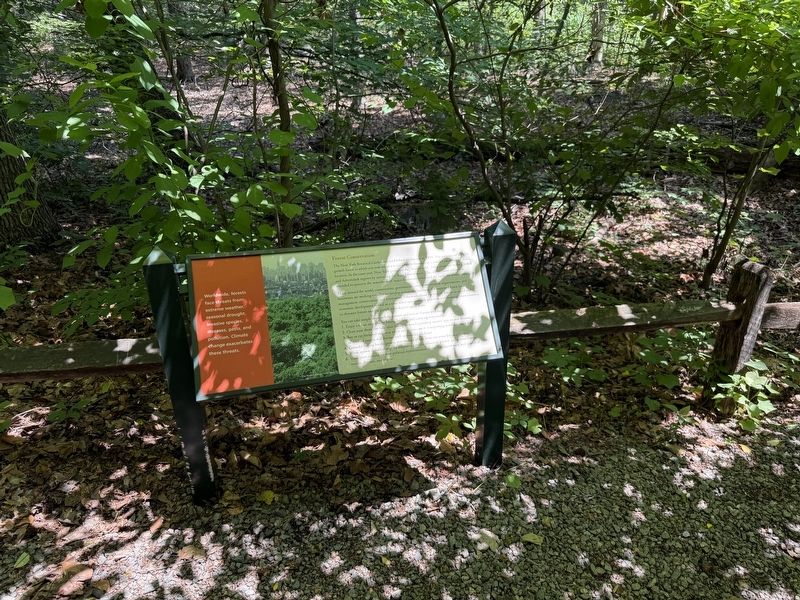
Location. 40° 51.746′ N, 73° 52.597′ W. Marker is in Bronx, New York, in Bronx County. It is in New York Botanical Garden. It is at the intersection of Bridge Trail and Spicebush Trail, on the right when traveling west on Bridge Trail. Touch for map. Marker is at or near this postal address: 81 Spicebush

Regionally, this marker is in New York City. It is also in the American Northeast, in the Mid-Atlantic, and on the Eastern Seaboard. Globally, it is in the North Atlantic Region, North America, the Western Hemisphere, the Western World, and the Anglosphere. Historically, it finds itself in what was once New Netherland and also one of the original Thirteen Colonies.
Other nearby markers. At least 8 other markers are within walking distance of this marker: Thain Family Forest (here, next to this marker); Common Spicebush (here, next to this marker); Old-Growth Forests: Pit and Mound Formations (a few steps from this marker); Black Oak (within shouting distance of this marker); Human Impact (within shouting distance of this marker); Pokeberry (about 300 feet away, measured in a direct line); Oak (about 300 feet away); Old-Growth Forests: Snags (about 300 feet away). Touch for a list and map of all markers in Bronx.
Credits. This page was last revised on July 10, 2025. It was originally submitted on July 10, 2025, by Devry Becker Jones of Washington, District of Columbia. This page has been viewed 98 times since then and 16 times this year. Photos: 1, 2. submitted on July 10, 2025, by Devry Becker Jones of Washington, District of Columbia.
