Norman in Cleveland County, Oklahoma — The American South (West South Central)
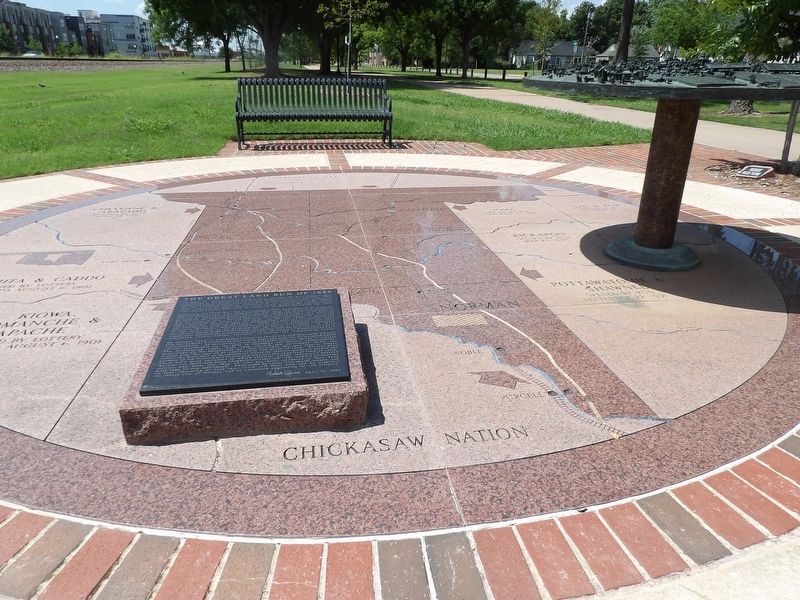
The Great Land Run of 1889
| — | Norman Legacy Trail | — |

Photographed by Duane and Tracy Marsteller, June 20, 2025
1. The Great Land Run of 1889 Marker
On April 22, 1889 at twelve o'clock noon, possibly the most dramatic land settlement in the history of the United States occurred in this area. This unfolding drama was the Great Land Run of 1889 that opened for settlement the part of Indian Territory referred to as the Unassigned Lands. These lands consisted of approximately 2,950 square miles in the central part of what would become officially the State of Oklahoma November 16, 1907.
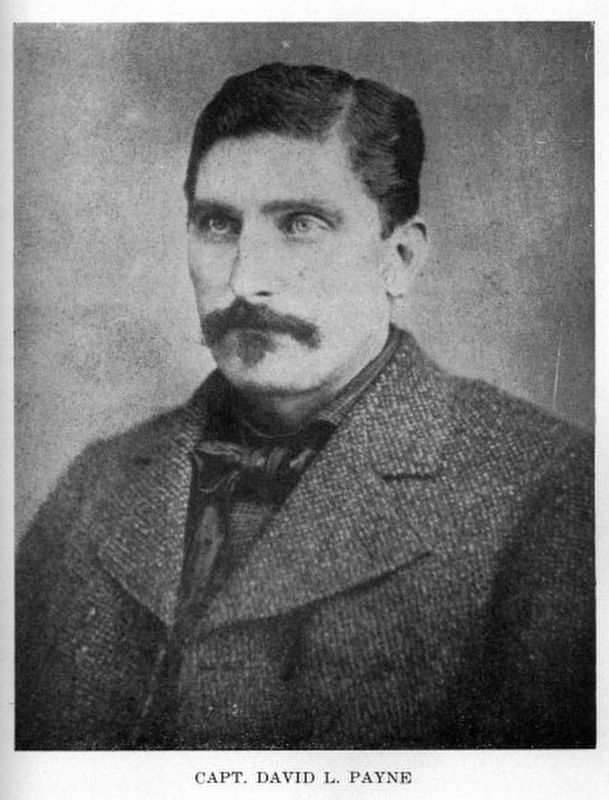
Following the Civil War, the Unassigned Lands were defined by policies and agreements that were imposed in 1866 upon the Creek and Seminole Nations by the United States government. Although these lands were to be held by the federal government for other Indian tribes, this intention did not come to pass. During the next 20 years, several events occurred that forecasted the future of this area. In the late 1860s, a movement led by David L. Payne to open the Unassigned Lands for settlement began and reached its peak in the 1880s. Payne and his followers, who were known as “Boomers”, made several illegal attempts to establish settlements in this area, only to be escorted out by the U.S.
this page online
By January 1889, it had become clear to the Creek and Seminole Nations that the federal government was intent upon opening the Unassigned Lands for settlement. At this point, those two Indian nations agreed to release earlier agreements on the area in exchange for modest compensation. The Unassigned Lands were then opened for settlement under the provisions of the Homestead Act that provided that any man or single woman over the age of 21 could claim 160 acres of land. Several days before the Run, tens of thousands of would-be settlers gathered around the borders of the Unassigned Lands and awaited the appointed time of entry. There were many instances in which settlers, called “Sooners,” entered the area too early and when caught were removed. The number of hopeful settlers who made the “Run of ’89” has been estimated to have been more than 50,000 individuals. They came by train, horseback, wagon, and
Photographed by Duane and Tracy Marsteller, March 21, 2019
2. The Great Land Run of 1889 Marker
– Robert Goins April 22, 2004
Erected 2004.
Topics. This historical marker is listed in these topic lists: Indigenous Peoples and Communities • Settlements & Settlers. A significant historical date for this entry is April 22, 1889.
Location. 35° 12.977′ N, 97° 26.43′ W. Marker is in Norman, Oklahoma, in Cleveland County. It can be reached from South Jones Avenue south of Castro Street, on the right when traveling south. Marker is on the Norman Legacy Trail, which runs parallel and to the west of South Jones Street. Touch for map. Marker is in this post office area: Norman OK 73069, United States of America. Touch for directions.

Regionally, this marker is in Central Oklahoma—Frontier Country and in Greater Oklahoma City. It is also in the American South, specifically on the prairies, and on the Southern Plains. Globally, it is in North America, the Western Hemisphere, the Western World, and the Anglosphere. Historically, it finds itself in what was once the territory of the Mississippian
Photographed by Duane and Tracy Marsteller, June 20, 2025
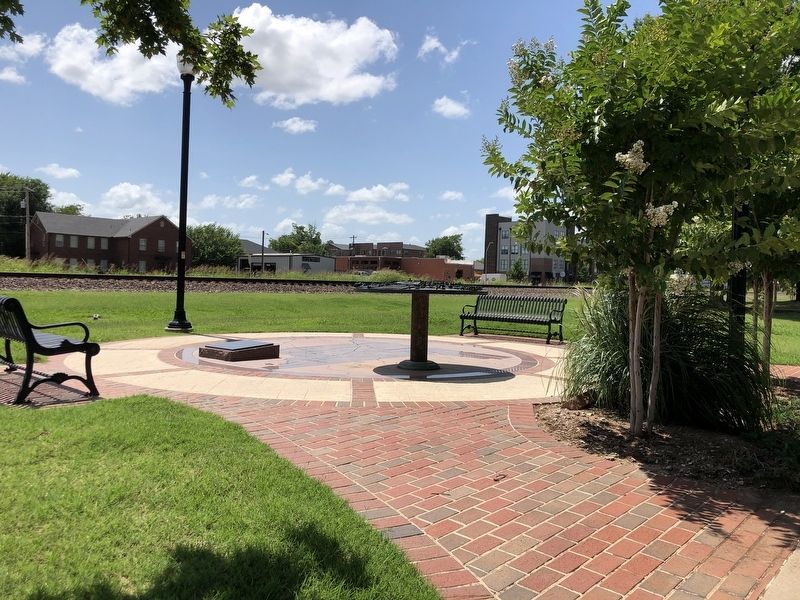
3. The Great Land Run of 1889 Marker
Other nearby markers. At least 8 other markers are within walking distance of this marker: The City of Norman 1889-1907 (here, next to this marker); Extra! Extra! Read All About It! (here, next to this marker); Native Oklahoma (about 400 feet away, measured in a direct line); Indian Territory, 1866-1889 (about 400 feet away); University on the Prairie (about 700 feet away); A Tough Decade (about 700 feet away); The Brooks Years and World War One (about 700 feet away); Norman the University City (about 700 feet away). Touch for a list and map of all markers in Norman.
Also see . . . The Oklahoma Land Run of 1889. (Submitted on July 16, 2025, by Brandon D Cross of Flagler Beach, Florida.)
Oklahoma! Politically and Topographically Described…, A.P. Jackson; Wikimedia Commons (Public Domain), 1885
4. David Lewis Payne (1836-1884)
A Civil War veteran, he led eager followers – called the “Boomer Army” – on several illegal settlement attempts in Indian Territory. This led some to consider him the “Father of Oklahoma”, but he didn't live to see his dream realized – he died four years before the area was officially opened for settlement.
Credits. This page was last revised on November 8, 2025. It was originally submitted on July 16, 2025, by Duane and Tracy Marsteller of Murfreesboro, Tennessee. This page has been viewed 284 times since then and 60 times this year. Photos: 1, 2, 3, 4. submitted on July 16, 2025, by Duane and Tracy Marsteller of Murfreesboro, Tennessee.
