Midtown - Downtown in Columbia in Richland County, South Carolina — The American South (South Atlantic)
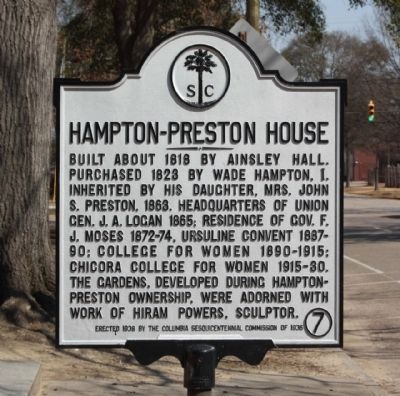
Hampton-Preston House
Photographed by Mike Stroud, 2010
1. Hampton - Preston House Marker
Erected 1938 by The Columbia Sesquicentennial Commission of 1936. (Marker Number 40-7.)
Topics and series. This historical marker is listed in these topic lists: Education • Government & Politics • Religion & Religious Structures • War, US Civil. In addition, it is included in the South Carolina Historical Markers series list. A significant historical year for this entry is 1818.
Location. 34° 0.619′ N, 81° 1.764′ W. Marker is in Columbia, South Carolina, in Richland County. It is in Midtown - Downtown. It is on Blanding Street. Located between Henderson Street and Pickens Street. Touch for map. Marker is in this post office area: Columbia SC 29201, United States of America. Touch for directions.

Regionally,
this page online
Other nearby markers. At least 8 other markers are within walking distance of this marker: Historic Fence and Gates Restoration (here, next to this marker); A Garden Resource for Everyone (here, next to this marker); Welcome to the Hampton-Preston Mansion & Gardens (here, next to this marker); Connected by History, Divided by Color (here, next to this marker); Columbia Bible College, 1937-1960 / Westervelt Home, 1930 - 1937 (here, next to this marker); Hampton-Preston Welcome Garden (a few steps from this marker); Former Site of Columbia Theological Seminary (a few steps from this marker); The Garden's Foundation (a few steps from this marker). Touch for a list and map of all markers in Columbia.
Regarding Hampton-Preston House. The
Photographed by Mike Stroud, February 21, 2010
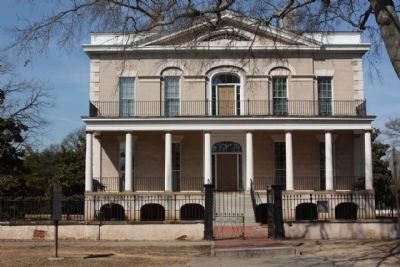
2. Hampton - Preston House
National Register of Historic Places :
Hampton-Preston House ** (added 1969 - Building - #69000172)
South Carolina Department of Archives and History, October 25, 2006
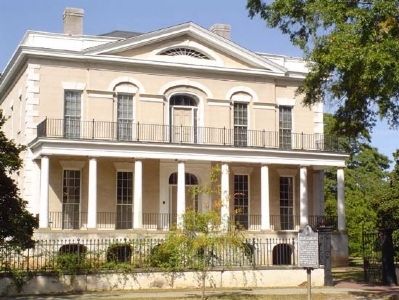
3. Hampton - Preston House
(South Carolina Department of Archives and History)
National Register of Historic Places:
Hampton-Preston House ** (added 1969 - - #69000172)
♦ Historic Significance: Event, Architecture/Engineering, Person
♦ Architect, builder, or engineer: Yates,Robert, Philips,Zachariah
♦ Architectural Style: Other
♦ Historic Person: Preston, John S.
♦ Significant Year: 1818
♦ Area of Significance: Education, Politics/Government, Landscape Architecture, Religion
♦ Period of Significance: 1875-1899, 1850-1874, 1825-1849, 1825-1849
♦ Owner: State
♦ Historic Function: Domestic
♦ Historic Sub-function: Single Dwelling
South Carolina Department of Archives and History, October 25, 2006
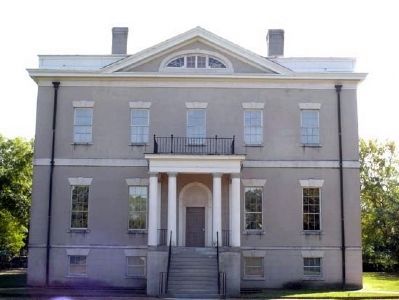
4. Hampton - Preston House , rear view
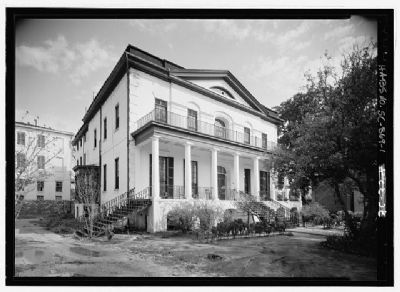
Historic American Buildings Survey, Jack E. Boucher, April 1960
5. Hampton - Preston House
Historic American Engineering Record HABS SC-869-1
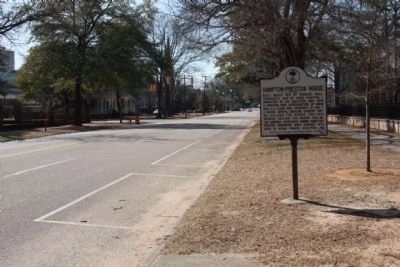
Photographed by Mike Stroud, February 21, 2010
6. Hampton - Preston House Marker seen along Blanding Street , looking west
Credits. This page was last revised on January 24, 2026. It was originally submitted on February 26, 2010, by Mike Stroud of Bluffton, South Carolina. This page has been viewed 1,770 times since then and 37 times this year. Photos: 1, 2, 3, 4. submitted on February 26, 2010, by Mike Stroud of Bluffton, South Carolina. 5. submitted on May 14, 2010, by Mike Stroud of Bluffton, South Carolina. 6. submitted on February 26, 2010, by Mike Stroud of Bluffton, South Carolina. • Craig Swain was the editor who published this page.
