Chama in Rio Arriba County, New Mexico — The American Mountains (Southwest)
Old Spanish Trail
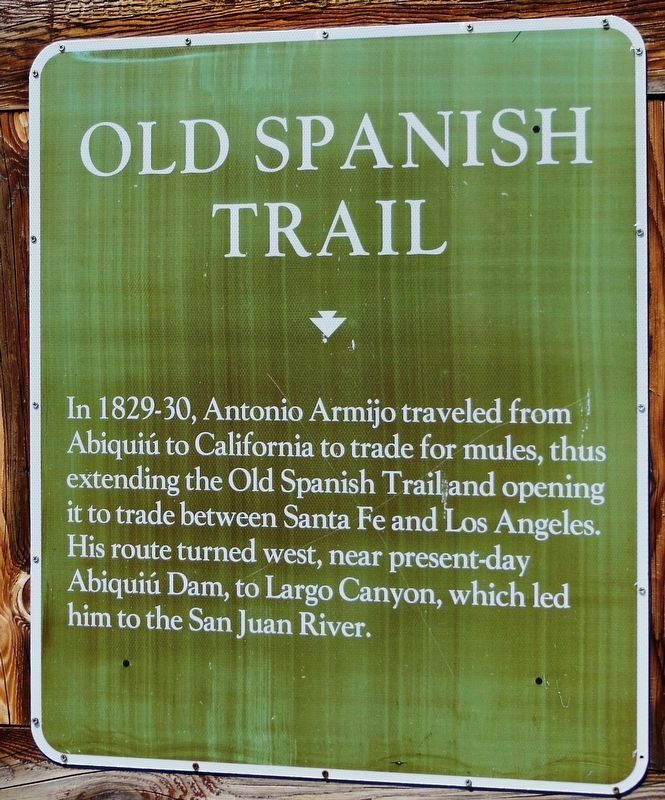
Photographed by Cosmos Mariner, June 12, 2013
1. Old Spanish Trail Marker
Erected by New Mexico Historic Preservation Division.
Topics. This historical marker is listed in these topic lists: Exploration • Industry & Commerce • Roads & Vehicles. A significant historical year for this entry is 1829.
Location. 36° 53.007′ N, 106° 35.103′ W. Marker is in Chama, New Mexico, in Rio Arriba County. It is at the intersection of State Highway 17 and U.S. 64, on the right when traveling south on State Highway 17. Marker is located in front of the Northern New Mexico Welcome Center. Touch for map. Marker is at or near this postal address: 2321 New Mexico Highway 17, Chama NM 87520, United States of America. Touch for directions.

Regionally, this marker is in Northern New Mexico. It is also in the American Southwest, in the Mountain West, and at the Four Corners. Globally, it is in North America, the Rocky
this page online
Other nearby markers. At least 8 other markers are within 9 miles of this marker, measured as the crow flies: Denver & Rio Grande Railroad San Juan Extension (approx. 1.4 miles away); Chama (approx. 1.4 miles away); The Chama Railyard (approx. 1.4 miles away); Coal Tipple (approx. 1.4 miles away); 1881 Log Bunkhouse (approx. 1½ miles away); a different marker also named Chama (approx. 1.8 miles away); Continental Divide (approx. 8.2 miles away); Cumbres Pass (approx. 9 miles away in Colorado). Touch for a list and map of all markers in Chama.
More about this marker. This is a large, painted metal "billboard-style" style marker mounted in a heavy wooden timber frame.
Also see . . .
1. Antonio Armijo Pioneered trade along the Old Spanish Trail. There was money to be made in transporting New Mexico serapes and other woolen goods to Los Angeles, and in wrangling California-bred horses and mules back to Santa Fe.
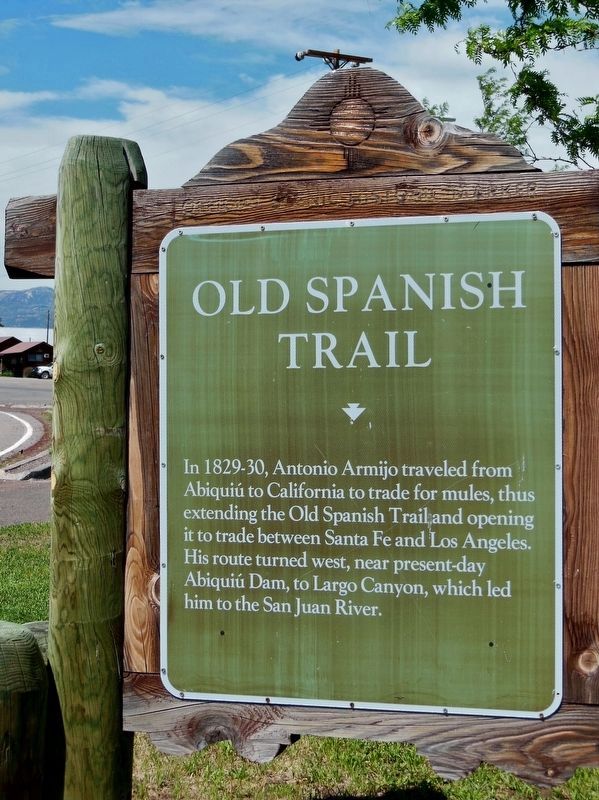
Photographed by Cosmos Mariner, June 12, 2013
2. Old Spanish Trail Marker (tall view; New Mexico Highway 17 in background)
2. Antonio Armijo Trail. (This link presents a map of the trail route.) Antonio Armijo was a Spanish Mexican explorer and merchant who in 1829 and 1830 led an expedition to find a trade route between New Mexico and Los Angeles. This was the first trading expedition between New Mexico and Los Angeles. It was so successful that annual expeditions were made thereafter until 1848. (Submitted on October 28, 2018, by Cosmos Mariner of Cape Canaveral, Florida.)
3. Antonio Armijo. Abiquiú was the starting point and eastern terminus of the original route of the Old Spanish Trail. Though segments of an overland route between the Spanish colonies of Nuevo México and Alta California had been blazed decades earlier, Armijo was the first to pioneer a complete route that
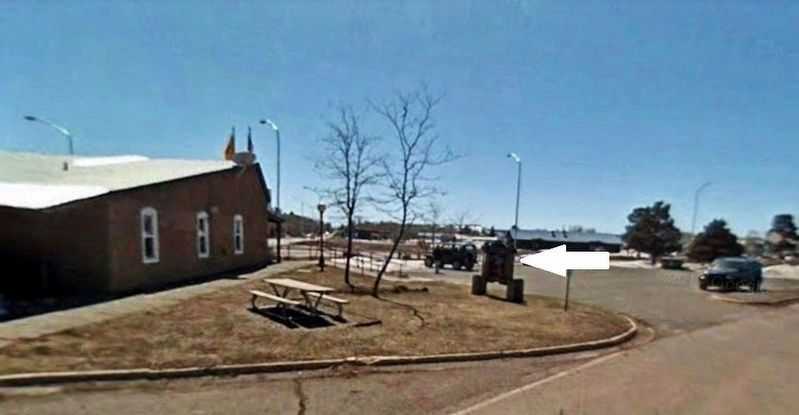
3. Northern New Mexico Visitor Center (marker visible near parking lot, on right)
Credits. This page was last revised on August 6, 2025. It was originally submitted on October 26, 2018, by Cosmos Mariner of Cape Canaveral, Florida. This page has been viewed 959 times since then and 78 times this year. Last updated on July 30, 2025, by Bill Wingate of Albuquerque, New Mexico. Photos: 1, 2, 3. submitted on October 28, 2018, by Cosmos Mariner of Cape Canaveral, Florida. • Devry Becker Jones was the editor who published this page.
