Zanesville in Muskingum County, Ohio — The American Midwest (Great Lakes)
1833
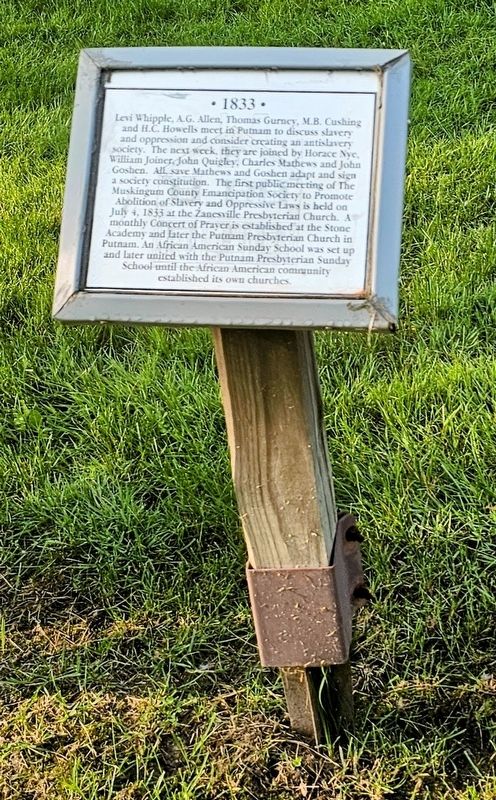
Photographed by Ian Lefkowitz, June 2, 2025
1. 1833 Marker
Topics. This historical marker is listed in these topic lists: Abolition & Underground RR • African Americans. A significant historical date for this entry is July 4, 1833.
Location. 39° 55.904′ N, 82° 0.407′ W. Marker is in Zanesville, Ohio, in Muskingum County. It can be reached from Putnam Avenue north of Jefferson Street. Touch for map. Marker is at or near this postal address: 456 Putnam Ave, Zanesville OH 43701, United States of America. Touch for directions.

Regionally, this marker is in the American Midwest, in Appalachia, and specifically in Northern Appalachia. Globally, it is in North America, the Western Hemisphere, the Western World, and the Anglosphere. Historically, it finds itself in what was once the Haudenosaunee (Iroquois) Confederacy, the territory of the Mississippian Culture, and the Northwest Territory.
Other nearby markers. At least 8 other markers are within walking distance of this marker: 1831 (here, next to this marker); 1834 (here, next to this marker); 1835 (here, next to this
this page online
Also see . . . Nevin Winter account of the creation of the Muskingum County Emancipation Society.
On Jul. 4, 1833, a public meeting was held in the Presbyterian Church, in Zanesville and the constitution was amended and the organization named the Muskingum County Emancipation Society." Its purposes were to promote the abolition of slavery and of oppressive laws.(Submitted on August 5, 2025, by Ian Lefkowitz of New York, New York.)
Photographed by Ian Lefkowitz, June 2, 2025
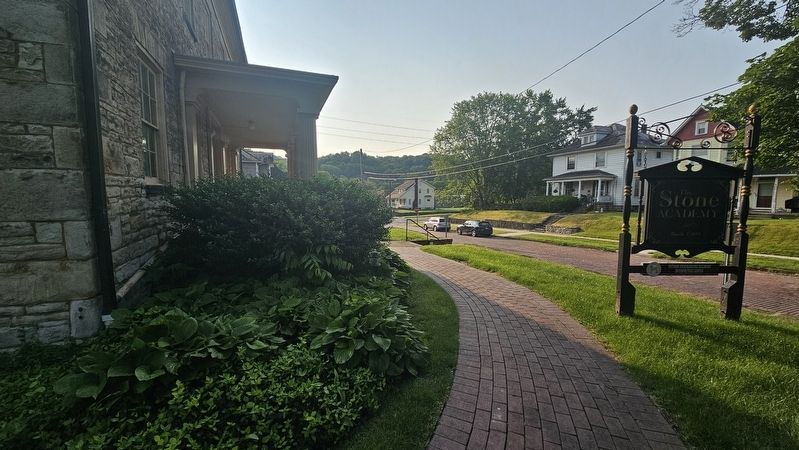
2. The Stone Academy
The Stone Academy, site of the monthly Concert of Prayer and a prominent stop on the Underground Railroad.
Photographed by Ian Lefkowitz, June 2, 2025
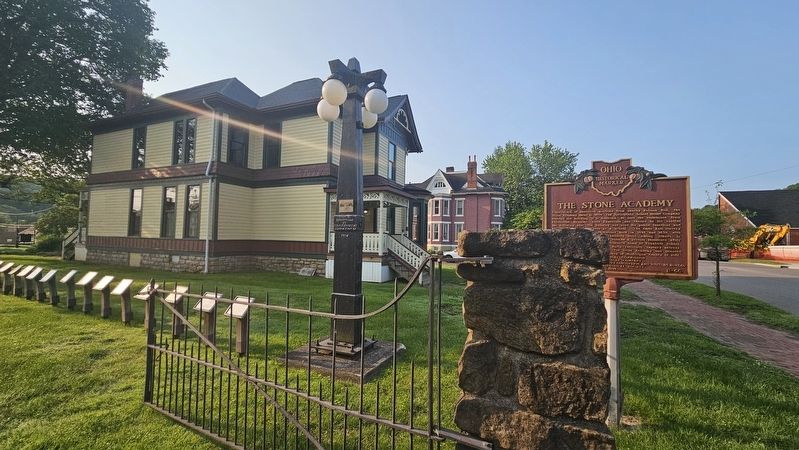
3. Putnam Underground Railroad Interpretive Center
This marker is part of a timeline of historic events leading to the abolition of slavery within Muskingum County.
Credits. This page was last revised on September 5, 2025. It was originally submitted on August 5, 2025, by Ian Lefkowitz of New York, New York. This page has been viewed 63 times since then and 19 times this year. Photos: 1, 2, 3. submitted on August 5, 2025, by Ian Lefkowitz of New York, New York. • Bill Pfingsten was the editor who published this page.
