Fairgrounds in Columbus in Franklin County, Ohio — The American Midwest (Great Lakes)
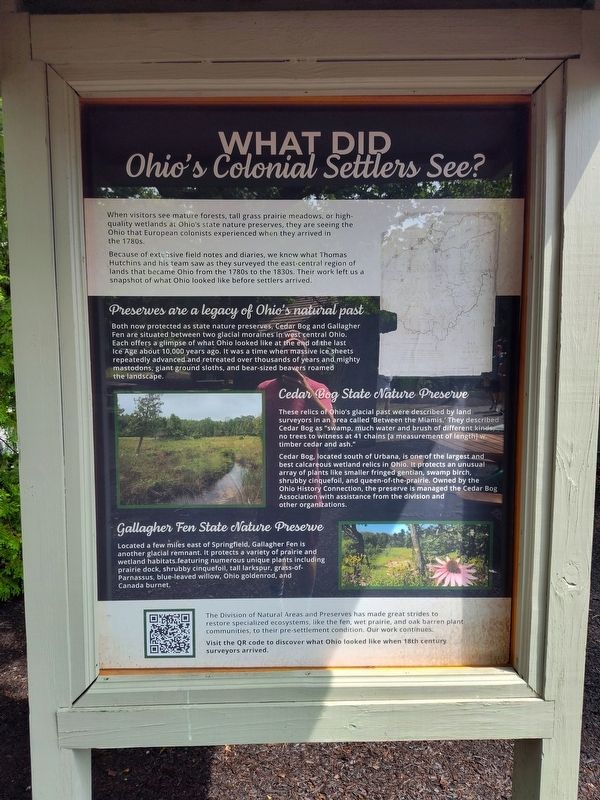
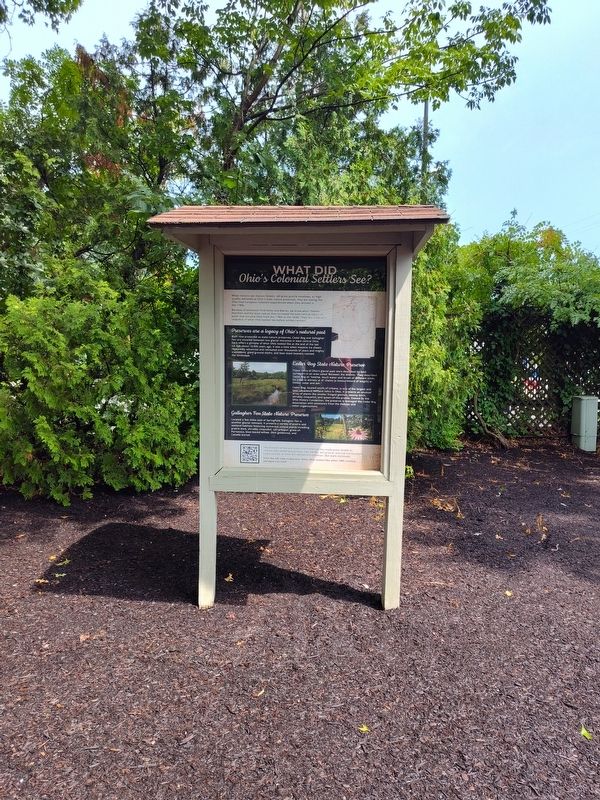
What Did Ohio's Colonial Settlers See?
Photographed by Craig Doda, July 27, 2025
1. What Did Ohio's Colonial Settlers See? Marker
Because of extensive field notes and diaries, we know what Thomas Hutchins and his team saw as they surveyed the east-central region of lands that became Ohio from the 1780s to the 1830s. Their work left us a snapshot of what Ohio looked like before settlers arrived.
Preserves are a legacy of Ohio's natural past
Both now protected as state nature preserves, Cedar Bog and Gallagher Fen are situated between two glacial moraines in west central Ohio. Each offers a glimpse of what Ohio looked like at the end of the last Ice Age about 10,000 years ago. It was a time when massive ice sheets repeatedly advanced and retreated over thousands of years and mighty mastodons, giant ground sloths, and bear-sized beavers roamed the landscape.
Cedar Bog State Nature Preserve
These relics of Ohio's glacial past were described by land surveyors in an area called 'Between the Miamis.' They described Cedar Bog as "swamp, much
this page online
Cedar Bog, located south of Urbana, is one of the largest and best calcareous wetland relics in Ohio. It protects an unusual array of plants like smaller fringed gentian, swamp birch, shrubby cinquefoil, and queen-of-the-prairie. Owned by the Ohio History Connection, the preserve is managed the Cedar Bog Association with assistance from the division and other organizations.
Gallagher Fen State Nature Preserve
Located a few miles east of Springfield, Gallagher Fen is another glacial remnant. It protects a variety of prairie and wetland habitats featuring numerous unique plants including prairie dock, shrubby cinquefoil, tall larkspur, grass-of- Parnassus, blue-leaved willow, Ohio goldenrod, and Canada burnet.
Erected by Ohio Department of Natural Resorces Division of Natural Areas & Preserves.
Topics. This historical marker is listed in this topic list: Environment.
Location. 39° 59.661′ N, 82° 59.263′ W. Marker is in Columbus, Ohio, in Franklin County. It
Photographed by Craig Doda, July 27, 2025
2. What Did Ohio's Colonial Settlers See? Marker

Regionally, this marker is in the Scioto Valley. It is also in the American Midwest and in the Corn Belt. Globally, it is in North America, the Western Hemisphere, the Western World, and the Anglosphere. Historically, it finds itself in what was once the Haudenosaunee (Iroquois) Confederacy, the territory of the Mississippian Culture, and the Northwest Territory.
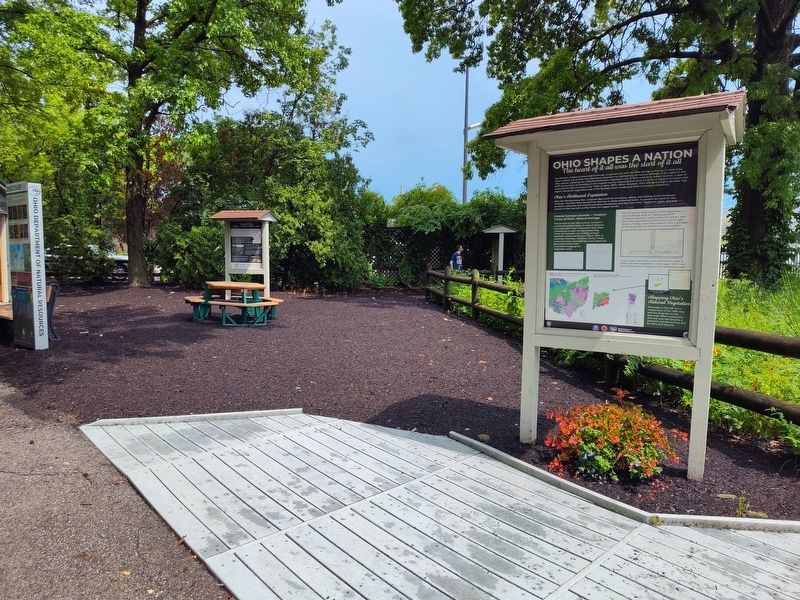
Other nearby markers. At least 8 other markers are within walking distance of this marker: Surveying the Northwest Territory (here, next to this marker); Ohio Shapes A Nation (here, next to this marker); Rattlesnake Master (a few steps from this marker); Tall Grass Prairie (a few steps from this marker); Bison (within shouting distance of this marker); Ohio Department of Natural Resources 75th Anniversary (within shouting distance of this marker); Apple Tree
Photographed by Craig Doda, July 27, 2025
3. What Did Ohio's Colonial Settlers See? Marker
Credits. This page was last revised on August 20, 2025. It was originally submitted on August 6, 2025, by Craig Doda of Napoleon, Ohio. This page has been viewed 78 times since then and 20 times this year. Photos: 1, 2, 3. submitted on August 6, 2025, by Craig Doda of Napoleon, Ohio. • Andrew Ruppenstein was the editor who published this page.
