Grimsby in Niagara Region, Ontario — Central Canada (North America)
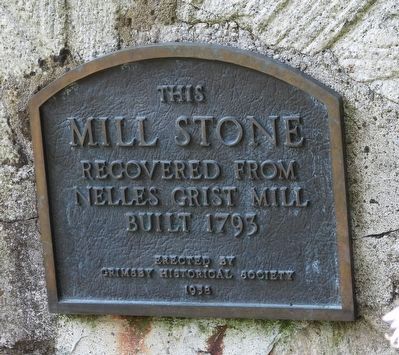
This Mill Stone Recovered From Nelles Grist Mill
Photographed by Kevin Westell, August 7, 2025
1. This Millstone Recovered From Nelles Grist Mill - Marker
This mill stone recovered from Nelles grist mill
Built 1793
Erected 1958 by Grimsby Historical Society.
Topics and series. This historical marker is listed in this topic list: Industry & Commerce. In addition, it is included in the The Welland Canals series list. A significant historical year for this entry is 1793.
Location. 43° 11.475′ N, 79° 33.881′ W. Marker is in Grimsby, Ontario, in Niagara Region. It is on Gibson Street, on the right when traveling east. The marker and millstone are 5 metres south of the west end of the walking bridge connecting the two dead-ends of Gibson St. Touch for map. Marker is at or near this postal address: 118 Gibson Street, Grimsby ON L3M 1G8, Canada. Touch for directions.

Regionally, this marker is on the Golden Horseshoe and in Niagara Canada. It is also in Central Canada. Globally, it is in North America, on the Great Lakes, in the Western Hemisphere, in the Western World, and in the Anglosphere. Historically, it finds itself in what was once a British colony, the Viceroyalty of New France, the Haudenosaunee (Iroquois) Confederacy, and Rupert’s Land.
Other nearby markers. At
this page online
Regarding This Mill Stone Recovered From Nelles Grist Mill. At one time around 1800, there were 5 mills operating along 40 Mile Creek. The water flow was highly seasonal on all these Niagara Peninsula creeks that flow north over the escarpment. After the Welland Canal was completed in 1829, its reliable water supply favoured milling businesses in St. Catharines and Thorold.
Photographed by Kevin Westell, August 7, 2025
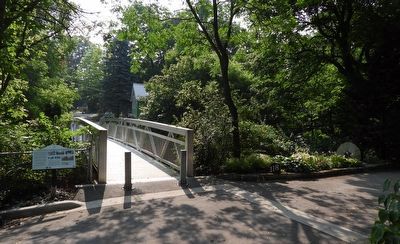
2. This Millstone Recovered From Nelles Grist Mill - Marker in context
The millstone (right) is steps south of the west end of the walking bridge.
Photographed by Kevin Westell, August 7, 2025
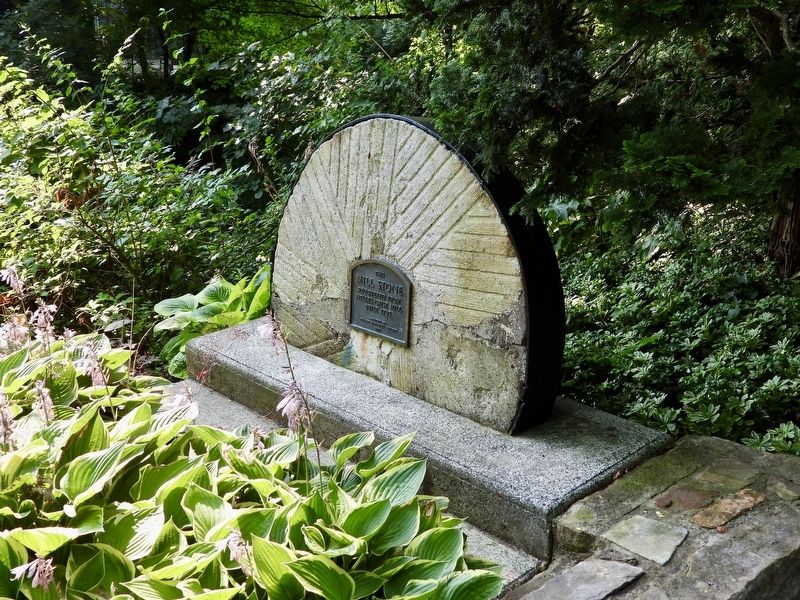
3. Nelles's Millstone
Photographed by Kevin Westell, August 7, 2025
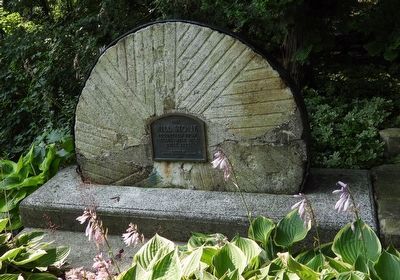
4. Nelles's Millstone
Credits. This page was last revised on August 13, 2025. It was originally submitted on August 8, 2025, by Kevin Westell of St. Catharines, Ontario. This page has been viewed 72 times since then and 19 times this year. Photos: 1, 2, 3, 4. submitted on August 8, 2025, by Kevin Westell of St. Catharines, Ontario. • Andrew Ruppenstein was the editor who published this page.
