Walsenburg in Huerfano County, Colorado — The American Mountains (Southwest)
Walsenburg
Scenic Highway of Legends
Photographed by Cosmos Mariner, July 11, 2025
1. Walsenburg Marker (left panel)
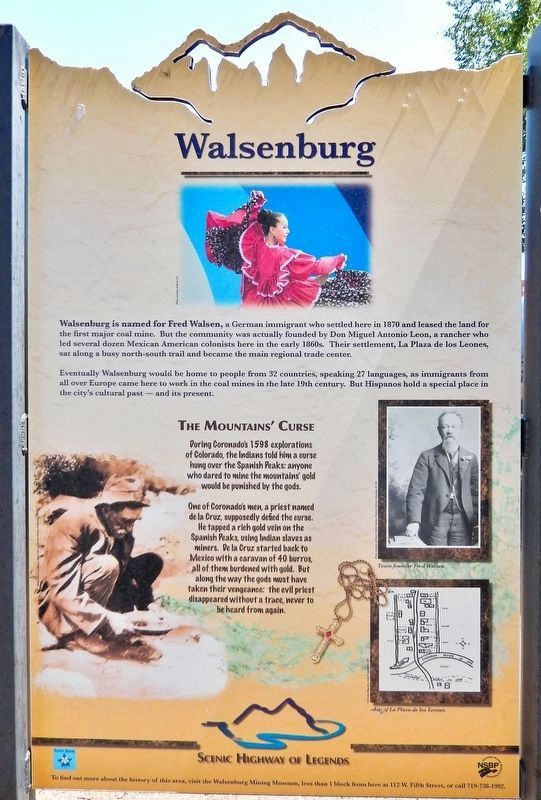
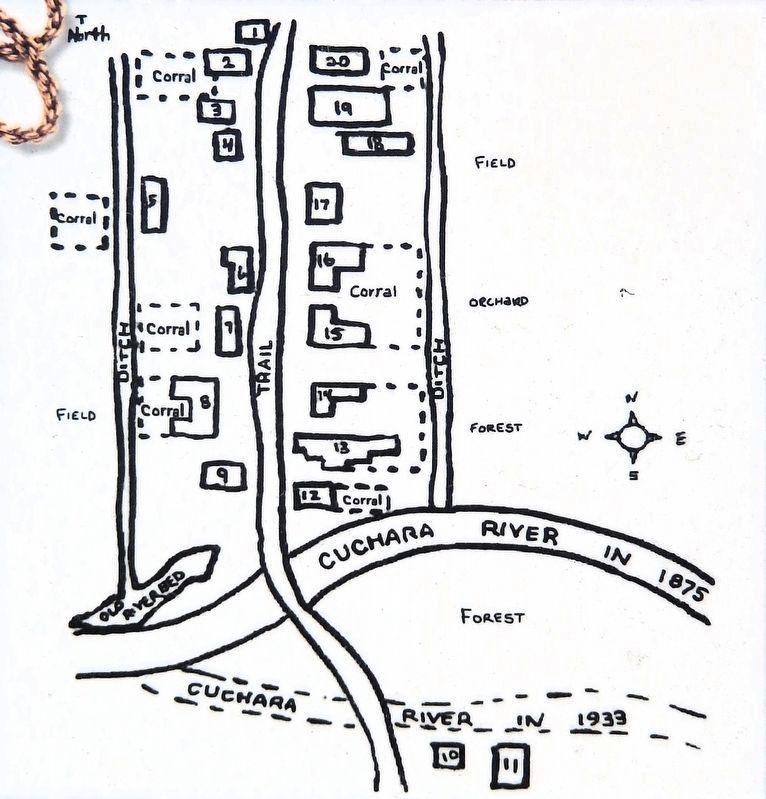
Walsenburg is named for Fred Walsen, a German immigrant who settled here in 1870 and leased the land for the first major coal mine. But the community was actually founded by Don Miguel Antonio Leon, a rancher who led several dozen Mexican American colonists here in the early 1860s. Their settlement, La Plaza de los Leones, sat along a busy north-south trail and became the main regional trade center.
Eventually Walsenburg would be home to people from 32 countries, speaking 27 languages, as immigrants from all over Europe came here to work in the coal mines in the late 19th century. But Hispanos hold a special place in the city's cultural past — and its present.
The Mountains’ Curse
During Coronado's 1598 explorations of Colorado, the Indians told him a curse hung over the Spanish Peaks: anyone who dared to mine the mountains' gold would be punished by the gods.
One of Coronado's men, a priest named de la Cruz, supposedly defied the curse. He tapped a rich gold vein on the Spanish Peaks, using Indian slaves as miners. De la Cruz started back to Mexico with a caravan of 40 burros, all of them burdened with gold. But along the way the gods must have taken their vengeance: the evil priest disappeared without a trace, never to be heard from again.
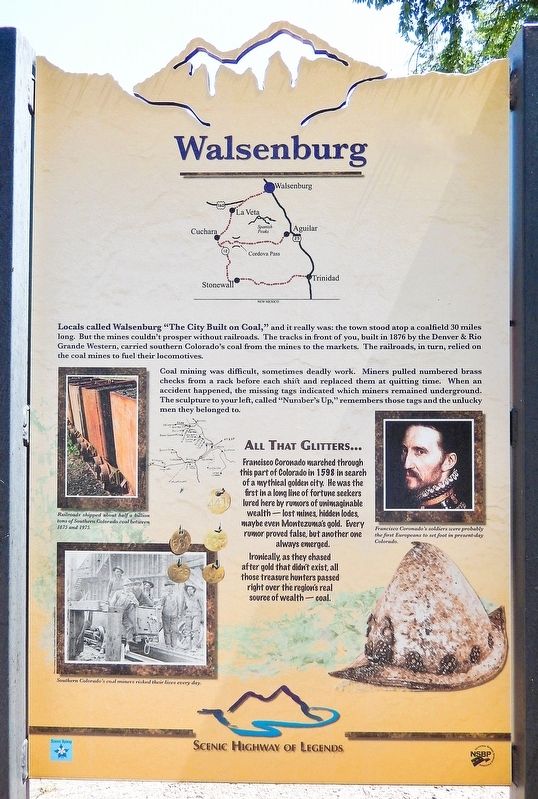
Locals called Walsenburg "The City Built on Coal," and it really was: the town stood atop a coalfield 30 miles long. But the mines couldn't prosper without railroads. The tracks in front of you, built in 1876 by the Denver & Rio Grande Western, carried southern Colorado's coal from the mines to the markets. The railroads, in turn, relied on the coal mines to fuel their locomotives.
Railroads shipped about half a billion tons of Southern Colorado coal between 1875 and 1975.
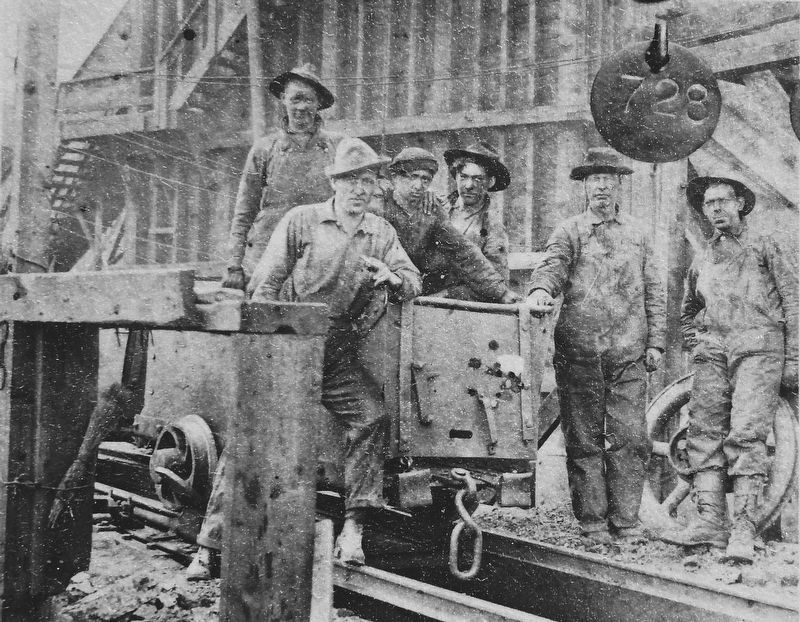
Coal mining was difficult, sometimes deadly work. Miners pulled numbered brass checks from a rack
this page online
All That Glitters…
Francisco Coronado marched through this part of Colorado in 1598 in search of a mythical golden city. He was the first in a long line of fortune seekers lured here by rumors of unimaginable wealth — lost mines, hidden lodes, maybe even Montezuma's gold. Every rumor proved false, but another one always emerged.
Ironically, as they chased after gold that didn't exist, all those treasure hunters passed right over the region’s real source of wealth — coal.
To find out more about the history of this area, visit the Walsenburg Mining Museum, less than 1 block from here at 112 W. Fifth Street, or call 719-738-1992.
Erected by National Scenic Byways Program.
Topics. This historical marker is listed in these topic lists: Immigration • Industry & Commerce • Railroads & Streetcars • Settlements & Settlers. A significant historical year for this entry is 1870.
Location. 37° 37.519′ N,
Photographed by Cosmos Mariner, July 11, 2025
2. Walsenburg Marker (right panel)

Regionally, this marker is in the American Mountain West and on the Santa Fe Trail Corridor. Globally, it is in North America, the Rocky Mountains, the Western Hemisphere, the Western World, and the Anglosphere. Historically, it finds itself in what was once New Spain, the Comanchería, and the Republic of Texas.
Other nearby markers. At least 3 other markers are within 9 miles of this marker, measured as the crow flies: This Site Marks the Location of the Alexander and Lillie Levy Home (within shouting distance of this marker); Huerfano Butte (approx. 9 miles away); a different marker also named Huerfano Butte (approx. 9 miles away).
Also see . . . Walsenburg: Steeped in History (City of Walsenburg).
Excerpt:(Submitted on August 11, 2025, by Cosmos Mariner of Cape Canaveral, Florida.)
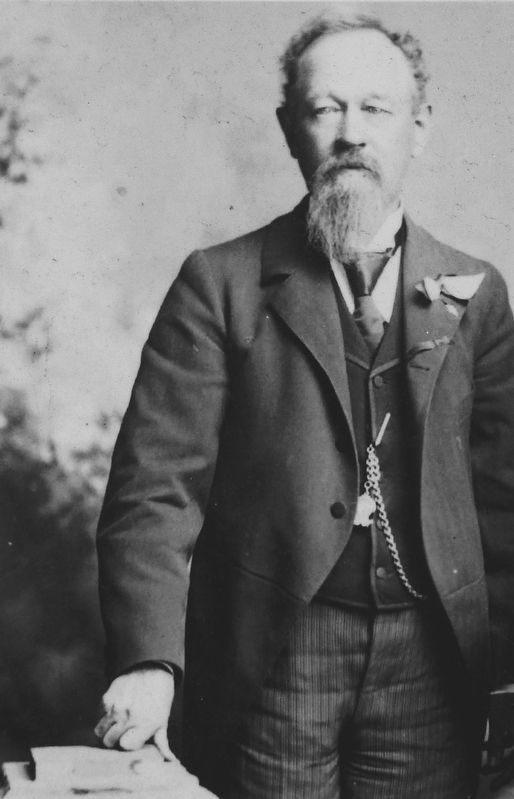
Fred Walsen arrived in the US from Germany in 1859, migrated to the San Luis Valley in 1864, followed the San Luis immigrants to the Lower Cucharas Valley in 1870 and established his home in la Plaza de los Leones. There he managed the Bartels General Store.
The first longhorn cattle arrived from Texas in 1870. By 1900, Anglo settlement and cattle corporations absorbed most of the available range land. Along with many other Anglos, Fred Walsen and Alexander Levy‚ his future brother-in-law, were involved the cattle business and supplied beef to the Denver and Rio Grande Railroad both for transport and to feed their workers. Fred Walsen owned 24,000 sheep and 250 head of cattle.
Settlersto the area were aware that the ground was rich with coal and dug it out and used it. In 1876, Fred Walsen bought the land — allegedly for a wagon, a team of mules and $100 in cash — where the first coal mine was established. This became the Walsen mine — and the direction of Walsenburg’s economy was set. This first mine was little more than tunnels where English, Scottish and Mexican miners crawled in. The coming of the railroads broke the coal mining economy in Walsenburg wide open. The Denver and Rio Grande Railroad laid track from Pueblo reaching Walsenburg in 1876 and the Colorado and Southern Railroad soon followed. Both had their own train depots and freight outlets. Mining brought bustling economies ‚ commercial businesses, livery stables, banking and more ranching. At its high point, there were no less than fifty mines in Huerfano County.Denver Public Library, Western History Collection, Z-77563. Marker detail: Fred Walsen, town founder
Photographed by Colorado Magazine, Louis B. Sporleder, 1933
4. Marker detail: La Plaza de los Leones map
History Colorado, Trinidad Collection, #20004316
5. Marker detail: Coal Miners
Southern Colorado’s coal miners risked their lives every day.
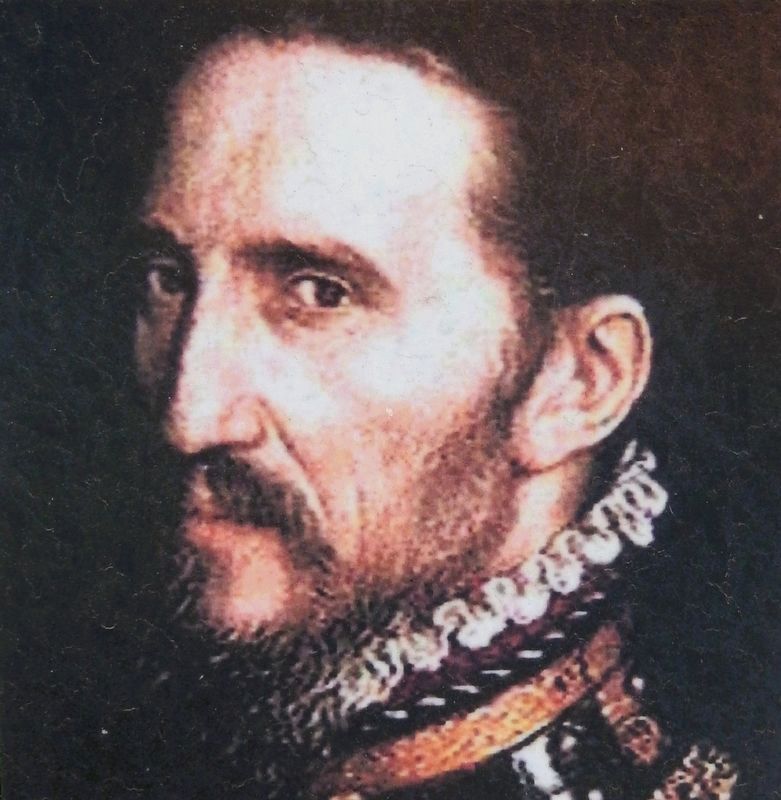
6. Marker detail: Francisco Coronado
Francisco Coronado’s soldiers were probably the first Europeans to set foot in present-day Colorado.
Photographed by Cosmos Mariner, July 11, 2025
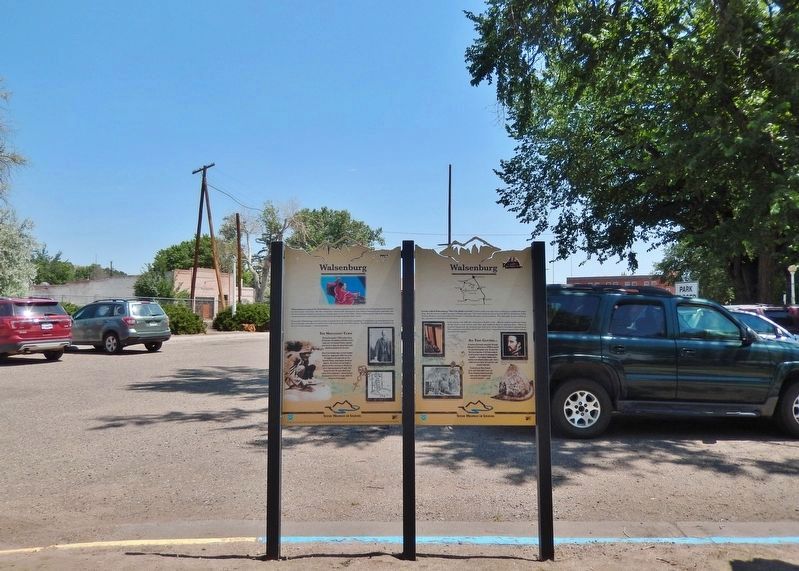
7. Walsenburg Marker (two panels)
Looking east from Main Street. Heritage Park is in the right background. The former railroad depot is in the left background.
Credits. This page was last revised on August 11, 2025. It was originally submitted on August 10, 2025, by Cosmos Mariner of Cape Canaveral, Florida. This page has been viewed 225 times since then and 102 times this year. Photos: 1, 2, 3, 4, 5, 6. submitted on August 10, 2025, by Cosmos Mariner of Cape Canaveral, Florida. 7. submitted on August 11, 2025, by Cosmos Mariner of Cape Canaveral, Florida.
