San Marino in Los Angeles County, California — The American West (Pacific Coastal)
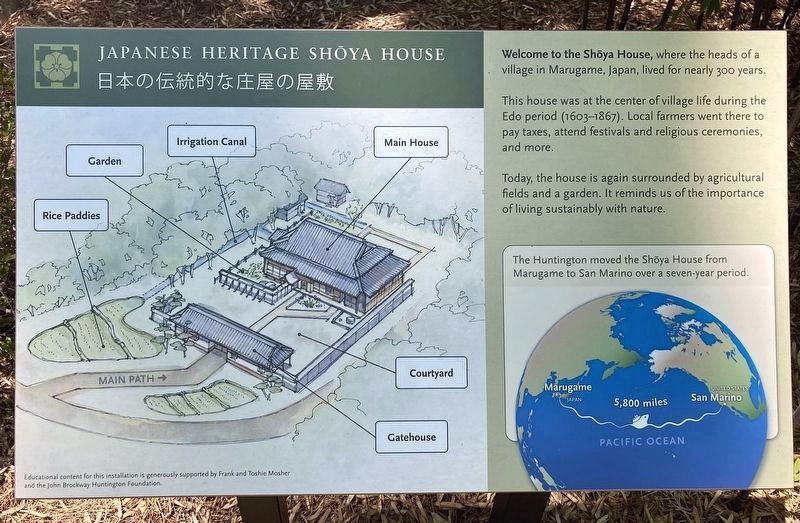
Japanese Heritage Shōya House
日本の伝統的な庄屋の屋敷
| — | A traditional Japanese village headman's house | — |
Photographed by Craig Baker, August 7, 2025
1. Shōya House Marker
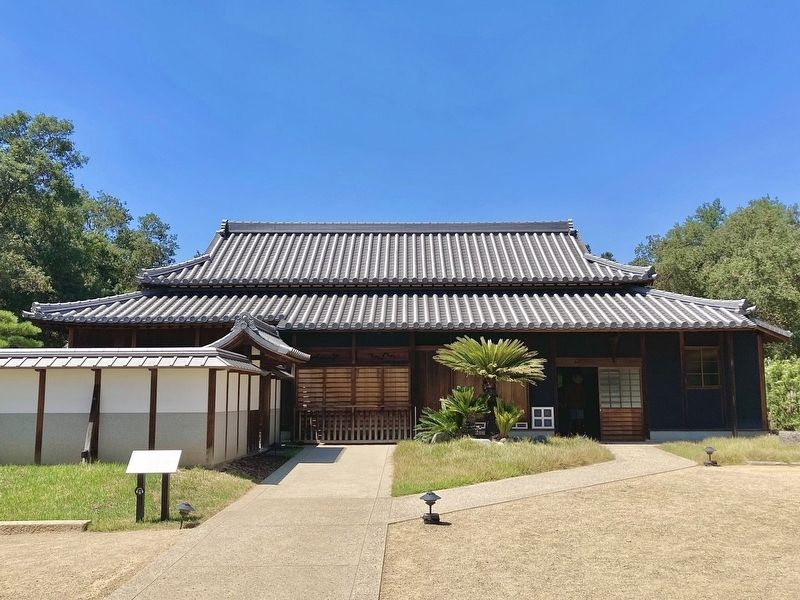
Welcome to the Shoya House, where the heads of a village in Marugame, Japan, lived for nearly 300 years.
This house was at the center of village life during the Edo period (1603-1867). Local farmers went there to pay taxes, attend festivals and religious ceremonies, and more.
Today, the house is again surrounded by agricultural fields and a garden. It reminds us of the importance of living sustainably with nature.
The Huntington moved the Shoya House from Marugame to San Marino over a seven-year period.
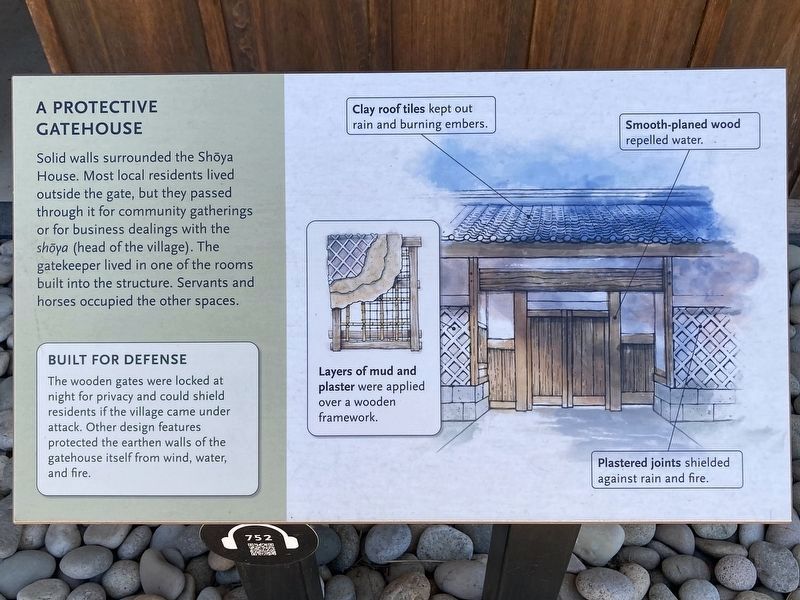
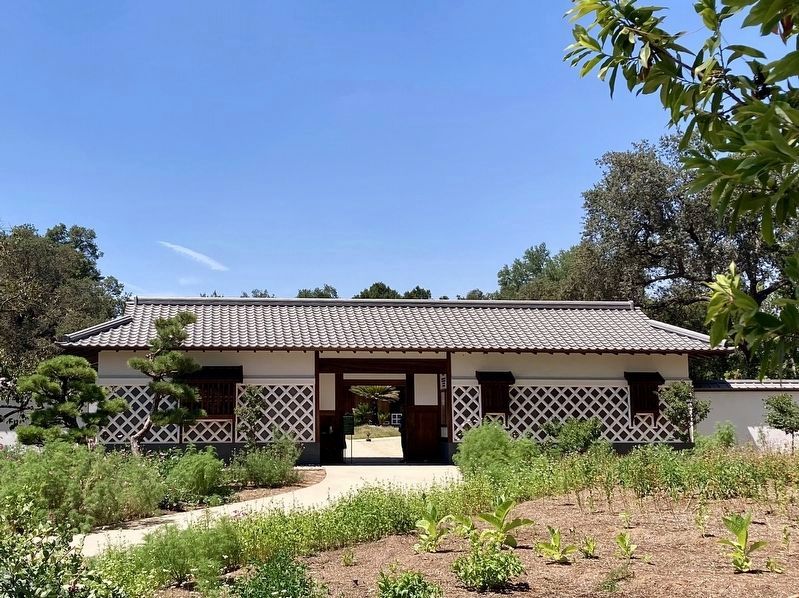
A Protective Gatehouse
Solid walls surrounded the Shoya House. Most local residents lived outside the gate, but they passed through it for community gatherings or for business dealings with the shoya (head of the village). The gatekeeper lived in one of the rooms built into the structure. Servants and horses occupied the other spaces.
Built For Defense
The wooden gates were locked at night for privacy and could shield residents if the village came under attack. Other design features protected the earthen walls of the gatehouse itself from wind, water, and
this page online
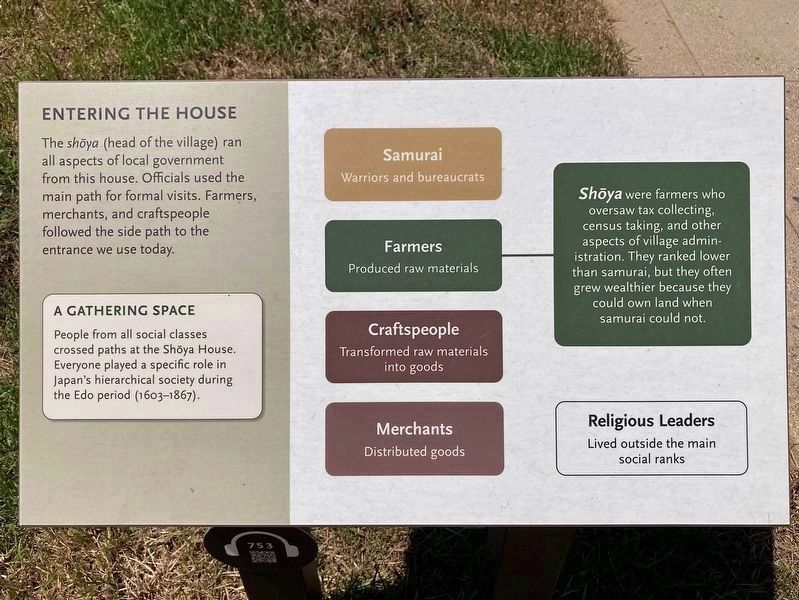
Entering the House
The shoya (head of the village) ran all aspects of local government from this house. Officials used the main path for formal visits. Farmers, merchants, and craftspeople followed the side path to the entrance we use today.
A Gathering Space
People from all social classes crossed paths at the Shoya House. Everyone played a specific role in Japan's hierarchical society during the Edo period (1603-1867).
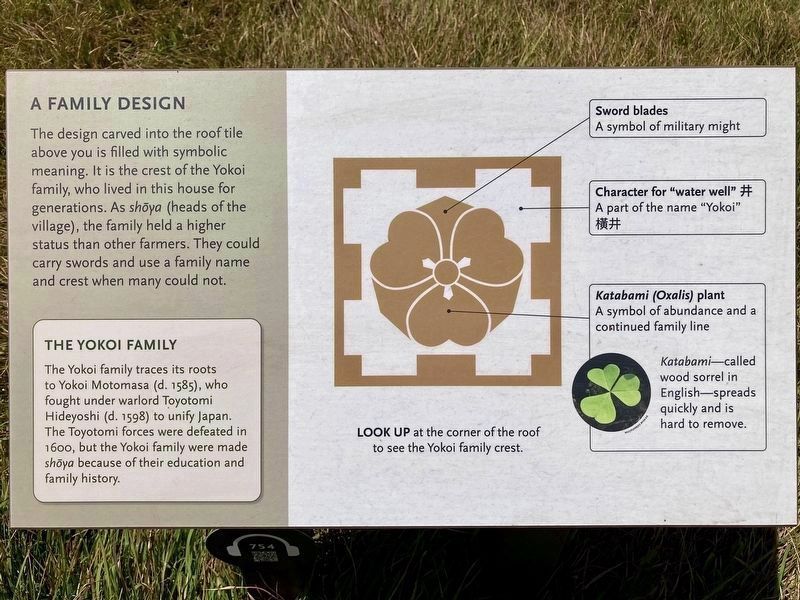
A Family Design
The design carved into the roof tile above you is filled with symbolic meaning. It is the crest of the Yokoi family, who lived in this house for generations. As shoya (heads of the village), the family held a higher status than other farmers. They could carry swords and use a family name and crest when many could not.
The Yokoi Family
The Yokoi family traces its roots to Yokoi Motomasa (d. 1585), who fought under warlord Toyotomi Hideyoshi (d. 1598) to unify Japan. The Toyotomi forces were defeated in 1600, but the Yokoi family were made shoya because of their education and family history.
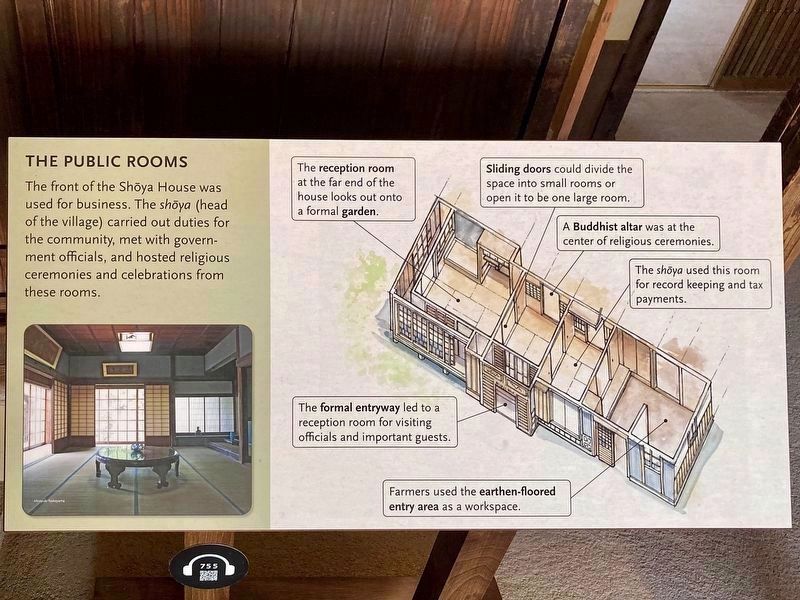
The Public Rooms
Photographed by Craig Baker, August 7, 2025
2. A Protective Gatehouse
The front of the Shoya House was used for business. The shoya (head of the village) carried out duties for the community, met with govern- ment officials, and hosted religious ceremonies and celebrations from these rooms.
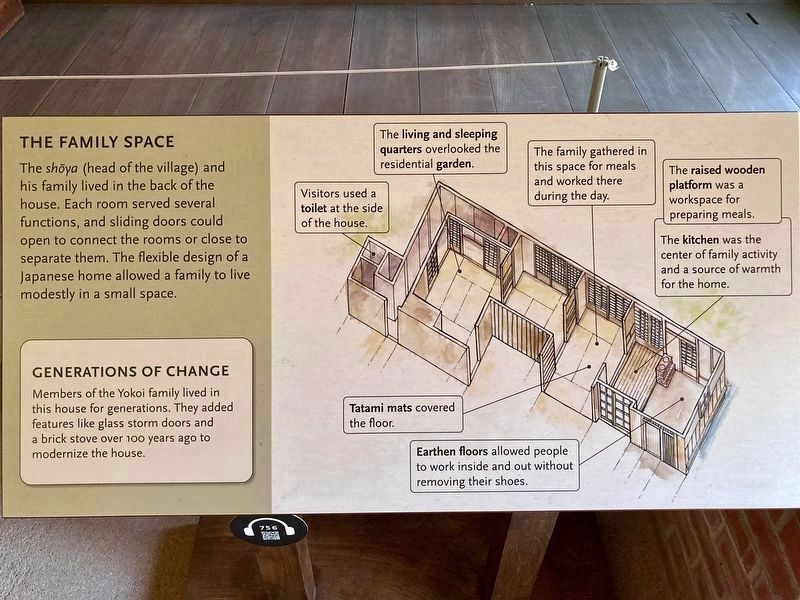
The Family Space
The shoya (head of the village) and his family lived in the back of the house. Each room served several functions, and sliding doors could open to connect the rooms or close to separate them. The flexible design of a Japanese home allowed a family to live modestly in a small space.
Generations of Change
Members of the Yokoi family lived in this house for generations. They added features like glass storm doors and a brick stove over 100 years ago to modernize the house.
Peek Into the Garden
Today, a common Japanese word for home - katei 家庭 - combines the characters for "house" and "garden."
Topics. This historical marker is listed in these topic lists: Agriculture • Architecture • Settlements & Settlers. A significant historical year for this entry is 1600.
Location. 34° 7.587′ N, 118° 6.982′ W. Marker is in San Marino,
Photographed by Craig Baker, August 7, 2025
3. Entering the House

Regionally, this marker is in Greater Los Angeles and in the Transverse Ranges. It is also on the American Pacific Coast. Globally, it is in North America, on the Ring of Fire, on the Pacific Rim, in the Western Hemisphere, in the Western World, and in the Anglosphere. Historically, it finds itself in what was once New Spain and also Mexico’s Alta California.
Other nearby markers. At least 8 other markers are within walking distance of this marker: Dry Landscape Garden (about 400 feet away, measured in a direct line); The Historic Rose Garden Tea Room (about 600 feet away); Queensland Kauri (about 700 feet away); The Huntington Flagpole (approx. 0.2 miles away); Camellia Japonica ‘California’ (approx. ¼ mile away); George S. Patton, Jr. Memorial (approx. half a mile away); Hale Solar Laboratory (approx. half a mile away); Thornton Gardens (approx. 0.6 miles away). Touch for a list and map
Photographed by Craig Baker, August 7, 2025
4. A Family Design
More about this marker. Located at The Huntington Library, Art Collection, and Botanical Gardens. See their website for hours, admission, map, collections, etc.
Regarding Japanese Heritage Shōya House. The family that owned this house moved to the United States and maintained ownership of the house in Japan until it became too difficult to take care of. They wanted to move the house to the United States, so they donated it to the Huntington.
Photographed by Craig Baker, August 7, 2025
5. The Public Rooms
Photographed by Craig Baker, August 7, 2025
6. The Family Space

Photographed by Craig Baker, August 7, 2025
7. Peek Into the Garden
Photographed by Craig Baker, August 7, 2025
8. Shōya House
Photographed by Craig Baker, August 7, 2025
9. Gatehouse

Photographed by Craig Baker, August 7, 2025
10. Shōya House Interior

Photographed by Craig Baker, August 7, 2025
11. Garden
Credits. This page was last revised on July 29, 2026. It was originally submitted on August 13, 2025, by Craig Baker of Sylmar, California. This page has been viewed 151 times since then and 35 times this year. Photos: 1, 2, 3, 4, 5, 6, 7, 8, 9, 10, 11. submitted on August 13, 2025, by Craig Baker of Sylmar, California.
