Inner Harbor in Baltimore, Maryland — The American Northeast (Mid-Atlantic)
Baltimore’s Maritime Heritage
Pride of Baltimore II
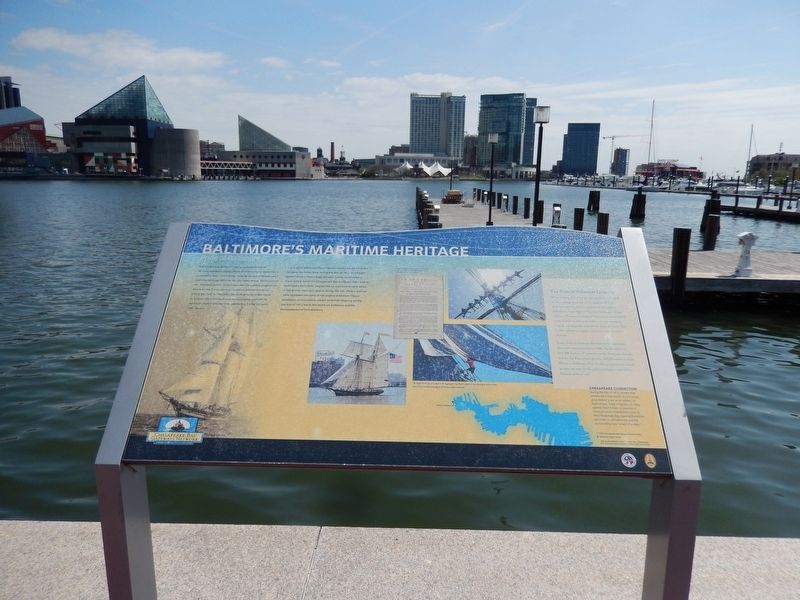
Photographed by Don Morfe, April 14, 2017
1. Baltimore’s Maritime Heritage Marker
The world’s only authentic sailing reproduction of an 1812-era Baltimore Clipper. Pride of Baltimore II is more than a spectacular ship---it is a living, working symbol of Baltimore’s maritime heritage. With her sharply raked masts, abundance of sail, and sleek profile, Pride of Baltimore II captures the public’s imagination whenever she travels around the nation and the world as a sailing goodwill ambassador. Whether at home in Baltimore or abroad, she provides a unusual educational platform for American history and the Chesapeake Bay during the early 19th century.
The original Baltimore Clipper ships were the life blood of the fledging American Navy during the War of 1812 as it fought against Great Britain’s huge armada. American privateers, many sailing out of the Chesapeake Bay in clipper ships built in Baltimore’s Fell’s Point neighborhood, captured or sank some 1,700 British merchant vessels during the war. Pride II and her crew represent the spirit of the original Baltimore Clipper privateers, whose severe impact on British shipping during the War of 1812 led to the attack on Baltimore and the bombardment of
this page online
The Pride of Baltimore Lives On
[Illegible] The first Baltimore Clipper built in 130 years, the original Pride sailed over 150,000 nautical miles in nine years before she was struck by a squall and tragically sunk off the coast of Puerto Rico in 1986 taking her captain and three crew members with her.
Today, Pride II continues the work of her namesake. Since her commissioning in 1988, she has called on over 200 ports in 37 countries in the Americas, Europe and the Far East, covering some 200,000 nautical miles. When in Baltimore, Pride II offers programs for school groups, day sails for the public, and guest crew berths between ports of call.
Chesapeake Connection
During the War of 1812 private ship owners were licensed by the American government to act as privateers, or legal pirates, supporting the U.S. Navy against Great Britain. A majority of these privateers hailed from ports in the Chesapeake Bay, causing the British admiralty to call Baltimore and the surrounding area “a nest of pirates.”
Topics. This historical marker is listed in these topic lists: War of 1812 • Waterways & Vessels. A significant historical year for this entry is 1812.
Location. Marker
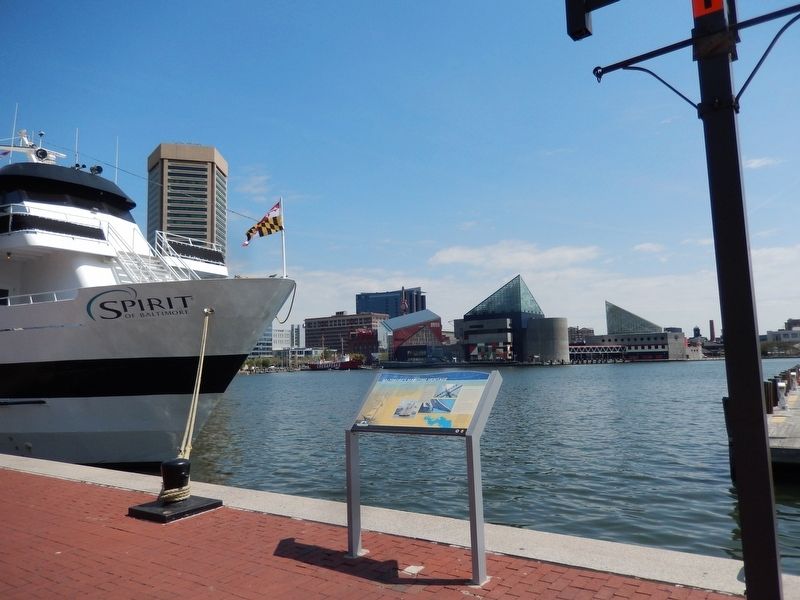
Photographed by Don Morfe, April 14, 2017
2. Baltimore’s Maritime Heritage Marker
We have been informed that this marker is no longer there and will not be replaced. This page is an archival view of what was.
Regionally, this marker was in Central Maryland. It was also in the American Mid-Atlantic, in the Chesapeake Bay Region, and on the Eastern Seaboard. Globally, it was in the North Atlantic Region, North America, the Western Hemisphere, the Western World, and the Anglosphere. Historically, it found itself in what was once one of the original Thirteen Colonies and also the Antebellum South.

Other nearby markers. At least 8 other markers are within walking distance of this location: Pride of Baltimore (within shouting distance of this marker); Admiral Guillermo Brown (within shouting distance of this marker); Baltimore Turns the Tide (about 300 feet away, measured in a direct line); Adventure Begins at the Bay's Front Door (about 400 feet away); Van's Bird and Butterfly Garden (about 500 feet away); A History of Firsts in Baltimore (about 500 feet away); United States Merchant Seamen Memorial (about 600 feet away); Private Armed Schooner of Baltimore (about 700 feet away). Touch for a list and map of all markers in Baltimore.
Other markers no longer nearby. The Great Baltimore Fire (was a few steps from this marker but has been permanently removed); a different marker also named Baltimore’s Maritime Heritage (was about 500 feet away but has been permanently removed); Baltimore’s Part in Saving the Bay (was about 600 feet away but has been permanently removed).
Credits. This page was last revised on September 27, 2025. It was originally submitted on April 21, 2017, by Don Morfe of Baltimore, Maryland. This page has been viewed 497 times since then and 33 times this year. Last updated on August 18, 2025, by Evan Dwyer of Richmond, Virginia. Photos: 1, 2. submitted on April 21, 2017, by Don Morfe of Baltimore, Maryland. • Devry Becker Jones was the editor who published this page.
