Inner Harbor in Baltimore, Maryland — The American Northeast (Mid-Atlantic)
A History of Firsts in Baltimore
The Baltimore Museum of Industry
Photographed by Don Morfe, April 14, 2017
1. A History of Firsts in Baltimore Marker
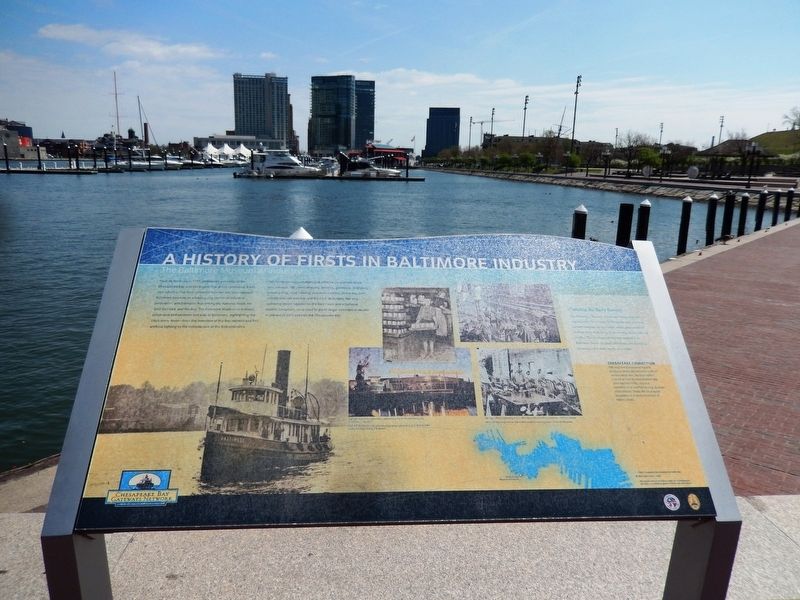
From its founding in 1729, Baltimore’s proximity to the Chesapeake Bay was the engine that drove commerce, trade and industry. The most inland port on the eastern seaboard, Baltimore boomed as a leading city, center of industrial innovation and transportation hub linking the National Road, the B&O Railroad and the Bay. The Baltimore Museum of Industry celebrates and explores this side of Baltimore, highlighting the city’s many first---from the invention of the first railroad and first artificial lighting to the manufacture of the first umbrellas.
The hands-on museum displays Baltimore’s major industries over 100 years in shipping, printing, garments, machining, broadcasting, food canning, and even a corner pharmacy. Just outside you can visit the coal-fired S.S. Baltimore, the only operating steam tugboat on the East Coast and a National Historic Landmark, once used to guide larger commercial vessels in and out of port and into the Chesapeake Bay.
[Captions:]
Canning the Bay’s Bounty
The Baltimore Museum of Industry is located in the original 130 old old Plant Oyster building, the only surviving cannery structure (the balance of the text is not legible).
Chesapeake Connection
Although the Chesapeake Bay will produce about 500 million pounds of seafood each year, the Bay’s oyster population has declined dramatically since the late 1970s, due to a combination of over harvesting, disease, and pollution. Today the local oyster population’s at about 2 percent of historic levels.
Topics.
this page online
Location. 39° 16.927′ N, 76° 36.703′ W. Marker is in Baltimore, Maryland. It is in the Inner Harbor. It is at the intersection of Light Street (Maryland Route 2) and West Lee Street, on the right when traveling north on Light Street. The marker is located in the Baltimore Inner Harbor boardwalk not far from the Science Center. Touch for map. Marker is at or near this postal address: 561 Light St, Baltimore MD 21230, United States of America. Touch for directions.

Regionally, this marker is in Central Maryland. It is also in the American Mid-Atlantic, in the Chesapeake Bay Region, and on the Eastern Seaboard. Globally, it is in the North Atlantic Region, North America, the Western Hemisphere, the Western World, and the Anglosphere. Historically, it finds itself in what was once one of the original Thirteen Colonies and also the Antebellum South.
Other nearby markers. At least 8 other markers are within walking distance of this marker: Van's Bird and Butterfly Garden (within
Photographed by Don Morfe, April 14, 2017
2. A History of Firsts in Baltimore Marker
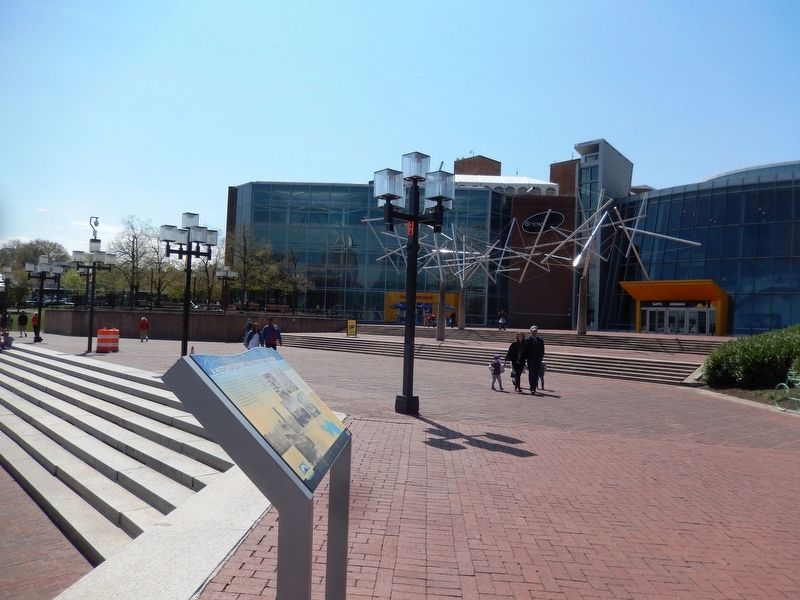
The Maryland Science Center is in the background.
Other markers no longer nearby. Baltimore’s Part in Saving the Bay (was within shouting distance of this marker but has been permanently removed); The Olmsted Legacy (was within shouting distance of this marker but has been permanently removed); Port of Baltimore (was within shouting distance of this marker but has been permanently removed); The Great Baltimore Fire (was about 400 feet away but has been permanently removed); Baltimore’s Maritime Heritage (was about 500 feet away but has been permanently removed).
Photographed by Don Morfe, April 14, 2017
3. A History of Firsts in Baltimore Marker
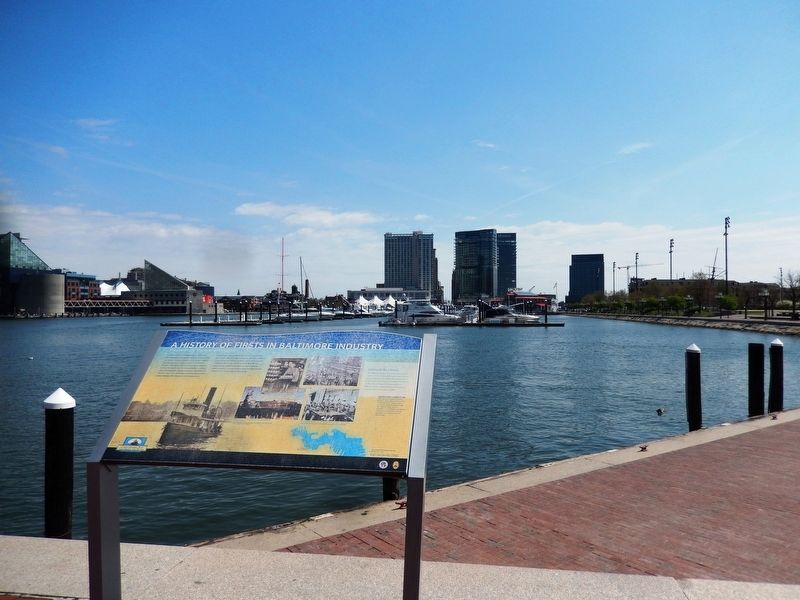
The Baltimore Harbor is in the background
Credits. This page was last revised on September 29, 2025. It was originally submitted on April 22, 2017, by Don Morfe of Baltimore, Maryland. This page has been viewed 958 times since then and 40 times this year. Last updated on August 18, 2025, by Evan Dwyer of Richmond, Virginia. Photos: 1, 2, 3. submitted on April 22, 2017, by Don Morfe of Baltimore, Maryland. • Devry Becker Jones was the editor who published this page.
