
Vinci in Città Metropolitana di Firenze, Tuscany, Italy — Southern and Western Europe (Mediterranean)
Leonardo da Vinci's Birthplace
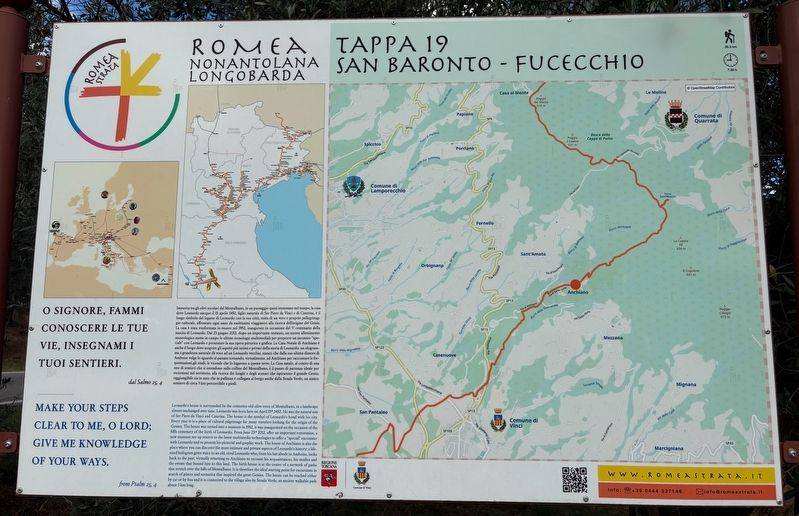
Romea Nonantolana Longobarda
Photographed by Sean P. Flynn, July 29, 2025
1. Leonardo da Vinci's Birthplace Marker
O Signore, fammi conoscere le tue vie, insegnami I tuoi sentieri.
Dal Salmo 25, 4
Immersa tra gli olivi secolari del Montalbano, in un paesaggio quasi immutato nel tempo, la casa dove Leonardo nacque il 15 aprile 1452, figlio naturale di Ser Piero da Vinci e di Caterina, è il luogo simbolo del legame di Leonardo con la sua città, mèta di un vero e proprio pellegrinag-gio culturale, affrontato ogni anno da moltissimi viaggiatori alla ricerca dell'origine del Genio. La casa è stata trasformata in museo nel 1952, inaugurato in occasione del V centenario della nascita di Leonardo. Dal 23 giugno 2012, dopo un importante restauro, un nuovo allestimento museologico mette in campo le ultime tecnologie multimediali per proporre un incontro "spe-ciale con Leonardo e presentare la sua opera pittorica e grafica, La Casa Natale di Anchiano è anche il luogo dove scoprire gli aspetti più intimi e privati della storia di Leonardo: un ologram-ma a grandezza naturale dà voce ad un Leonardo vecchio, stanco che dalla sua ultima dimora di Amboise volge lo sguardo al passato tornando, virtualmente, ad Anchiano per raccontare le fre-quentazioni,gli
this page online
Make your steps clear to me, O Lord; give me knowledge of your ways.
From Psalm 25, 4Leonardo's house is surrounded by the centuries-old olive trees of Montalbano, in a landscape almost unchanged over time. Leonardo was born here on April 15th, 1452. He was the natural son of Ser Piero da Vinci and Caterina. The house is the symbol of Leonardo's bond with his city. Every year it is a place of cultural pilgrimage for many travelers looking for the origin of the Genius. The house was turned into a museum in 1952, it was inaugurated on the occasion of the fifth centenary of the birth of Leonardo. From June 23rd 2012, after an important restoration, a new museum set-up resorts to the latest multimedia technologies to
Photographed by Sean P. Flynn, July 29, 2025
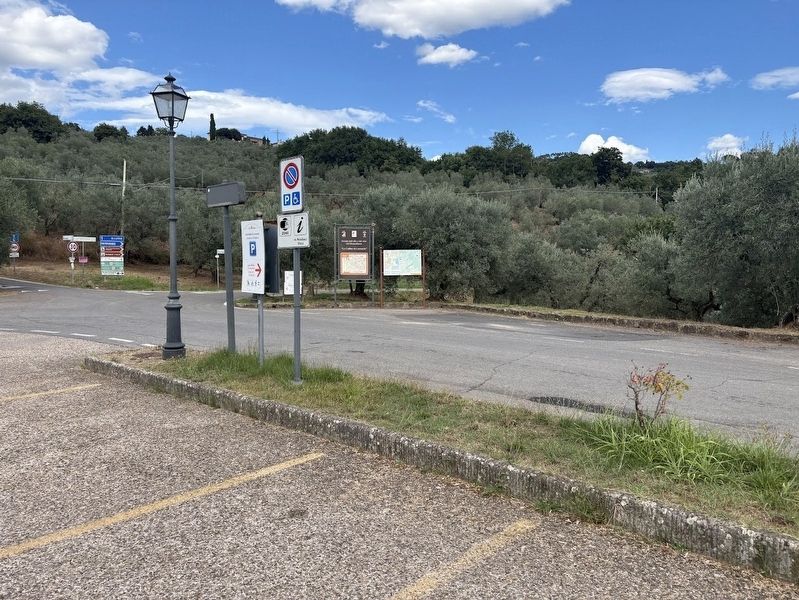
2. Leonardo da Vinci's Birthplace Marker
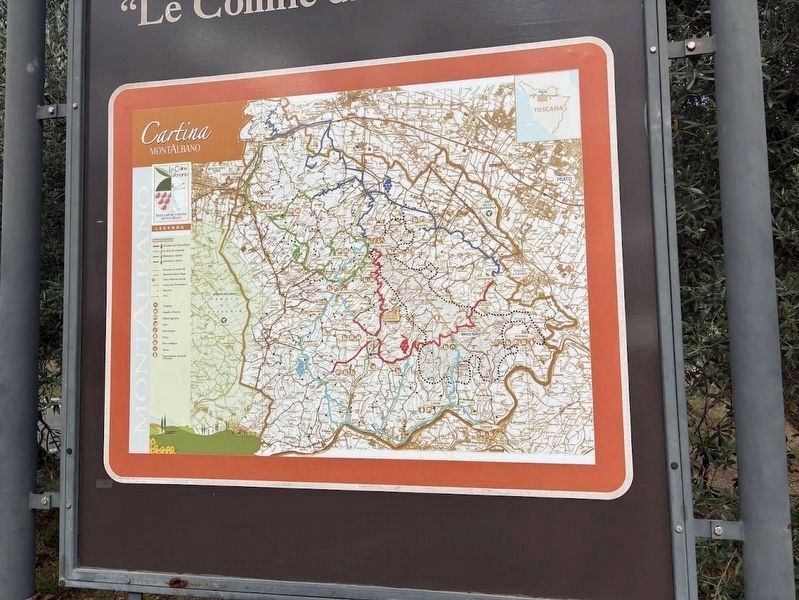
A map of the area is immediately left of this marker.
Erected by Romea Strata.
Topics. This historical marker is listed in these topic lists: Arts, Letters, Music • Notable Buildings • Religion & Religious Structures • Roads & Vehicles. A significant historical date for this entry is April 15, 1452.
Location. 43° 47.993′ N, 10° 56.361′ E. Marker is in Vinci, Toscana (Tuscany),
Photographed by Sean P. Flynn, July 29, 2025
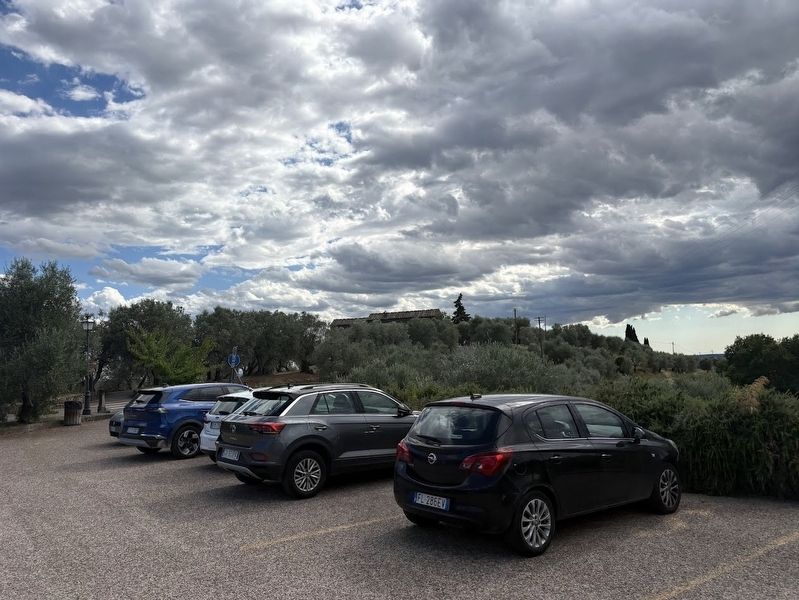
3. Leonardo da Vinci's Birthplace
The home is visible in the distance, past the parking lot and above the trees.

Regionally, it is in Europe, the European Union, the Schengen Area, a coastal Mediterranean country, and the Western World. Historically, it finds itself in what was once the Roman Empire and specifically also the Holy Roman Empire.
Other nearby markers. At least 8 other markers are within 3 kilometers of this marker, measured as the crow flies: Città di Vinci (within shouting distance of this marker); Piazzale Charles C. Dent (within shouting distance of this marker); il Castello dei Conti Guidi / The Castle of the Guidi Counts (approx. 1.7 kilometers away); I Volti Femminili di Leonardo / The Female Faces of Leonardo (approx. 1.7 kilometers away); Vittorio Emanuele II / Victor Emmanuel II (approx. 1.8 kilometers away); The Liberation of Vinci, Italy (approx.
Roland Arhelger (CC BY-SA 4.0), via Wikimedia Commons, June 5, 2019
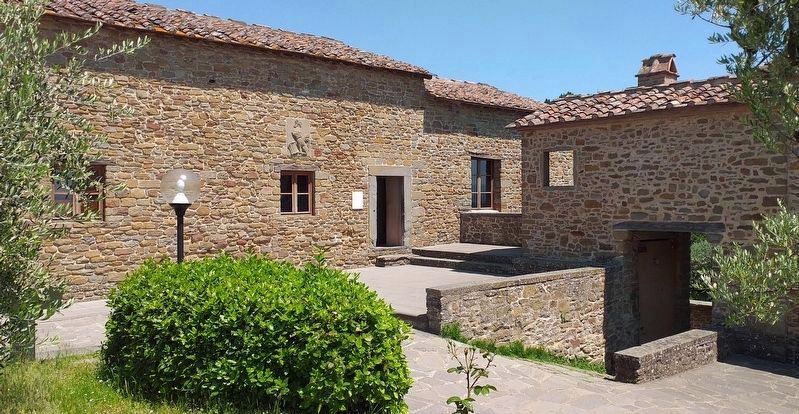
4. Leonardo da Vinci's Birthplace
The home, down a pathway from the location of this historical marker, is today a museum.
More about this marker. Vinci is the nearest town, about 3 kilometers south of here. This particular location is a hamlet called Anchiano, and it is located in hills called the Montalbano.
Also see . . .
1. Romea Strata official site. The Romea Strata is a trail that follows the route used during the Middle Ages to connect the Baltic region with Italy. (Submitted on September 1, 2025, by Sean P. Flynn of Oak Park, Illinois.)
2. Visit Tuscany: The Birthplace of Leonardo da Vinci. (Submitted on September 1, 2025, by Sean P. Flynn of Oak Park, Illinois.)
3. Birthplace of Leonardo da Vinci drone footage (YouTube). (Submitted on September 2, 2025, by Sean P. Flynn of Oak Park, Illinois.)
Photographed by Sean P. Flynn, July 29, 2025
5. Map of Montalbino
This hilly area just north of Vinci, where Leonardo was born, is known as Montalbino. This map is immediately next to the marker.
Credits. This page was last revised on September 3, 2025. It was originally submitted on September 1, 2025, by Sean P. Flynn of Oak Park, Illinois. This page has been viewed 129 times since then and 31 times this year. Photos: 1, 2, 3. submitted on September 1, 2025, by Sean P. Flynn of Oak Park, Illinois. 4, 5. submitted on September 2, 2025, by Sean P. Flynn of Oak Park, Illinois.
