
Homer in Licking County, Ohio — The American Midwest (Great Lakes)
Major General William Starke Rosecrans
⎯⎯⎯
Bishop Sylvester Horton Rosecrans
Photographed by William Fischer, Jr., October 17, 2008
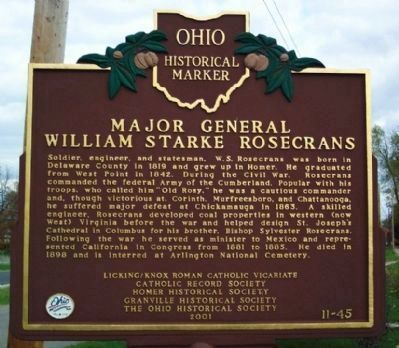
1. Major General William Starke Rosecrans Marker
Major General William Starke Rosecrans
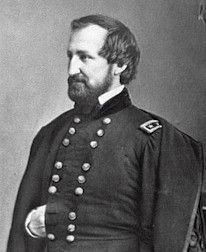
Soldier, engineer, and statesman, W.S. Rosecrans was born in Delaware County in 1819 and grew up in Homer. He graduated from West Point in 1842. During the Civil War, Rosecrans commanded the federal Army of the Cumberland. Popular with his troops, who called him "Old Rosy," he was a cautious commander and, though victorious at, Corinth, Murfreesboro, and Chattanooga, he suffered major defeat at Chickamauga in 1863. A skilled engineer, Rosecrans developed coal properties in western (now West) Virginia before the war and helped design St. Joseph's Cathedral in Columbus for his brother, Bishop Sylvester Rosecrans. Following the war he served as minister to Mexico and represented California in Congress from 1881 to 1885. He died in 1898 and is interred at Arlington National Cemetery.
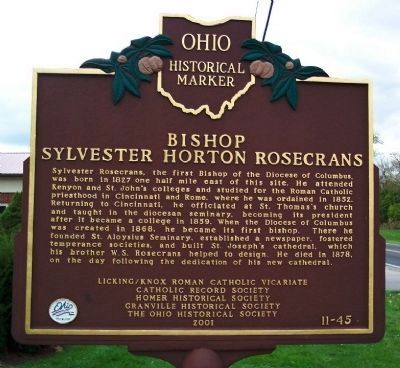
Bishop Sylvester Horton Rosecrans
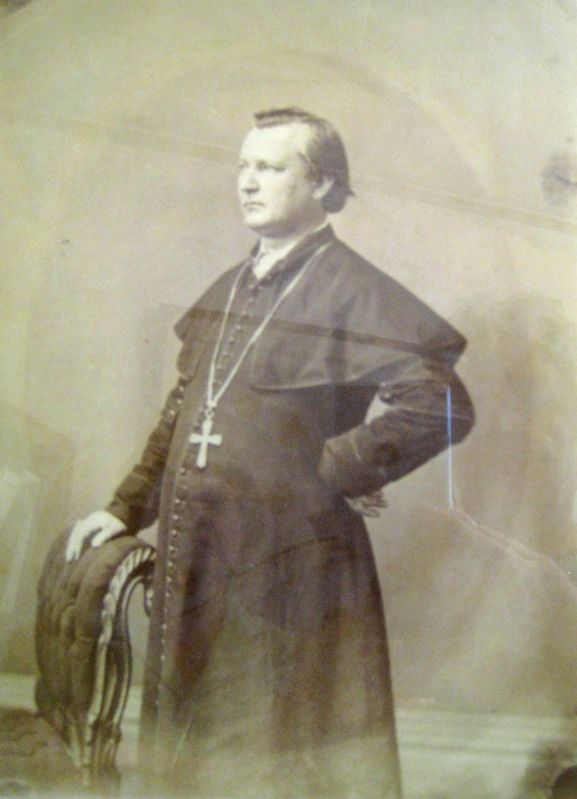
Sylvester Rosecrans, the first Bishop of the Diocese of Columbus, was born in 1827 one half mile east of this site. He attended Kenyon and St. John's colleges and studied for the Roman Catholic priesthood in Cincinnati and Rome, where he was ordained in 1852. Returning
this page online
Erected 2001 by Licking/Knox Roman Catholic Vicariate, Catholic Record Society, Homer Historical Society, Granville Historical Society, and The Ohio Historical Society. (Marker Number 11-45.)
Topics and series. This historical marker is listed in these topic lists: Military • Religion & Religious Structures • War, US Civil. In addition, it is included in the Ohio Historical Society / The Ohio History Connection series list. A significant historical year for this entry is 1819.
Location. 40° 15.128′ N, 82° 31.519′ W. Marker is in Homer, Ohio, in Licking County. It is at the intersection of Homer Road and South Street, on the left when traveling west
Photographed by William Fischer, Jr., October 17, 2008
2. Bishop Sylvester Horton Rosecrans Marker

Regionally, this marker is in the Columbus Metropolitan Area. It is also in the American Midwest, in the Corn Belt, in Appalachia, and specifically in Northern Appalachia. Globally, it is in North America, the Western Hemisphere, the Western World, and the Anglosphere. Historically, it finds itself in what was once the Haudenosaunee (Iroquois) Confederacy, the territory of the Mississippian Culture, and the Northwest Territory.
Other nearby markers. At least 8 other markers are within 6 miles of this marker, measured as the crow flies: Victoria Claflin-Woodhull-Martin / First Woman Candidate for President of the United States (a few steps from this marker); Homer Veterans Memorial (within shouting distance of this marker); Cora B. Clark (approx. 4 miles away); The Hufford House (approx. 4 miles away); Utica Veterans Memorial (approx. 4 miles away); Brandon World War II Honor Roll (approx. 4.1 miles away); Ritchey's Lunches & Fountain Service (approx.
via Shotgun's Home of the American Civil War, unknown
3. Major General William Starke Rosecrans
Also see . . . Sylvester Horton Rosecrans. Rosencrans Headquarters website entry (Submitted on July 7, 2022, by Larry Gertner of New York, New York.)
Additional commentary.
1. Adena mound in immediate vicinity
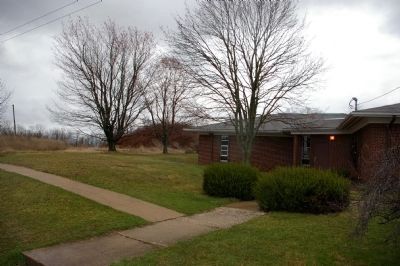
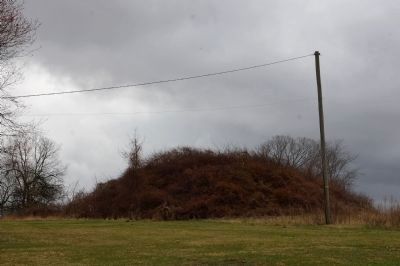
To the south and east of this historical marker, on private property, sits a prehistoric earthen mound about 15 feet high, made by the Adena culture. In the early 20th century, William C. Mills of the Ohio Historical Society considered this to be one of the most important conical mounds in the North Fork valley, according the Indian Mounds of the Middle Ohio Valley. That it remains in any condition is significant, as so many of these structures were destroyed by agriculture and construction.
This mound is known as the the Dixon Mound, but has also been known as the Williamson Mound.
— Submitted March 30, 2009, by Christopher Busta-Peck of Shaker Heights, Ohio.
via Rosencrans Headquarters, unknown
4. Bishop Sylvester Horton Rosecrans
Photographed by William Fischer, Jr., October 17, 2008
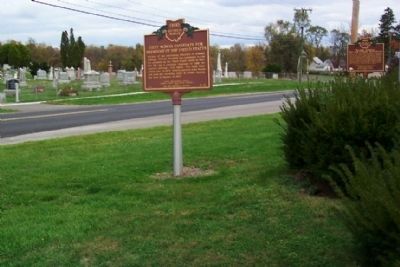
5. Rosecrans and First Woman Candidate For President Markers
Across from the Homer Cemetery.
Photographed by Grant & Mary Ann Fish, September 24, 2022
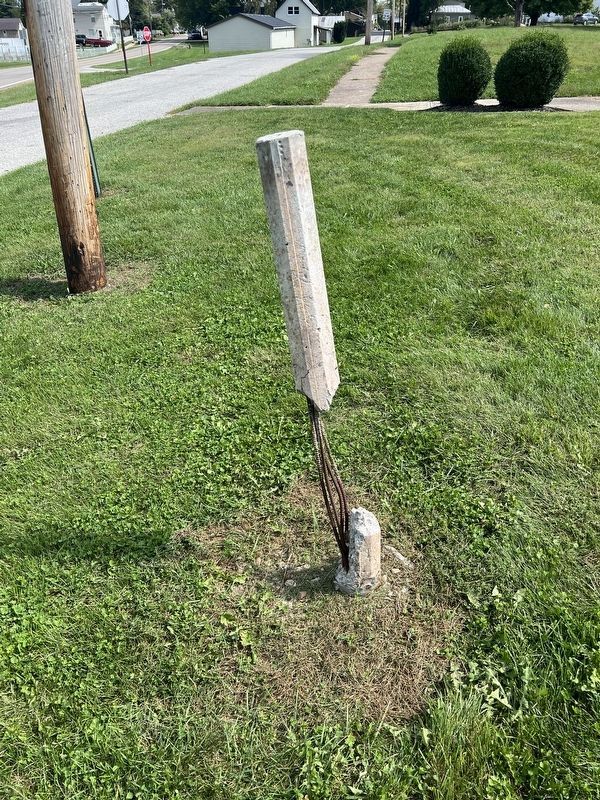
6. Remnants of the missing marker's supporting post
Photographed by Christopher Busta-Peck, March 29, 2009
7. Location of the Adena mound relative to the library
Photographed by Christopher Busta-Peck, March 29, 2009
8. Dixon Mound (also known as the Williamson Mound)
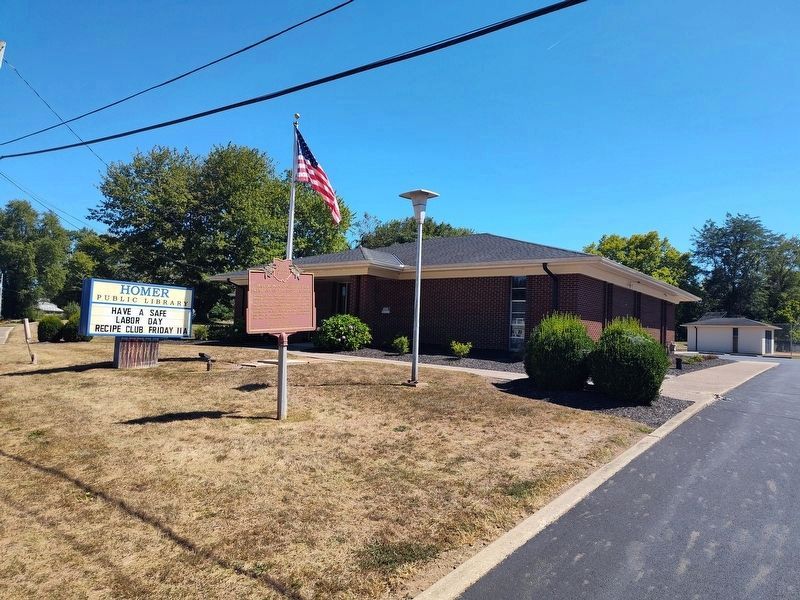
Photographed by Craig Doda, August 31, 2025
9. Homer Public Library
Credits. This page was last revised on September 4, 2025. It was originally submitted on October 20, 2008, by William Fischer, Jr. of Reynoldsburg, Ohio. This page has been viewed 2,363 times since then and 32 times this year. Last updated on September 2, 2025, by Craig Doda of Napoleon, Ohio. Photos: 1, 2. submitted on October 20, 2008, by William Fischer, Jr. of Reynoldsburg, Ohio. 3, 4. submitted on July 7, 2022, by Larry Gertner of New York, New York. 5. submitted on October 20, 2008, by William Fischer, Jr. of Reynoldsburg, Ohio. 6. submitted on September 26, 2022, by Grant & Mary Ann Fish of Galloway, Ohio. 7, 8. submitted on March 30, 2009, by Christopher Busta-Peck of Shaker Heights, Ohio. 9. submitted on September 2, 2025, by Craig Doda of Napoleon, Ohio. • Bernard Fisher was the editor who published this page.
