Phoebus in Hampton, Virginia — The American South (Mid-Atlantic)
Emancipation Oak
"Thirst for knowledge"
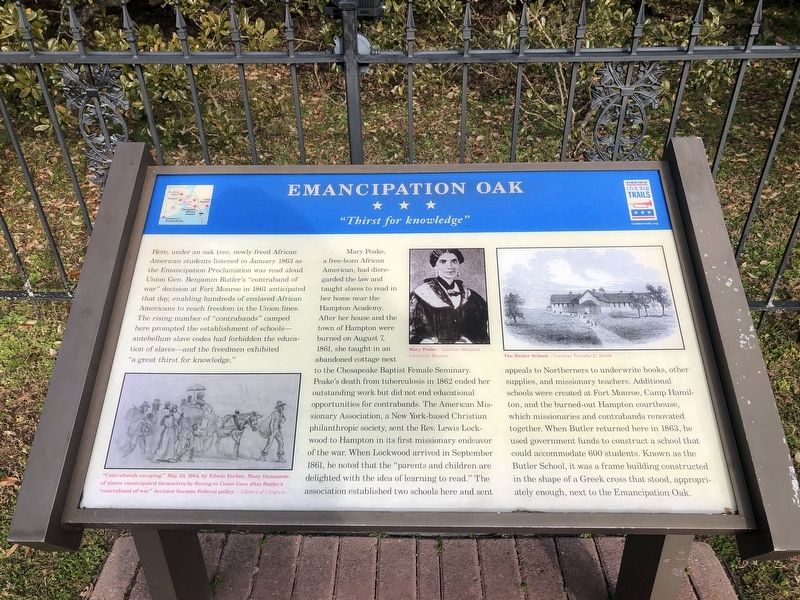
Here, under an oak tree, newly freed African American students listened in January 1863 as the Emancipation Proclamation was read aloud. Union Gen. Benjamin Butler's "contraband of war" decision at Fort Monroe in 1861 anticipated that day, enabling hundreds of enslaved African Americans to reach freedom in the Union lines. The rising number of "contrabands" camped here prompted the establishment of schools—antebellum slave codes had forbidden the education of slave—and the freedmen exhibited "a great thirst for knowledge."
Mary Peake, a free-born African American, had disregarded the law and taught slaves to read in her home near the Hampton Academy. After her house and the town of Hampton were burned on August 7, 1861, she taught in an abandoned cottage next to the Chesapeake Baptist Female Seminary. Peake's death from tuberculosis in 1862 ended her outstanding work but did not end educational opportunities for contrabands. The American Missionary Association, a New York-based Christian philanthropic society, sent the Rev. Lewis Lockwood to Hampton in its first missionary endeavor of the war. When Lockwood arrived
this page online
(captions)
"Contrabands escaping." May 29, 1864, by Edwin Forbes. Many thousands of slaves emancipated themselves by fleeing to Union lines after Butler's "contraband of war" decision became Federal policy. — Library of Congress
Mary Peake - Courtesy Hampton University Museum
The Butler School - Courtesy Timothy L. Smith
Erected by Virginia Civil War Trails.
Topics and series. This historical marker is listed in these topic lists: African Americans
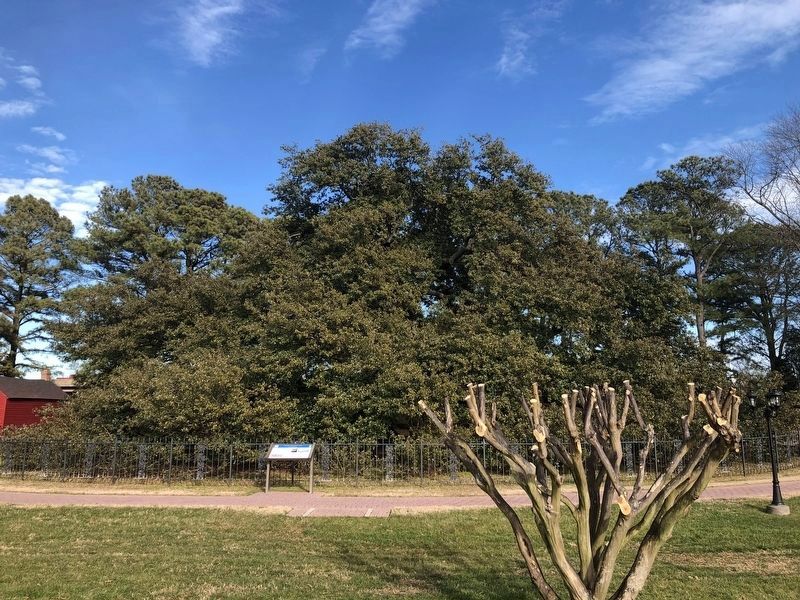
Photographed by Devry Becker Jones (CC0), February 6, 2021
2. Emancipation Oak Marker
The marker is directly in front of the Emancipation Oak.
Location. This marker has been replaced by another marker nearby. It was located near 37° 1.385′ N, 76° 19.833′ W. Marker was in Hampton, Virginia. It was in Phoebus. It was on Emancipation Drive 0.1 miles south of Tyler Street, on the left when traveling south. Touch for map. Marker was at or near this postal address: 103 Emancipation Dr, Hampton VA 23663, United States of America. Touch for directions.

Regionally, this marker was on Virginia’s Peninsula and in Coastal Virginia. It was also in the American South, specifically in the Upper South, in the Tidewater, and on the Eastern Seaboard. Globally, it was in the North Atlantic Region, North America, the Western Hemisphere, the Western World, and the Anglosphere. Historically, it found itself in what was once the territory of the Mississippian Culture, one of the original Thirteen Colonies, one of the Confederate States of America, and the Antebellum South.
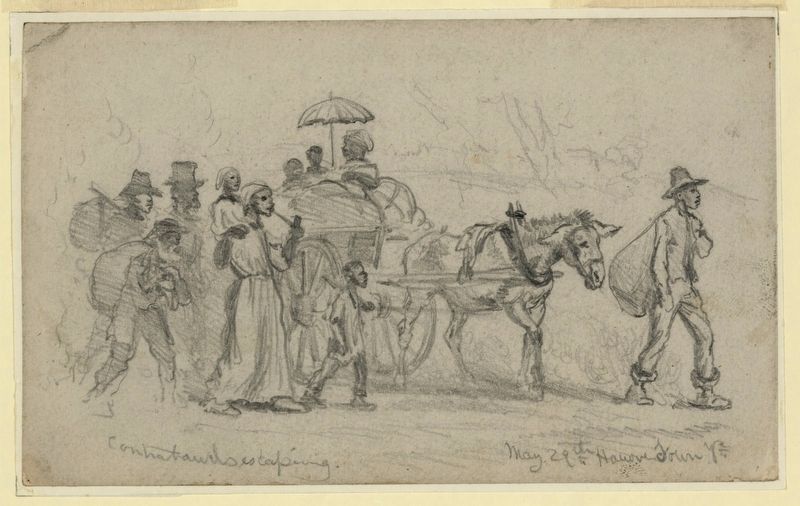
Photographed by Edwin Forbes, May 29, 18
3. Contrabands Escaping
Library of Congress [LC-USZC4-1455]
Other nearby markers. At least 8 other markers are within walking distance of this location: A different marker also named Emancipation Oak (here, next to this marker); Hampton Institute (a few steps from this marker); a different marker also named Emancipation Oak (within shouting distance of this marker); John Baptist Pierce (about 300 feet away, measured in a direct line); Civil Rights (approx. 0.2 miles away); Phoebus (approx. 0.2 miles away); Second Church at Kecoughtan (approx. ¼ mile away); First Church at Kecoughtan (approx. ¼ mile away). Touch for a list and map of all markers in Hampton.
Another marker is no longer nearby. Emancipation Oak (has been replaced with this marker).
Related markers. Click here for a list of markers that are related to this marker. Old & New CWT Markers At This Location also titled "Emancipation Oak".
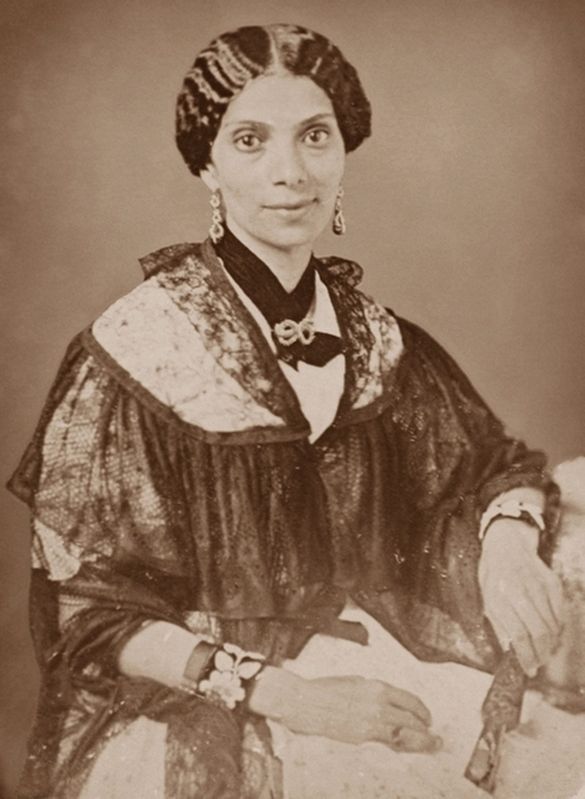
4. Mary Smith Kelsey Peake (1823–1862)
Courtesy Hampton University Museum
Credits. This page was last revised on September 7, 2025. It was originally submitted on February 8, 2021, by Devry Becker Jones of Washington, District of Columbia. This page has been viewed 436 times since then and 25 times this year. Last updated on September 3, 2025, by Evan Dwyer of Richmond, Virginia. Photos: 1, 2. submitted on February 8, 2021, by Devry Becker Jones of Washington, District of Columbia. 3, 4. submitted on August 1, 2010, by Bernard Fisher of Richmond, Virginia. • Bernard Fisher was the editor who published this page.
