
Windsor in Essex County, Ontario — Central Canada (North America)
The Underground Railroad in Canada
⎯⎯⎯
Le Chemin de fer Clandestin au Canada
Photographed by Dale K. Benington, August 9, 2010
1. The Underground Railroad in Canada Marker

The Underground Railroad in Canada
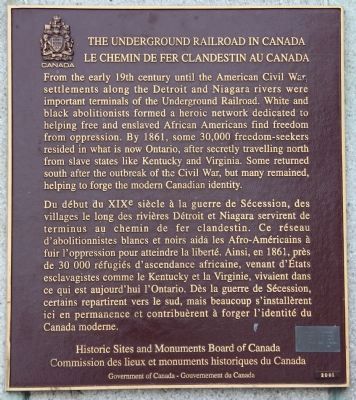
From the early 19th century until the American Civil War, settlements along the Detroit and Niagara rivers were important terminals of the Underground Railroad. White and black abolitionists formed a heroic network dedicated to helping free and enslaved African Americans find freedom from oppression. By 1861, some 30,000 freedom-seekers resided in what is now Ontario, after secretly traveling north from slave states like Kentucky and Virginia. Some returned south after the outbreak of the Civil War, but many remained, helping to forge the modern Canadian identity.
Le Chemin de fer Clandestin au Canada
Du début du XIXe siècle à la guerre de Sécession, des villages le long des rivières Détroit et Niagara servirent de terminus au chemin de fer clandestin. Ce réseau d'abolitionnistes blancs et noirs aida les Afro-Américains à fuir l'oppression pour atteindre la liberté. Ainsi, en 1861, près de 30 000 réfugiés d'ascendance africaine, venant d'États esclavagistes comme le Kentucky et la Virginie, vivaient dans ce qui est aujourd'hui l'Ontario. Dès la
this page online
Erected by Historic Sites and Monuments Board of Canada.
Topics and series. This historical marker is listed in this topic list: Abolition & Underground RR. In addition, it is included in the Canada, Historic Sites and Monuments Board series list. A significant historical year for this entry is 1800.
Location. 42° 19.189′ N, 83° 2.206′ W. Marker is in Windsor, Ontario, in Essex County. It is on Pitt Street East east of Goyeau Street, on the right when traveling west. Touch for map. Marker is in this post office area: Windsor ON N9A 6T6, Canada. Touch for directions.

Regionally, this marker is in the Southwest Ontario Area and in Southwestern Ontario. It is also in Central Canada. Globally, it is in North America, on the Great Lakes, in the Western Hemisphere, in the Western World, and in the Anglosphere. Historically, it finds itself in what was once a British colony, the Viceroyalty of New France, the Haudenosaunee (Iroquois) Confederacy, and Rupert’s
Photographed by Dale K. Benington, August 9, 2010
2. The Underground Railroad in Canada Marker
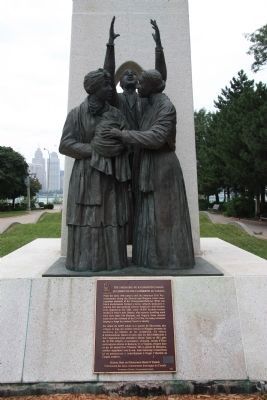
View of historical marker affixed to the south side of the monument.
Other nearby markers. At least 8 other markers are within walking distance of this marker: Original Home of Major F.A. Tilston V.C. Armoury (approx. 0.3 kilometers away); The Great Western Railway (approx. 0.3 kilometers away); The Rt. Hon. Herb Gray, PC., C.C., Q.C. (approx. 0.3 kilometers away); French Settlement on the South Shore (approx. 0.3 kilometers away); The Bell (approx. 0.3 kilometers away); The Catholic Coloured Mission of Windsor / La Mission Catholique Noire de Windsor (approx. 0.3 kilometers away); The Detroit River / La rivière Détroit / Detroit Ziibi (approx. 0.4 kilometers away); Mary Ann Shadd Cary (1823-1893) (approx. 0.4 kilometers away). Touch for a list and map of all markers in Windsor.
Photographed by Dale K. Benington, August 9, 2010
3. The Underground Railroad in Canada Marker
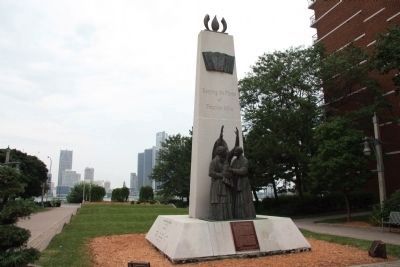
View looking northeast of the historic marker, the monument and sculpting, and the park grounds, with a distant view of the Detroit River and downtown Detroit, Michigan in the background.
Photographed by Dale K. Benington, August 9, 2010
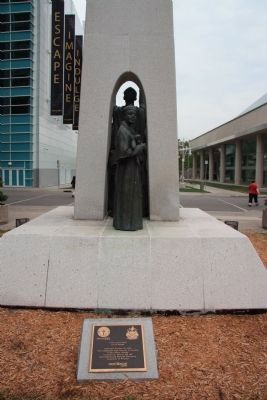
4. The Underground Railroad in Canada Memorial
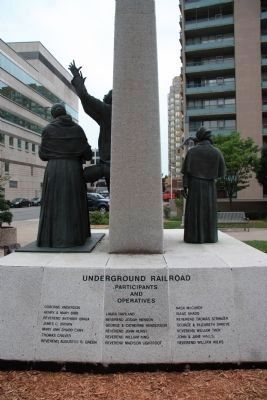
View of the east side of the monument.
Photographed by Dale K. Benington, August 9, 2010
5. The Underground Railroad in Canada Memorial
View of the north side of the monument.
Photographed by Dale K. Benington, August 9, 2010
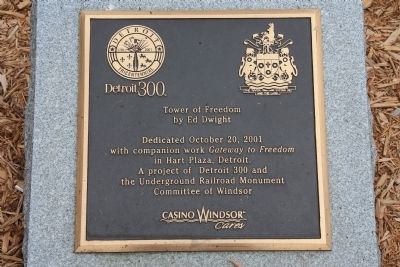
6. The Underground Railroad in Canada Memorial
View of the plaque at the base of the south side of the monument.
Photographed by Dale K. Benington, August 9, 2010
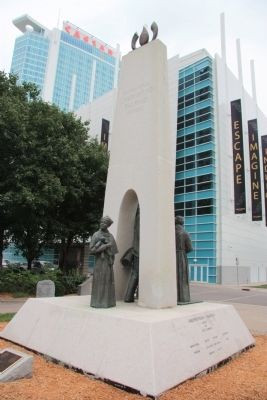
7. The Underground Railroad in Canada Memorial
View looking southeast of the monument and of the Casino Windsor in the background.
Photographed by Dale K. Benington, August 9, 2010
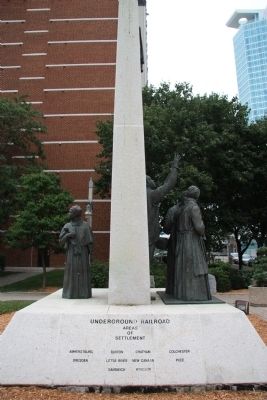
8. The Underground Railroad in Canada Memorial
View of the west side of the monument.
Credits. This page was last revised on July 31, 2026. It was originally submitted on October 30, 2010, by Dale K. Benington of Toledo, Ohio. This page has been viewed 2,167 times since then and 44 times this year. Last updated on September 9, 2025, by Kevin Westell of St. Catharines, Ontario. Photos: 1, 2, 3, 4, 5, 6, 7, 8. submitted on October 30, 2010, by Dale K. Benington of Toledo, Ohio. • Devry Becker Jones was the editor who published this page.
